The aftermath of the Rwandan genocide spilled over into Congo in the mid-1990s, acting like gasoline on the fire of preexisting intercommunal tensions and conflict, as well as rapacious and indifferent governance by the Congolese government in its eastern provinces. In 1994, between April 6 and mid-July, a period of 99 days of mayhem, approximately 500,000-800,000 Tutsi and moderate Hutu were slaughtered in Rwanda in a systematically planned genocide.
From 1996 onwards, the bilateral relationship between the Rwandese and Congolese governments has played a critical role in shaping the situation in eastern Congo. After facilitating the installation of a friendly regime in Congo, Rwanda and Congo soon broke ties, creating a bitter and bloody enmity between the two countries that would endure for the next 10 years, marked by military confrontations, the pillaging of the Congo’s natural resources, and the deaths of over 6 million people.
Sometimes touted as the pivotal event on the road to peace in eastern Congo, the ephemeral success of the Goma Conference—ostensibly designed to hammer out a peace accord among an alphabet soup of warring factions—quickly disappeared after the resumption of hostilities later in 2008.
Since December 2024, the March 23 Movement (M23) rebel group—one of many operating in eastern Congo—has taken control of the provincial capitals Goma and Bukavu, escalating unrest in a region plagued by armed conflict and mineral disputes, while asserting it is protecting the Tutsi minority. The conflict has disrupted the delivery of food, medicine, and other humanitarian materials to the conflict-hit areas. Many places remain inaccessible due to the lack of security, leaving displaced people without basic necessities.
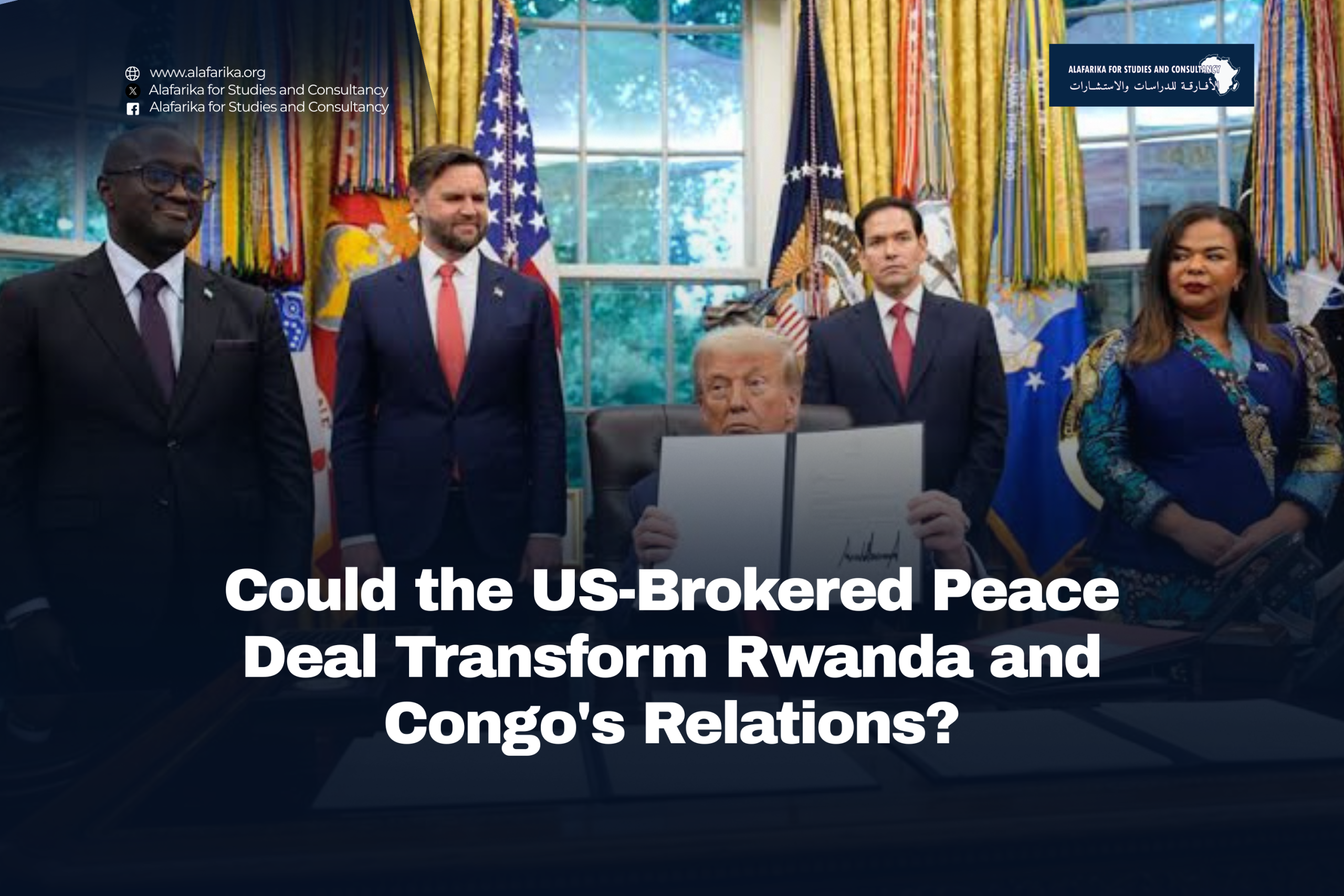
DR Congo accuses Rwanda of arming the M23 and sending troops to support the rebels in the conflict. Despite assertions from both the UN and US, Rwanda has denied supporting the M23. In March, Congolese President Felix Tshisekedi and his Rwandan counterpart, Paul Kagame, called for a ceasefire during surprise talks mediated by Qatar’s emir in Doha. Similarly, in April, Congo’s Foreign Minister Therese Kayikwamba Wagner and her Rwandan counterpart Olivier Nduhungirehe signed a US-brokered declaration in Washington. US Secretary of State Marco Rubio attended the event.
Furthermore, the two sides pledged to respect each other’s sovereignty and draft a peace agreement to end hostilities in eastern Congo. The foreign ministers of Rwanda and the Democratic Republic of the Congo (DRC) signed a new peace agreement on 27 June 2025 under the auspices of the US. The agreement aims to foster long-term peace and increased economic trade and security. The DRC is one of Africa’s largest nations, with over 110 million people. Rwanda has a population of 14 million.
On the Brink of Change Amid US Peace Efforts
In April, the Congolese president discussed a mining agreement with Massad Boulos, a Lebanese-American businessman and father-in-law of Trump’s daughter Tiffany tapped by the president as a senior advisor on Africa. “This agreement signed by the foreign ministers of our two countries during a solemn ceremony presided over by the US Secretary of State Mr. Marco Rubio… opens the way to a new era of stability, cooperation, and prosperity for our nation,” Congolese President Felix Tshisekedi said in a speech broadcast Monday to mark the 65th anniversary of DRC’s independence from Belgium.
Tshisekedi called the peace deal “historic” and said it was a “decisive turning point” in ending the conflict. “This deal is not just a document; it is a promise of peace for the people” affected by the conflict in the eastern DRC, Tshisekedi said. He said he wanted to “fully re-establish the authority of the state over the entire national territory,” although large swathes have for months been under the control of the M23 group. The text—negotiated through Qatar since before Trump took office—does not explicitly address territorial gains by the M23 anti-government group.
Nevertheless, while the White House may be celebrating its diplomatic triumph in brokering a peace deal between tense neighbors DRC and Rwanda, for skeptical observers and people caught up in conflict and deprivation in eastern DRC, the mood is bound to be far more muted, experts say. “I think a lot of ordinary citizens are hardly moved by the deal, and many will wait to see if there are any positives to come out of it,” said Michael Odhiambo, a peace expert for Eirene International in Uvira in eastern DRC, where 250,000 displaced people lost access to water due to Trump’s aid cutbacks.
Odhiambo suggests that for Congolese living in towns controlled by armed groups—like the mineral-rich area of Rubaya, held by M23 rebels—US involvement in the war may cause anxiety rather than relief. “There is fear that American peace may be enforced violently, as we have seen in Iran. Many citizens simply want peace, and even though [this is] dressed up as a peace agreement, there is fear it may lead to future violence that could be justified by America protecting its business interests.”
Catalyst for a New Era in Rwanda-Congo Relations?
The deal hinges on what is by now a familiar theme with the Trump administration: access to critical minerals for the United States. Chances are the device you are reading this on contains rare materials such as tantalum, tungsten, or coltan mined in the DRC or Rwanda. Critical minerals from these countries also go into nearly every form of high-end defense equipment manufactured today. But technology is not without consequences. Funds from the mines that extract these valuable metals have been diverted toward fueling the conflict and associated corruption.
China, which holds a monopoly over the DRC’s vast cobalt industry, will be watching this deal closely, as it too has a rapacious demand for critical minerals for its processing industry and for commercial and defense applications. China has reportedly supplied weapons to both the DRC and Rwanda. The deal could test China’s ability to navigate the region. Russia also has a strong history with the DRC and will surely be at the ready with misinformation about US intentions with the deal.
In the meantime, on top of the security plan, the draft deal lays out a three-part economic strategy to help stabilize the region and tie it closer to US interests. First, it calls for more cooperation between Kinshasa and Kigali on hydropower, national parks, and the legal trade of minerals. The aim is to build clear supply chains “from the mine to the refined metal.”
Second, the deal pushes for stronger regional links through groups like the International Conference on the Great Lakes Region, the East African Community, and the Common Market for Eastern and Southern Africa. These bodies should help boost trade, draw in investors, and stop smuggling. Audits will check that things stay transparent. Third, the United States is expected to step up its role to secure access to critical minerals for green and tech industries. This includes resources not just in North Kivu and South Kivu but also other provinces.
More than 100 armed groups are believed to be active in eastern Congo, with the Rwanda-backed M23 rebel group being the most prominent. The group made major advances early this year and seized eastern Congo’s two largest cities and lucrative mining areas. However, M23 rebels have indicated that the agreement will not be binding on them. The conflict has displaced more than seven million people. The United Nations has described it as “one of the most protracted, complex, serious humanitarian crises on Earth.”
Regional Stability in the Balance
Observers say the outcome will largely depend on the commitment of both countries and their regional and international partners. Despite the hopeful tone, Professor Tshibangu Kalala, an expert in international law at the University of Kinshasa, doubts Rwanda’s commitment. “Rwanda does not respect its own signature,” he said, recalling a failed 2004 agreement. “Today, Rwanda is doing exactly the opposite of its commitments from 2004.”
He further criticized the agreement’s failure to address justice for past atrocities, pointing to the unresolved issue of reparations for victims of Rwandan military operations in Kisangani and other parts of eastern DRC. “A peace agreement is being sought. But we are not talking about massacres or about the destruction of human lives or of material goods caused by Rwanda,” he told RFI. “Do these victims have the right to reparation, to compensation, or not? We are not talking about it. There is no peace without justice.”
In addition, political analyst Christian Moleka said US involvement gives the deal more weight. “The particularity is the involvement of the United States and its capacity to impose this roundtable, which African solutions couldn’t achieve,” he said. He pointed to the diplomatic and economic clout of the US and Qatar, which succeeded where African-led talks failed. “Previous solutions did not emphasize the economic elements. We know that the US is interested in securing the supply of critical materials, and so this economic interest dimension gives weight to American diplomacy,” he said.
Paradoxically, if not carefully managed, any new critical mineral extraction and access that the United States seeks from the deal could further perpetuate the factors that have enabled the conflict to endure for so long (such as child labor, corruption, devastating violence, and environmental plunder). The nature of US participation in the long-term diplomatic and economic implementation of the deal is unclear. It will be made harder by the recent cuts to the US capacity for aid and development programs, which would be a vital tool in assisting with peacebuilding. The inclusion of women, who have suffered greatly in this conflict, and other disenfranchised groups will also be crucial for securing a lasting peace.