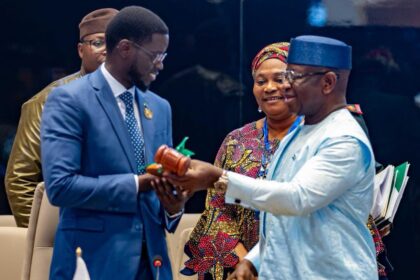
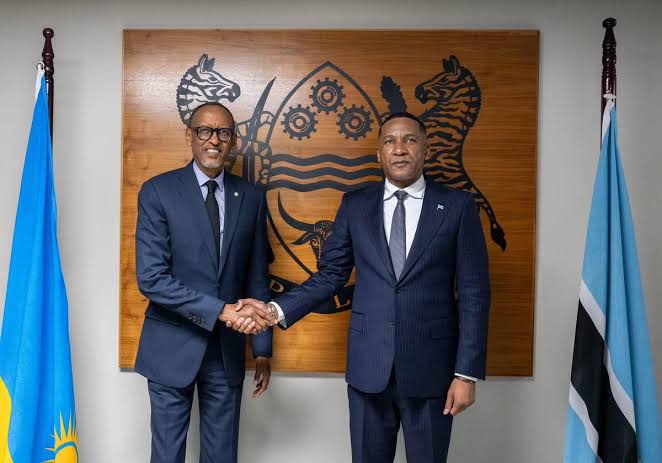
This Week, Rwanda and Botswana formalized their growing partnership through six cooperation agreements signed during a state visit by Rwandan President Paul Kagame. The deals span key sectors including aviation, tourism, agriculture, education, and transport, with both governments framing the pacts as a foundation for investment and mutual development. Botswana’s President Duma Boko underscored the spirit of shared learning driving the relationship. On the sidelines, Kagame toured the Diamond Trading Company Botswana — a cutting-edge hub for diamond sorting and valuation that stands as a cornerstone of the country’s export economy.
Chadian authorities have imposed a 20-day state of emergency across the Lake Chad region after a wave of attacks attributed to Boko Haram claimed the lives of at least 26 military personnel, among them two generals. The deadliest incident involved an assault on the Barka Tolorom military base. The government has responded by scaling up military operations in the area, while government spokesman Gassim Cherif acknowledged ongoing counterterrorism collaboration with Nigeria. Both Boko Haram and its ISWAP offshoot continue to destabilize the wider Lake Chad Basin.
Long queues have been increasing outside fuel stations across Benin after the government introduced new official pump prices in May, citing mounting pressure from rising global oil markets. Motorists are now paying 725 CFA francs per litre for gasoline, 750 CFA francs for diesel, and 1,040 CFA francs for kerosene — all markedly higher than January 2025 rates. While regulated stations in urban centers are applying the official tariffs, prices in the informal sector remain erratic. Ordinary Beninese fear the ripple effects will push up the cost of basic goods and further strain household budgets.
Angola and Gabon have sealed three bilateral agreements aimed at broadening economic collaboration and reducing dependence on oil revenues, following a summit between their heads of state in Luanda. Gabonese President Oligui Nguema expressed interest in tapping into Angola’s experience in tourism and agriculture as Libreville looks to diversify its economy. Angolan President João Lourenço, in turn, praised Gabon’s recent political transition, noting that the restoration of constitutional order had yielded positive results for the country and the continent at large.
Economic Freedom Fighters leader Julius Malema has issued a blunt call for South African President Cyril Ramaphosa to step down immediately, and for parliament to launch impeachment proceedings against him. Malema and allied opposition parties accuse ANC legislators of shielding Ramaphosa from scrutiny over a financial scandal involving a large sum of cash allegedly concealed on his farm, which he attributes to proceeds from a game animal sale. A parliamentary inquiry has rejected that account and recommended a full probe. Ramaphosa now faces accusations ranging from tax evasion to money laundering, though previous investigations by both the reserve bank and a public watchdog found no wrongdoing. His office says he is cooperating fully and trusts due process.
A Tunisian court has handed down a 20-year prison sentence to former Justice Minister Noureddine Bhiri, a senior figure in the opposition Ennahda movement, over allegations that he issued fraudulent passports and citizenship papers to individuals with terrorist links. Bhiri, who categorically denies the charges and maintains they are politically motivated, is already behind bars serving a separate 43-year term for alleged conspiracy against state security. The verdict has drawn fresh condemnation from international human rights organizations, who have consistently raised alarms over a broader clampdown on dissent under President Kais Saied, who has steadily consolidated executive power since dissolving parliament in 2021.
China has unveiled a sweeping trade concession granting tariff-free market access to Africa’s 20 largest economies for a two-year period. The beneficiaries include South Africa, Nigeria, Egypt, Algeria, and Kenya, building on existing arrangements that had already extended preferential treatment to 33 of the continent’s poorer nations. With the latest expansion, 53 of Africa’s 54 countries now qualify — the sole exception being Eswatini, which maintains official diplomatic ties with Taiwan. The policy’s first tangible outcome was the arrival of a 24-metric-ton shipment of South African apples cleared under the new framework, symbolizing what Beijing describes as a commitment to shared economic growth.
The United States Africa Command has confirmed that two American soldiers went missing in southwestern Morocco after venturing on a recreational hike following the conclusion of the African Lion multinational military exercises. The soldiers were last seen near the Cap Draa Training Area, a remote stretch of mountainous and semi-desert landscape. A broad search and rescue operation — involving helicopters, naval vessels, and specialist mountain rescue teams — is underway, with U.S. and Moroccan forces coordinating the effort alongside other exercise participants. An investigation into the circumstances of their disappearance is ongoing.
Nigeria’s government has announced plans to repatriate 130 of its nationals currently in South Africa, following a fresh wave of anti-immigration protests that have stoked tensions between the two countries. Foreign Minister Bianca Odumegwu-Ojukwu described the move as voluntary and raised Nigeria’s concerns directly with South Africa’s acting high commissioner. While no Nigerians were reported harmed in the most recent unrest, two Nigerian nationals were killed by security forces the previous month — deaths that Abuja has formally demanded be investigated, including the provision of autopsy findings to the victims’ families. South Africa’s Foreign Minister Ronald Lamola has acknowledged the friction and indicated both sides are working toward solutions on irregular migration.
Libya’s largest oil refinery, a 120,000-barrel-per-day facility in Zawiya roughly 40 kilometers west of Tripoli, was forced offline after heavy shelling erupted in its vicinity. The National Oil Corporation confirmed that all tankers had been evacuated as a precautionary measure, though it reported that structural damage to the complex was limited and fuel supplies to the capital remained stable. Local officials attributed the violence to a security operation targeting criminal elements, though the full circumstances behind the clashes remain unclear.