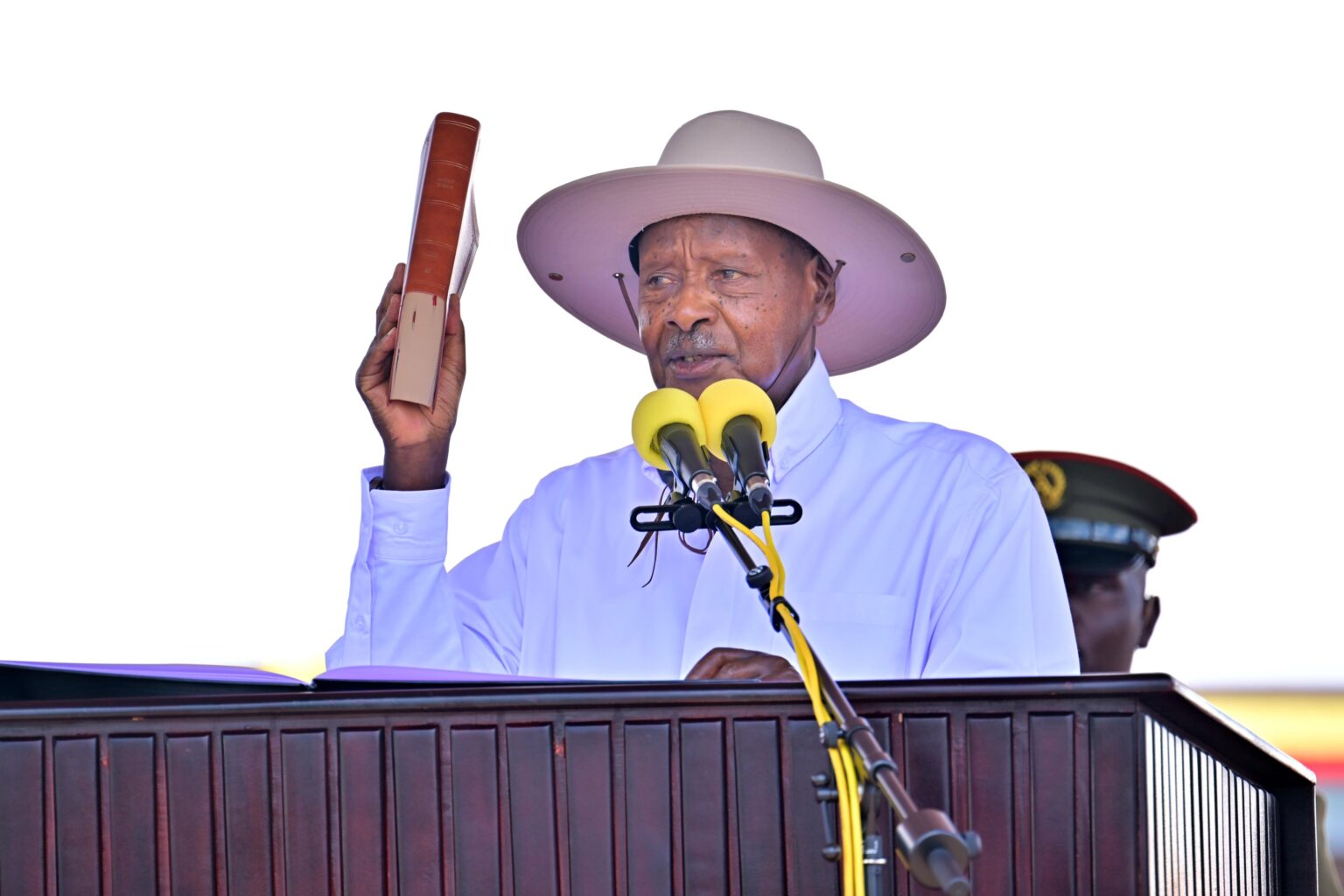
This week, Uganda’s long-serving leader Yoweri Museveni took the oath of office for a seventh consecutive presidential term, cementing a reign that now stretches across four decades. The 81-year-old secured over 70% of ballots cast in January’s election, though the poll was marred by reports of violence and vote-rigging. Thousands of citizens and fellow African heads of state gathered at Kampala’s Kololo Ceremonial Grounds to witness the inauguration. His closest rival, musician-turned-politician Bobi Wine — who garnered roughly a quarter of votes — has since fled to the United States after soldiers reportedly stormed his residence in the aftermath of the election.
South Africa has entered into a landmark $150 million development loan with the OPEC Fund for International Development — the first such agreement ever concluded between Pretoria and the institution. The financing is intended to support ongoing government reforms targeting chronic bottlenecks in the country’s energy generation and freight logistics sectors, both of which are seen as key to unlocking broader economic growth and reducing persistently high unemployment. The loan comes with a six-year repayment window and a two-year grace period, structured to align with South Africa’s broader strategy of diversifying its international financing sources.
The Republic of Congo has formally approached the International Monetary Fund, requesting the opening of negotiations toward a new financial support programme. An IMF technical team is expected to travel to Brazzaville within weeks to begin scoping discussions. The oil-dependent Central African nation faces significant economic headwinds, carrying a debt load exceeding 90% of its gross domestic product while remaining highly exposed to swings in global crude prices. This request comes approximately one year after Brazzaville concluded its previous three-year IMF programme, under which the Fund disbursed roughly $430 million in support.
The Moroccan government has announced a $2 billion supplementary allocation to its 2026 national budget, designed to shield citizens and businesses from the economic ripple effects of the ongoing Middle East conflict. Morocco finds itself particularly exposed to global energy market disruptions, as it relies almost entirely on imported oil, gas, and coal and possesses no domestic refining infrastructure. The additional funds are intended to sustain government subsidies that keep household fuel, electricity, and public transport costs from spiralling, thereby protecting the purchasing power of ordinary Moroccans in an increasingly volatile global environment.
Egypt has signed a major financing agreement worth $1.5 billion with the International Islamic Trade Finance Corporation (ITFC) to bolster its food supply and energy sectors amid mounting global economic pressures. Of the total package, $700 million is earmarked for Egypt’s commodity supply authority to fund essential food imports, while the remaining $800 million will flow to the national petroleum corporation to shore up energy supplies. The deal deepens an 18-year partnership between Cairo and the ITFC, which has cumulatively channelled more than $24 billion into Egypt across food security, energy, and small business development since 2008.
Ghana’s government has authorised the emergency repatriation of 300 of its nationals currently in South Africa, following a fresh wave of violent xenophobic attacks directed at migrants from other African countries. Foreign Minister Samuel Okudzeto Ablakwa confirmed the move, noting that the affected citizens had already registered with the Ghanaian High Commission in Pretoria seeking protection. Beyond the evacuation, Accra has escalated the matter diplomatically, formally requesting that the African Union place the recurring violence against African migrants in South Africa on the agenda of its upcoming mid-year coordination summit in Cairo.
A government investigation into Cameroon’s artisanal gold sector has uncovered a growing network of over 200 unlicensed mining operations, concentrated in the country’s eastern and Adamawa regions, with foreign nationals — predominantly Chinese — running the vast majority of the identified firms. The probe was prompted by glaring inconsistencies between Cameroon’s official gold export records and the volumes reported as received by trading partners, notably the UAE. While Cameroon declared exporting barely 22 kilograms of gold in 2023, destination countries logged imports of more than 15 tonnes from Cameroon — a gap of nearly 700 times the official figure. Authorities have ordered an immediate halt to all operations, though no criminal penalties have yet been announced.
Nigerian President Bola Tinubu and Rwandan President Paul Kagame held high-level discussions on the sidelines of the Africa CEO Forum in Kigali, agreeing to breathe new life into a bilateral cooperation framework that has largely remained dormant since its inception in 2021. The Joint Permanent Ministerial Commission, the primary vehicle for structured engagement between both nations, is to be revived, with Nigeria set to host the next round of talks. Tinubu also signalled Abuja’s willingness to extend reciprocal visa-free access to Rwandan citizens, mirroring an existing Rwandan policy toward Nigerians. Additional discussions touched on pending agreements covering tourism, anti-drug cooperation, and advancing trade under the African Continental Free Trade Area framework, with aviation links through RwandAir also explored.
French President Emmanuel Macron used the Africa Forward summit — held in Nairobi and marking France’s first major African gathering in an English-speaking country — to unveil a €23 billion ($27 billion) investment package for the continent. The funding pool draws on €14 billion from French public and private sector entities and €9 billion from African investors, with priority sectors including clean energy, agriculture, and artificial intelligence. Macron projected that the resulting economic activity would generate 250,000 jobs on both sides. Co-hosting the summit with Kenyan President William Ruto, Macron framed the initiative as a shift toward a genuine partnership of equals, even as France works to reassert its continental influence following the loss of its military and diplomatic footing across much of West Africa.
A fresh Ebola outbreak has been confirmed in the Democratic Republic of Congo’s remote Ituri province, with health authorities recording nearly 250 suspected infections and 65 fatalities. Laboratory analysis of collected samples points to a strain distinct from the commonly known Zaire Ebola virus, adding complexity to containment efforts. The outbreak has already crossed borders, with Uganda reporting a fatality linked to an imported case from Congo. Africa CDC has convened an emergency coordination session bringing together health officials from DRC, Uganda, South Sudan, and global partners including the World Health Organization to coordinate an urgent response.