For some years now, the Northern Nigeria faces a daunting array of insecurity issues that are deeply rooted in socio-economic, political, ethnic, and religious tensions. At the core of Northern Nigeria’s insecurity is the pervasive issue of banditry, which has significantly evolved from its historical origins. Initially integrated into the societal structure, banditry has now transformed, becoming more violent amidst the advent of modern weaponry and the crumbling of traditional social structures.
Boko Haram, the sect officially known as Jama’at Ahl al-Sunna li-Da’wa wal-Jihad (JAS), was formed in 2002 in northeast Nigeria. Seven years later, its founder, Mohammed Yusuf, was killed by security agencies, leading to an onslaught by the group that has killed thousands and displaced more than 2.5 million people in a never-ending conflict. While local authorities in northwest Nigeria have been raising the alarm about the operations of Ansaru, one of its former factions, alongside bandits in Kaduna, which sits as a connector between the region and central Nigeria.
Established in 2011, Ansaru was led initially by commanders who disagreed with the late Abubakar Shekau’s ultra-takfir – an approach that justifies the killings of other Muslims deemed to be unbelievers. The group reappeared in 2019 as an al-Qaeda franchise in Nigeria after years underground, absorbing former JAS fighters who fled the northeast due to offensives in the Lake Chad area by a multinational force comprising Cameroon, Chad, Niger and Nigeria.
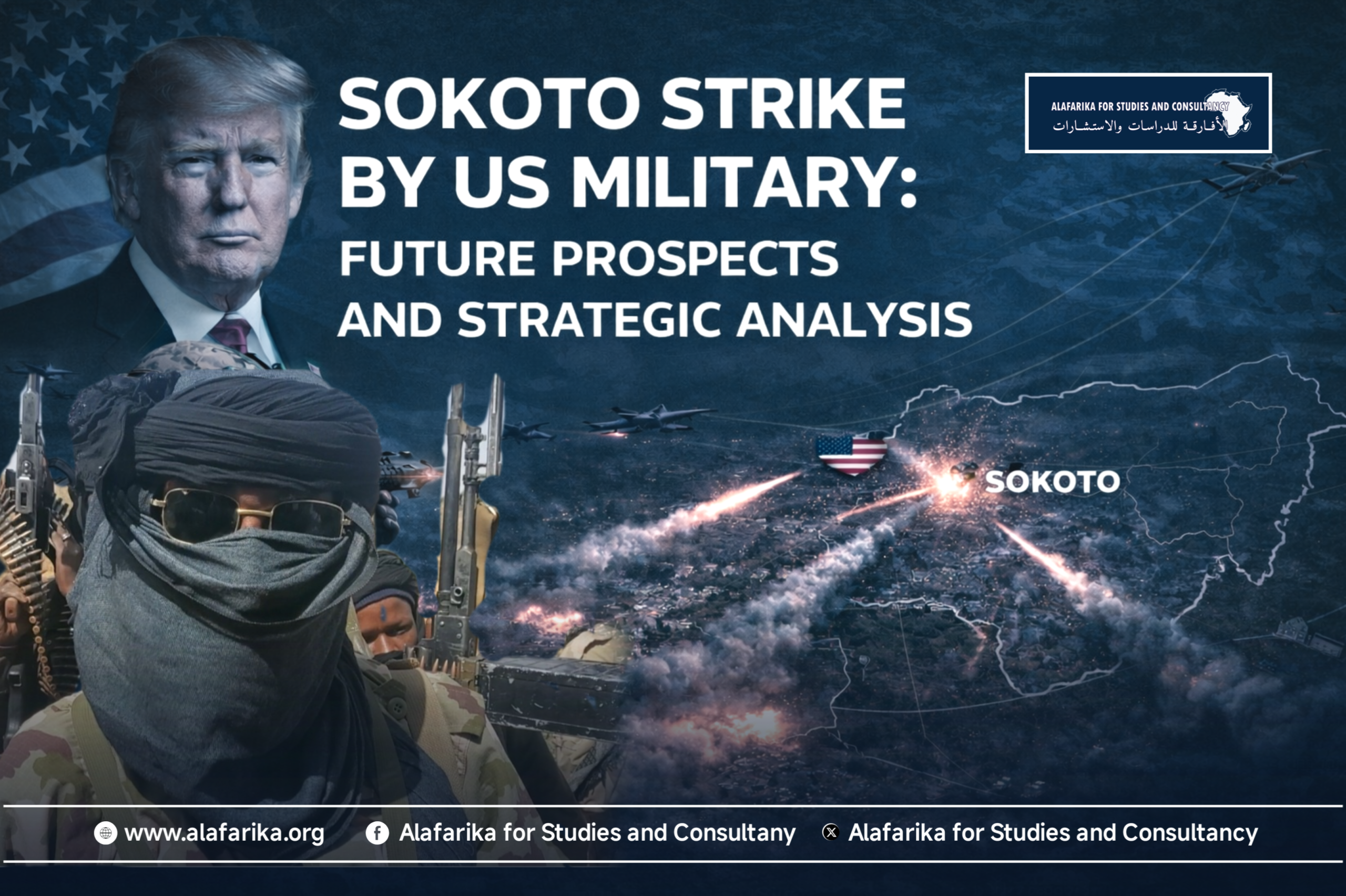
At the direction of the President of the United States and the Secretary of War, and in coordination with Nigerian authorities, U.S. Africa Command conducted strikes against ISIS terrorists in Nigeria on Dec. 25, 2025, in Sokoto State, a statement said. Nothing that the command’s initial assessment is that multiple ISIS terrorists were killed in the ISIS camps. “U.S. Africa Command is working with Nigerian and regional partners to increase counterterrorism cooperation efforts related to on-going violence and threats against innocent lives,” said Gen. Dagvin Anderson, commander, U.S. Africa Command. “Our goal is to protect Americans and to disrupt violent extremist organizations wherever they are.”
Why U.S. Military Airstrikes in Sokoto?
President Donald Trump has said the US launched a “powerful and deadly strike” against the Islamic State (IS) group in north-western Nigeria. The US leader described IS as ” terrorist scum”, accusing the group of “targeting and viciously killing, primarily, innocent Christians”. Trump said the US military “executed numerous perfect strikes”, while the US Africa Command (Africom) later reported that Thursday’s attack was carried out in co-ordination with Nigeria in the Sokoto state.
The US strikes come after months of allegations by Christian evangelical groups and senior Republicans that Christians were being targeted in widespread violence in Nigeria. The US president has repeatedly made references to what he said was the killing of innocent Christians in Nigeria. In late October, Trump accused Nigeria of religious freedom violations, saying that Christianity faces an “existential threat” in the West African nation. Later, he designated the nation as a “Country of Particular Concern” under the International Religious Freedom Act, as per CNN.
However, groups monitoring violence say there is no evidence to suggest that Christians are being killed more than Muslims in Nigeria, which is roughly evenly divided between followers of the two religions. In addition, an adviser to Nigerian President Bola Tinubu told the BBC at the time that any military action against the jihadist groups should be carried out together. Daniel Bwala said Nigeria would welcome US help in tackling the Islamist insurgents but noted that it was a “sovereign” country. He also said the jihadists were not targeting members of a particular religion and that they had killed people from all faiths, or none. Previously, President Tinubu has insisted there is religious tolerance in the country and said the security challenges were affecting people “across faiths and regions”.
What is the position of the Nigerian Government?
The Government of Nigeria through Brigadier General Samaila Mohammed Uba has confirmed that the US strike was conducted with the approval of Nigerian authorities and following intelligence-sharing on the part of the government. “The strike followed credible intelligence and careful operational planning aimed at degrading the capability of the targeted elements while minimising collateral damage,” Uba, who serves as director of Defence Information, said in a statement quoted by local news outlet The Guardian. “The operation underscores the resolve of the Federal Government of Nigeria, working with strategic partners, to confront transnational terrorism and prevent foreign fighters from establishing or expanding footholds within Nigeria’s borders.”
Equally, on Friday morning, the Nigerian foreign ministry said in a statement that the country’s authorities “remain engaged in structured security co-operation with international partners, including the United States of America, in addressing the persistent threat of terrorist and violent extremism. “This has led to precision hits on terrorist targets in Nigeria by air strikes in the North West,” the statement said.
What are the Challenges?
Since the early years of the crisis, Nigeria’s international partners have cautioned that Boko Haram is unlikely to be defeated on the battlefield alone. They have stressed the need for a multidimensional response that tackles the drivers of insecurity in the region, including chronic weaknesses in service delivery, corrupt governance, and environmental degradation. However, the perception of limited leverage over Nigerian counterparts, restricted access to the country’s northeast, and a response to the crisis shaped by the U.S.-led Global War on Terror limited donors’ focus on these governance dimensions on the ground. In practise, international assistance came late and donors struggled to identify viable national counterparts for stabilization programs. As a result, their efforts centered on supporting regional military efforts and responding to the large-scale humanitarian crisis.
Meanwhile, the development underscores a growing security partnership between Nigeria and the United States, as both countries confront the persistent threat posed by extremist groups expanding across parts of the Sahel and North-West Nigeria. It also comes against the backdrop of previous warnings by President Trump, who has repeatedly vowed swift and decisive military action against I.S and other terrorist organisations wherever they operate. This latest strike appears to signal that those threats are now being translated into concrete action on the ground.
Correspondingly, the Thursday’s U.S. strikes were seen as crucial help for Nigeria’s security forces, which are often overstretched and outgunned as they fight multiple security crises across different regions. In states like Sokoto, the military often carries out airstrikes targeting militant hideouts and Nigeria has embarked on mass recruitment of security forces. But analysts say military operations targeting the gangs are not usually sustained and the militants easily move on motorcycles to new locations through vast forests that connect several states in the north. They also often use hostages — including schoolchildren — as cover, making airstrikes difficult.
Aneliese Bernard, a former State Department adviser who has a private consulting firm working in West Africa, said the part of northwest Nigeria, which US strikes targeted, are mostly affected by violence from bandits, who work with the Islamic State-Sahel Province and al-Qaeda affiliate Jama’at Nusrat al-Islam wal-Muslimin (JNIM), according to The Washington Post. Bernard indicates that evidence to support a specific Islamic State cell in that area is “dubious at best.” “This feels incredibly reactionary, and it doesn’t feel like it will do anything,” she said of the US strikes. “There is very little evidence that targeted airstrikes reduce armed group activity.”
An Islamic cleric, Sheikh Ahmad Gumi, has alleged that U.S air strikes against terrorists in Nigeria could worsen the country’s current security challenges. Gumi added that the strikes by AFRICOM could turn Nigeria into a theatre of war as anti-U.S. forces may make their way into the country. According to PM News, also said the airstrike by the U.S. under the guise of protecting Christians could deepen religious divisions within the country. He also insisted that “terrorists do not truly fight terrorists” while arguing that such interventions often result in civilian casualties and concealed political interests. Meanwhile, Gumi has been at the forefront of calls by the Nigerian government to negotiate with bandits and terrorists to drop their criminal activities instead of using military might against them.
In conclusion, the American action in Sokoto is not just a tactical decision but also a geopolitical message. It highlights the United States’ continuing, yet complex, engagement in African security. As for Nigeria, the challenge lies in harmonising its calculated partnerships while safeguarding authority and internal legality. Going forward, Abuja will need to assert a clearer security policy and diplomatic position to pilot an increasingly fragmented and competitive regional order.