- What the Summit is all about
- Key Outcomes of the Summit
- Perspectives On the Summit
- Does the summit represent a transformative shift in Africa-France relations?
- What Critics said about the Summit
- The Counter-Summit: Africa’s Dissenting Voice
- Why France is Pivoting towards East Africa
- What Comes Next?
- Conclusion
For decades, France’s relationship with the African continent was shaped by a heavy, dominant footprint for its former colonies, most particularly in the Sahel region. It adopted a controversial system of influence over its former colonies known as “Françafrique.” The system involves diplomatic and political influence, military presence, currency control, and linguistic ties. However, from 2020 till date, that system continued to crumble widely, with the rise of anti-French sentiments across the Sahel.
Recently, the world witnessed an occurrence that would have been almost difficult to imagine a decade ago: the Africa Forward Summit, co-hosted by France and Kenya, an English-speaking country. This signifies France’s utmost interest in reshaping its relationship with Africa, pivoting from the traditional system of influence towards building economic ties with mutual benefits and sovereign equality as the pillars of a new relationship.
The 2026 Africa Forward Summit, formally titled “Africa–France Partnerships for Innovation and Growth,” appears to be France’s most ambitious diplomatic engagement with the African continent in years, as French President Macron made an announcement of €23 billion in business investments, pledging 250,000 jobs across France and Africa.
This analysis delves into this development and seeks to answer whether this summit represents a genuine partnership of equals or is simply a more polished version of a Françafrique-influenced relationship, rebranded in the language of innovation, partnership, and equality.
What the Summit is all about
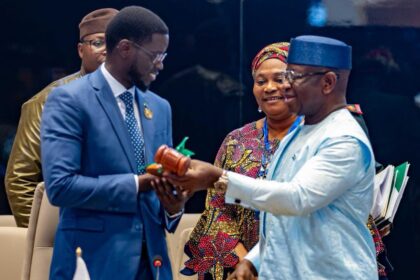
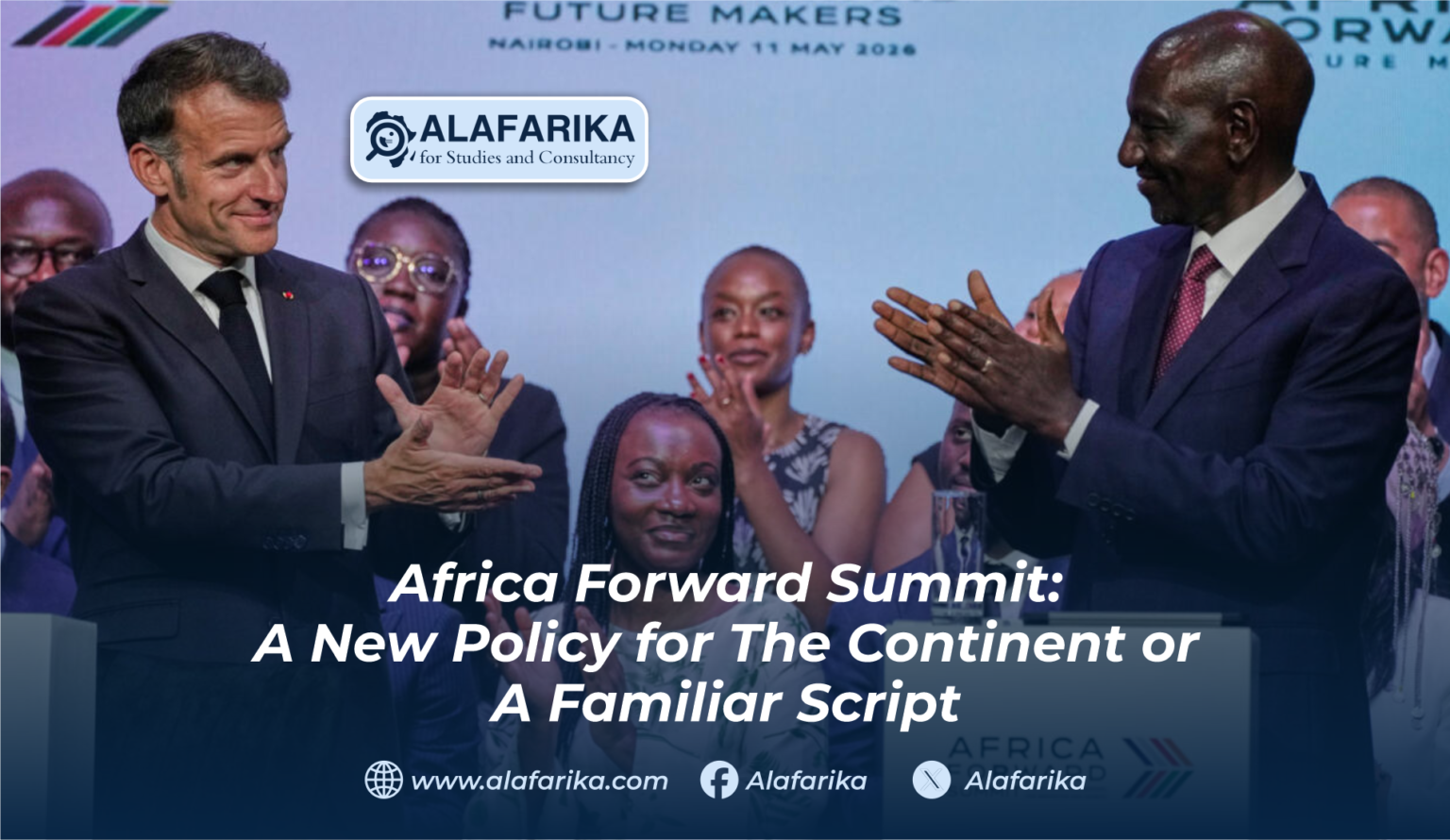
The Africa Forward Summit 2026 was a high-level gathering of heads of state and government, business leaders, and innovators who convened in Nairobi, Kenya, on May 11–12, 2026, under the theme “Africa – France Partnerships for Innovation and Growth.” The summit was co-hosted by Kenyan President William Ruto and French President Emmanuel Macron. It brought together over 1,500 economic stakeholders alongside continental institutions, private sector CEOs, multilateral leaders, and civil society representatives.
The summit specifically aims at forging a new Africa-France partnership built on equal ground. The agenda of the summit notably focused on consequential issues facing the African continent, including energy transition and green industrialization, AI and digital technologies, blue economy, sustainable agriculture, peace and security, global financing reforms, and resilient health systems.
The first day, themed “Inspire and Connect,” was anchored by a business forum co-organised by Bpifrance, Business France, and Proparco, and held at the University of Nairobi. It saw the presence of more than 2,000 African leaders, investors, and decision-makers. Designed to highlight the breadth of France-Africa economic partnerships and promote French and African private sectors. Special sessions from the day focused on young people and job-creating sectors to foster entrepreneurship and innovation.
On the second day of the summit, the setting shifted to the Kenyatta International Convention Centre (KICC) for the high-level political discussions. Participants convened for the opening ceremony, followed by a dedicated plenary on peace and security. Also, four thematic roundtables focused on finance development, peace, artificial intelligence and major global issues. Discussions centered on youth employment, sovereignty, and competitiveness. The closing remarks were delivered jointly by both co-hosts—the presidents of France and Kenya—bringing the two-day summit to a formal and successful conclusion.
Key Outcomes of the Summit
The Africa Forward Summit concluded with a series of outcomes that includes high-stakes financial commitments, a landmark declaration, and a fundamental shift in diplomatic strategy. It can be arguably classified as the most substantive France-Africa engagement in over a decade. Explained below are the major key outcomes:
1- Investment Commitments: The most significant outcome of the summit was a massive €23 billion investment, aimed at stimulating economic growth, targeting energy transition, digital infrastructure, and agriculture. To co-fund these initiatives, €14 billion will come from French public and private entities, while €9 billion will come from African investors, as announced by President Macron. This huge commitment is projected to generate 250,000 jobs across France and Africa. The adopted financing architecture of the commitment explains that development in Africa can no longer be achieved through receiving development assistance only but through adopting a new partnership model built upon co-investment and private capital mobilization.
2- Financial Architecture & Trade: The summit prioritized closing the finance gap that often stalls African development in trade and finance, achieving major landmarks in this regard. A French development finance institution known as Proparco signed deals worth over €500 million, including a €300 million protocol with Ecobank to support agricultural value chains. Another major milestone that was reached in this context is the world-first currency deal, in which a €200 million cross-currency transaction (Euro/CFA) was completed with the West African Development Bank, aimed at lowering exchange rate risks for investors. Also, the summit birthed an Africa AgriTrade Coalition, which saw the coming together of 16 financial institutions to address Africa’s $50 billion agricultural trade finance gap.
3- Strategic Bilateral Agreements: Kenya, being the host nation, signed eleven major agreements with France. These agreements cover energy, infrastructure, transport, healthcare, agriculture, artificial intelligence, and climate resilience. The major projects that these agreements span include the modernization of signaling for the Nairobi U-20 commuter train and a €700 million investment to modernize the port of Mombasa by French maritime giant CMA CGM. Also, additional deals on AI partnerships, tea exports, renovation of the Masinga Dam, and large-scale deployment of fiber-optic networks along a national digital highway all make up the list of bilateral commitments between the two countries. Some other countries successfully signed bilateral agreements in the summit; Nigeria welcomed a major deal signed between the French group Accor and the Nigerian Shoreline Group to develop Nigeria’s first national hotel platform, while South Africa’s vaccine producer Biovac finalized with France a $20 million loan.
4- The Nairobi Declaration: otherwise known as the Africa Forward Declaration, is a multi-pillar roadmap signed by all heads of state and government in attendance. In the declaration, leaders vowed to work towards Africa’s transition towards value addition, manufacturing, and sustainable production systems, moving Africa beyond the mere supplying of raw materials. It also affirmed partnerships based on mutual respect, co-development, and shared responsibility. On natural resources, the declaration committed governments to respect national sovereignty over natural resources and promote sustainable processing of Africa’s critical minerals. As regards peace and security, the declaration backed the implementation of UN Security Council Resolution 2719 to ensure “predictable and sustainable funding” for AU-led peace operations. The declaration further outlined plans to support agro-industrialization, pushed for stronger climate financing, and called for massive investments in green energy transition, broadband connectivity, regional data centers, cloud infrastructure, and AI systems.
5- Diplomatic outcomes: France formally invited Kenya to attend the upcoming G7 Summit, set to be held in Paris on June 15-17, 2026, signifying Nairobi’s growing position as a continental diplomatic capital. Another significant diplomatic outcome was the launching of a new fast-track visa system for African entrepreneurs and graduates heading to France. It will grant eligible African tech entrepreneurs and STEM graduates a 48-hour priority visa appointment at French consulates, with residence permits processed on the ANEF platform in under 30 days. Kenyan participants in the summit are the first to benefit, while a roll-out to 10 additional countries is planned by year-end.
Perspectives On the Summit
The Africa Forward Summit did not conclude in unanimity, as it was contested and criticized at various levels. While official reports from the summit emerged with the language of co-investment, strategic partnership, and shared prosperity, a very different conversation was unfolding outside the venues—in the streets, in civil society halls, and on social media. To understand the true significance of the summit, one has to critically analyze the positive and negative narratives that surround the credibility of the summit to evolve into a transformative step in Africa-France relations.
Does the summit represent a transformative shift in Africa-France relations?
For Kenya, the symbolism of the summit alone carries weight. In the past, the summit has traditionally been held in French-speaking countries. Kenya becomes the first Anglophone country to host it. That geographic and linguistic pivot is not incidental. It signals, at minimum, that France acknowledges the limits of its Francophone-only network and is reaching toward a broader African engagement. From the moment Macron landed in Nairobi, President Ruto set the diplomatic tone, saying Nairobi seeks to nurture a wide array of relationships and is “neither looking East nor West” but “looking forward.” It can be deduced from this that Kenya positioned itself not as a proxy for French interests but as a sovereign actor charting its own course in an increasingly competitive geopolitical environment.
For the business community, the summit birthed a concrete call to action. Africa House at Davos, representing African business thinking at the highest global forums, issued a three-point call to action for 2026, namely, design with Africa, not for Africa; align capital with African priorities, not imported templates; and move from presence to partnership.
Sandra Kassab of AFD Group echoed what entrepreneurs across the continent were demanding in her remarks: “This is a continent where the economic fabric relies heavily on the dynamism of individual entrepreneurs. Addressing issues of inclusion, support for SMEs, and entrepreneurship is essential to meet the challenges of economic prosperity and inclusion.”
The framing of France’s intention and interest in the summit, as expressed by President Macron—though contested—was also notably candid about the reset underway. He stated in the summit’s official welcome message, “Since 2017, we have been working on overhauling the Africa–France relationship. We wish to build partnerships on an equal footing, founded on shared interests and tangible results.”
Also, a French diplomat who was reportedly quoted in the Kenyan press went further, acknowledging history while pressing forward: “It is true that we have a past, but over a couple of years, especially under the leadership of the current president, we have made bold steps in looking into our past objectively. We are totally open to criticism, but we want to open a new partnership that is mutually beneficial. An Africa that prospers is in the interest of France.”
What Critics said about the Summit
Critics have pointed at contradictory signals to the summit’s potential of transforming the Africa-France relations, and the most damaging one came from President Macron himself.
On the first day of the summit, during a session meant to showcase African artists and young entrepreneurs, Macron stormed the stage to rebuke audience members for what he called a “total lack of respect,” accusing them of disrupting speakers during a presentation by artists and young entrepreneurs. The moment spread rapidly on social media and sparked a deeper conversation about whether France’s commitment to “equal partnership” extended beyond the talking points into actualizing it.
Notably, he had faced backlash ahead of the summit for claiming at a news conference alongside Kenyan President William Ruto that “we are the true Pan-Africanists.” The claim from the president of the country that invented Françafrique struck many observers as tone-deaf. Farida Nabourema, a Togolese human rights activist, published an open letter in direct response: “Pan-Africanism is not a brand, Mr. Macron, neither is it a diplomatic posture. It is a political philosophy that said no to everything France spent three centuries saying yes to: slavery, colonialism, and neocolonialism.”
Geopolitical analysts were more measured but equally criticized the statement. Beverly Ochieng, a senior analyst at geopolitical risk consultancy Control Risks, said Macron is trying to distance France from its diplomatic and military setbacks in West Africa by turning to the east of the continent, signaling that its strategic priorities now follow where it finds good will. She said Macron’s remarks were raising questions about whether France’s renewed engagement with Africa represented a genuine equal partnership or merely convenient rhetoric.
The Counter-Summit: Africa’s Dissenting Voice
Perhaps the most significant indicator of the summit’s contested nature was that it ran simultaneously with a parallel gathering. A section of civil society and pan-African lobby groups organized a counter-summit dubbed the Pan-Africanism Summit against Imperialism (PASAI) 2026 in Nairobi, opposing what they termed France repackaging neo-colonial influence under the guise of economic cooperation and development partnerships.
The organizers of PASAI were unsparing in their framing: “The France–Africa Summit is not a gesture of goodwill nor a platform for equal partnership. It is a rebranded offensive of imperialist decolonization, disguised behind the mask of environmental diplomacy and financial reform. This summit emerges in the wake of France’s military and diplomatic retreat from West Africa, where anti-imperialist uprisings expelled colonial troops from Mali, Burkina Faso, and Niger. French imperialism is now turning to East Africa, with Kenya as its principal gateway.”
Why France is Pivoting towards East Africa
From all indications, it is evident that France is operating from a position of weakness in Africa, not strength. Through the summit, its leadership attempted a massive strategic pivot, following the overwhelming diplomatic rejection in West Africa. Having lost significant ground to Russia’s Wagner Group and Chinese economic inroads across the Sahel, needs Africa far more visibly now than it did a decade ago.
Choosing Kenya as the specific location of the 2026 Africa Forward Summit was highly intentional and symbolic. It comes amidst efforts to rebrand French diplomacy, presenting the country as a modern partner focusing on artificial intelligence, green energy, and sustainable finance, while hoping to bypass the toxic, lingering legacy of its former colonies.
What Comes Next?
The Africa Forward Summit has concluded, but its real test has only just begun. History is filled with records of summits in Africa that initially generated ambitious declarations and then quietly faded into institutional memory. The question now is whether the Nairobi gathering will follows a different trajectory.
The true success of the Nairobi declaration will undoubtedly depend on implementation. Will the investment commitments materialize? Will technology transfer happen meaningfully? Will African businesses and innovators gain real opportunities within these partnerships? Will reforms to global finance move beyond rhetoric? These are the questions that matter most.
African leaders themselves have begun to frame the conversation in exactly these terms. President Ruto’s words at the summit aimed at this direction: “We should no longer think in terms of aid and loans but rather in terms of investment and what Africa has to offer.” The times before us demand stronger cooperation, renewed multilateralism, and partnerships grounded not on hierarchy but in sovereign equality, mutual respect, and shared responsibility.”
Conclusion
The Africa Forward Summit 2026 is genuinely unprecedented in several respects. It is the first France-Africa summit held in an Anglophone country. It is the first to be structured around co-investment rather than aid. It brought together 32 heads of state, over 1,500 business leaders, and a financial commitment of €23 billion.
Africa’s relationship with Europe is evolving into one shaped less by colonial or linguistic history and more by enterprise, innovation, and mutual economic interest. Africa enters this new era with demographic strength, abundant resources, growing policy confidence, and a clear understanding of its place in the global economy. The continent is no longer speaking as a passive recipient of development assistance. It is speaking as a partner, an investor, and a builder of shared prosperity.
Africa has heard the promises before times without number. What is different this time is that Africa is now confident enough, connected enough, and strategically important enough to hold the world accountable for them.