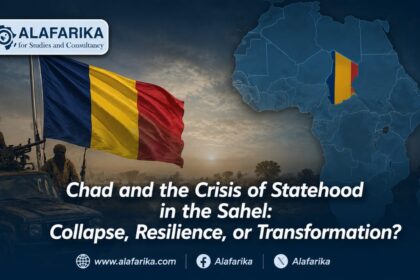
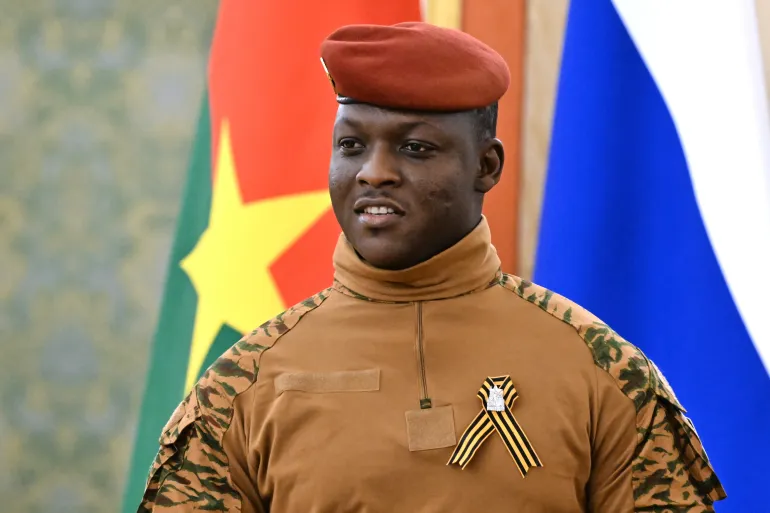
Burkina Faso’s military leader, Ibrahim Traoré, rejected the adoption of democracy, despite having spent nearly four years on government since his coup, claiming democracy has failed to protect civilians amid ongoing violence. He announced the extension of military rule and the ban on political parties while dissolving the electoral commission. The transition to civilian governance, initially set for mid-2024, has been delayed by five years. The junta argues that centralized control is needed to manage the jihadist violence plaguing the country. The United Nations has urged a reversal of these bans and a restoration of civic freedoms to avoid further destabilization.
Congo has formally declared the end of a two-year mpox outbreak that resulted in over 2,200 suspected deaths. Health Minister Roger Kamba announced that the situation is no longer a national emergency. The outbreak, which began in 2024, affected neighboring countries and led to the World Health Organization’s global health emergency declaration, which was lifted in September. The Africa Centers for Disease Control and Prevention reported more than 161,000 suspected cases during this period, with approximately 37,000 confirmed cases.
Authorities in Madagascar have charged 13 individuals, including a general, in connection with a suspected assassination plot against interim leader Michael Randrianirina, who took office after protests led to the ousting of former president Andry Rajoelina. State prosecutor Narindra Navalona Rakotoniaina confirmed that 11 suspects are in detention, while arrest warrants have been issued for additional linked individuals. The arrested army general named Colonel Patrick Rakotomamonjy is implicated as a key organizer of the plot, having been previously dismissed from a director-level position at the presidency. Investigators found WhatsApp messages and evidence of financial transactions linked to the plot.
At least 13 civilians were killed and 57 injured due to an ammunition explosion caused by an electrical short circuit at a military base in Bujumbura, Burundi. The incident occurred at the Burundi National Defense Force’s main ammunition depot in a densely populated area, damaging houses and vehicles and destroying military equipment. Firefighting efforts were also hampered by a water shortage. The army confirmed three soldiers were among the wounded but did not report military fatalities.
South Africa has deployed 2,200 soldiers to aid police combatting violent crimes, particularly illicit mining and gang activities, in five provinces. This step, which was earlier announced by President Cyril Ramaphosa, is seen as a longterm initiative that aims to restore order in crime-afflicted regions, although critics doubt the efficacy of military involvement in civilian policing. With the country facing one of the highest murder rates globally, recent statistics reveal approximately 71 daily murders. The initial deployment occurred in Gauteng province, specifically in gang-hit suburbs like Eldorado Park, followed by further operations in other provinces starting April 1.
Cameroon’s parliament is set to approve a new constitutional reform bill to create a vice president position. The draft bill, submitted on Thursday, aims to amend key constitutional provisions and has prompted President Paul Biya to call an urgent congress of the National Assembly and Senate for rapid approval. Proponents argue the reform will enhance institutional stability and governance, while critics, including opposition figure Ndam Njoya Hermine Patricia Tomaino, question its legitimacy due to concerns over extended parliamentary mandates and call for broader consultation. The vice president would be appointed and assume presidential duties in the event of a vacancy, raising fears about potential shifts in the political power balance in Cameroon.
Russian President Vladimir Putin held discussions with Egypt’s foreign minister, Badr Abdelatty, this week, addressing the Middle East conflict and economic collaboration. Putin expressed Russia’s commitment to stabilizing the region and enhancing food supply partnerships, particularly in grain. Abdelatty acknowledged Russia’s support for Egypt’s energy and food security and expressed intentions for Egypt to participate in the upcoming Russia–Africa Summit, hoping for a reduction in regional tensions. This meeting reflects Moscow’s strategy to strengthen relations with significant partners in the Middle East and Africa amidst ongoing conflicts.
Eight individuals from various African countries have been deported to Uganda from the United States this week, marking the first transfer under a migration agreement established last year. This arrangement designates Uganda as a safe third country for migrants unable to return home due to persecution. The deportations have faced criticism from the Uganda Law Society, which described the process as illegal and degrading, and intends to challenge it in court. Although the Uganda foreign ministry refrained from providing extensive details about the deportees, it reaffirmed Uganda’s commitment to offering sanctuary and treating migrants with dignity.
Mohamed Bazoum, Niger’s ousted president, is still detained as his official term ends this week, raising uncertainty about his future. Bazoum, who was elected in 2021, has been detained since a July 2023 coup led by General Abdourahamane Tiani, confined in the presidential palace. Despite his ousting, Bazoum refuses to resign, and his lawyers argue that his mandate has been interrupted, suggesting that his time in detention should not count against his presidency. The legal team insists that if he were to return to power, his detention period should be excluded from his term.
Algeria declared three days of national mourning following the death of former president Liamine Zeroual at 84. Zeroual, born on July 3, 1941, in Batna, served as president from 1994 to 1999 and was previously involved in the National Liberation Army during Algeria’s struggle for independence. He organized the country’s first multi-party presidential election in 1995, winning decisively. However, he prematurely ended his term in 1998, paving the way for Abdelaziz Bouteflika’s long presidency. Zeroual passed away in a military hospital in Algiers after a serious illness. In his honor, flags are being flown at half-mast.