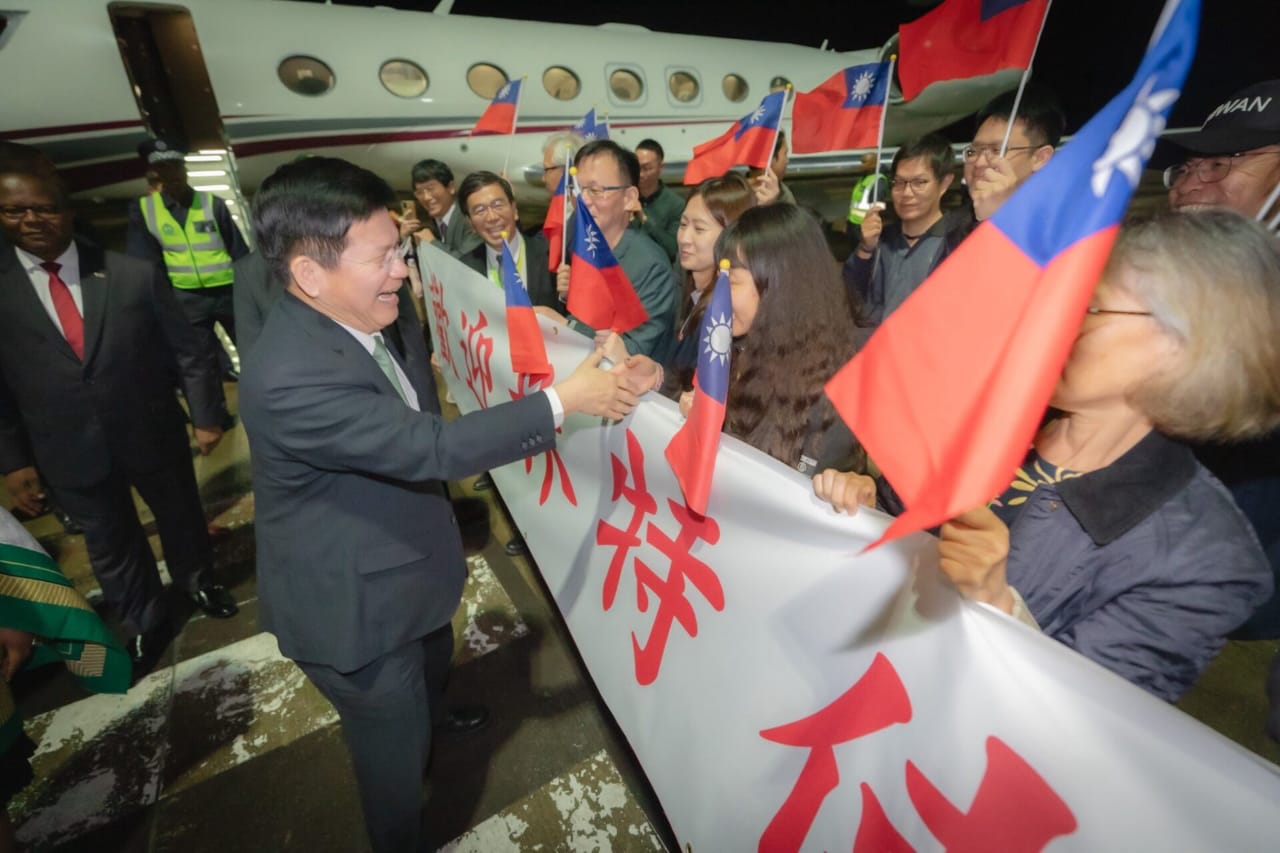
This week, Taiwanese Foreign Minister Lin Chia-lung arrived in Eswatini vowing Taipei would not be stopped by “authoritarian forces” after Taiwan accused China of pressuring the Seychelles, Mauritius, and Madagascar to revoke overflight permits for President Lai Ching-te’s aircraft. It was the first time a Taiwanese president cancelled an entire foreign trip due to denied airspace access. Lin traveled to Eswatini as Lai’s special envoy, with China denying involvement but praising the three nations for blocking the flight.
Gabon’s finance ministry signed a $150 million program with the World Bank, bringing the institution’s total commitment for the country to $600 million. A special commission is set to conduct a comprehensive audit of the country’s public debt, covering the 2016–2023 period of the previous administration. The audit follows concerns about failed project execution, missing treasury transfers, and breaches of budgetary rules. Gabon has also formally requested an IMF program to help stabilize its finances.
Mali’s junta leader Assimi Goïta made his first public appearance since recent coordinated insurgent attacks last weekend, vowing in a televised address to fully neutralize those responsible. West Africa’s al-Qaeda affiliate and a Tuareg separatist group struck Mali’s main army base and areas near Bamako’s airport while also pushing Russian-backed forces out of the strategic northern town of Kidal. Mali’s defense minister was among those killed. Goita met Russia’s ambassador, who reaffirmed Moscow’s support in the fight against terrorism.
The International Monetary Fund (IMF) reached a staff-level agreement with Ivory Coast following a mission from April 22–30, covering the sixth and final review of its EFF/ECF arrangements and the fifth review of its RSF arrangement. Upon Executive Board approval, Ivory Coast would access approximately $843.9 million. The IMF praised strong program performance, noting the Ivorian economy remains resilient despite global uncertainty, with growth projected at 6% in 2026.
Guinea witnessed a 25% surge in bauxite exports in the first quarter of 2026, reaching 60.9 million tons, driven largely by Chinese demand. The world’s largest bauxite exporter is now planning export curbs to support prices and protect smaller miners squeezed by weak margins. Prices have fallen to four-year lows of $32–$38 per ton. More than 70% of Guinea’s bauxite goes to China, making it critical to Beijing’s aluminum supply chain.
China’s Zhejiang Huayou Cobalt shipped Africa’s first consignment of lithium sulfate from its Zimbabwe mine, two months after the country halted exports of lithium concentrates over alleged malpractice. The shipment came from Huayou’s $400 million processing plant, which has the capacity to produce 50,000 metric tons of lithium sulfate annually for use in battery manufacturing. Zimbabwe, Africa’s top lithium producer, has been pushing miners to process minerals locally rather than exporting raw concentrates.
Sierra Leone signed a petroleum license agreement with Nigeria’s Marginal Energy Limited, granting offshore exploration and production rights over five blocks spanning about 6,800 square kilometers. Marginal Energy committed to a seismic and drilling program exceeding $225 million in exploration spending. The deal was signed at the Invest in African Energy conference in Paris as Sierra Leone works to attract investment into its largely under-explored offshore basin.
South Sudan’s President Salva Kiir sacked his foreign minister, Semeya Kumba, and trade minister, Atong Kuol Manyang, with no explanation given. Some other senior security officials, including the head of the Internal Security Bureau, were also removed from office in a series of government reshuffles. Analysts say Kiir regularly reshuffles the government to maintain control amid armed conflict and succession speculation.
A Johannesburg court ordered Bellarmine Chatunga Mugabe, the youngest son of Zimbabwe’s late former leader, Robert Mugabe, to pay fines totaling 600,000 rand and face deportation after pleading guilty to pointing a toy gun at someone and violating immigration laws. He and co-accused Tobias Matonhodze were arrested in February following a shooting at a Johannesburg mansion where Mugabe was staying. Matonhodze, who pleaded guilty to attempted murder, was sentenced to three years in prison before also being deported.
A Ugandan court sentenced Christopher Okello Onyum to death for stabbing four toddlers aged two and three at a Kampala nursery school on April 2 in an attack that sparked public outrage. The judge rejected an insanity plea, citing the attack’s premeditated nature—evidenced by phone searches for “schools near me” and “ISIS beheading.” The fast-tracked trial was held publicly in an open-air setting. Though Uganda retains the death penalty, executions have not been carried out in roughly two decades.