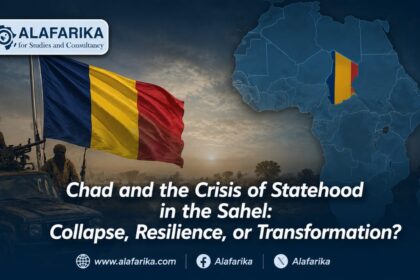

Chad concluded its first parliamentary election in 13 years, aiming to transition from military to civilian rule. Voting ended Sunday at 6:00 PM local time, with provisional results expected by January 15 and final results by January 31. The opposition boycotted the election, alleging a lack of credible oversight. With over 8 million registered voters selecting 188 legislators, the election marks a pivotal moment for the oil-exporting nation, which faces significant challenges, including insecurity from Boko Haram and strained ties with France, its former colonial ruler and long-time ally. Chad has yet to experience a free and fair power transfer since independence in 1960.
Ivory Coast announced the withdrawal of French troops this month, ending a decades-long military presence as part of a broader shift across Africa as announced by President Alassane Ouattara in an end-of-year address to the nation on Tuesday. The president attributed the decision to the modernization of the Ivorian army, with the 43rd BIMA marine infantry battalion in Abidjan to be handed over to national forces in January 2025. This follows similar moves by Mali, Burkina Faso, Niger, Senegal, and Chad, reflecting rising anti-French sentiment, especially in coup-hit nations. As France scales back its permanent troop presence, nations like Mali and Niger have moved closer to Russia, marking a shift in regional geopolitics.
Mozambique’s disputed presidential election according to report has triggered a humanitarian crisis, with nearly 3,000 people fleeing to neighboring Eswatini and Malawi amid ongoing violence. Protests have erupted following the October 9 election results, which saw the ruling Frelimo party retain power. Eswatini’s Malindza Refugee Centre, designed for 250 people, is overwhelmed, sheltering nearly 1,000 refugees. In Malawi, nearly 2,000 Mozambicans have arrived in a week, fleeing attacks and looting, often crossing the Shire River dangerously. As tensions in Mozambique persist, the refugee influx is straining resources in host nations and international aid organizations, highlighting the urgent need for support and resolution.
Morocco’s trade deficit grew by 6.5% to 275 billion dirhams ($27.2 billion) in the first 11 months of the year, as imports rose 5.7% to 689 billion dirhams, outpacing a 5.2% export increase to 413 billion dirhams according to the foreign exchange regulator on Tuesday. Energy and wheat imports fell by 5.9% and 8.7%, respectively. Automotive exports, Morocco’s top sector, climbed 6.7% to 145 billion dirhams, while phosphate exports increased 9.1% to 75.2 billion dirhams. Remittances grew by 2.8% to 108 billion dirhams, with tourism revenue up 7.2% to 104 billion dirhams. Foreign direct investment surged 30%, reaching 39.6 billion dirhams, bolstering the nation’s economic resilience.
The Islamic State (IS) group claimed responsibility on Tuesday for an attack on a military base in Somalia’s Puntland region, stating that 12 militants and two explosive-laden vehicles killed 22 Puntland soldiers and injured dozens. Somali authorities have not commented, but Puntland counter-terrorism forces reported repelling the attack, killing nine suicide bombers and injuring several soldiers near Dharjaale in the Bari region. Since being recognized in 2017, IS in Somalia has evolved from a minor threat to a key part of the global jihadist network, bolstered by foreign fighters and revenue from local business extortion, establishing itself as IS’s “nerve center” in Africa.
After 17 years of contributing to African Union peacekeeping forces in Somalia, Burundi announced it would not join the upcoming African Union Support Mission in Somalia (AUSSOM) on Sunday, citing disagreements over troop allocations with Somalia’s government. Somali Foreign Minister Ahmed Moalim Fiqi praised Burundi’s pivotal role in stabilizing Somalia and combating al-Shabaab. Burundi’s withdrawal follows the ATMIS drawdown, with 734 troops returning home in December 2024. AUSSOM, authorized by the UN to replace ATMIS, will deploy 12,626 personnel for counterterrorism and stabilization. However, Ethiopia’s participation remains uncertain due to territorial disputes and mistrust, complicating Somalia’s efforts to maintain security momentum.
Zimbabwe’s President Emmerson Mnangagwa this week signed a law abolishing the death penalty, marking a significant step for human rights in the region. Amnesty International praised the move but urged the removal of provisions allowing reinstatement during a state of emergency. Zimbabwe’s courts had continued issuing death sentences, despite the last execution in 2005. Around 60 death row inmates will be re-sentenced, considering their crimes and time served. Justice Minister Ziyambi Ziyambi emphasized the reform’s commitment to justice and humanity. Mnangagwa, himself a former death row inmate, has long opposed capital punishment. Zimbabwe joins 113 nations globally that have abolished the practice.
Mali’s military junta this week also accused Algeria of interference and supporting terrorist groups, criticizing Algerian Foreign Minister Ahmed Attaf’s comments on Mali’s counterterrorism strategy. While Attaf’s remarks were not quoted, Mali alleged Algerian bias toward northern Tuareg rebels. The Tuareg, an indigenous Berber group, have staged several uprisings, including a 2012 rebellion seeking autonomy for Azawad in northern Mali.
Outgoing Ghanaian President Nana Akufo-Addo announced that all African passport holders can now visit Ghana visa-free, a policy effective from January 1. He described it as a step toward fostering pan-African unity and enhancing economic cooperation under the African Continental Free Trade Area. Ghana joins Rwanda, Seychelles, The Gambia, and Benin in offering this privilege. This policy aligns with Ghana’s efforts to position itself as a hub for African and diaspora engagement, exemplified by the 2019 Year of Return initiative. Akufo-Addo’s two-term tenure ends amid mixed economic reviews, as John Mahama prepares to assume office after winning December’s election.
The Integrated Food Security Phase Classification (IPC) in a report indicated that Sudan’s ongoing conflict between the army and the paramilitary Rapid Support Forces (RSF) has created famine conditions for 638,000 people, with an additional 8.1 million on the brink of mass starvation. However, the Sudanese government, aligned with army chief Abdel Fattah al-Burhan, rejected the IPC’s findings, calling the report “speculative” and accusing the IPC of procedural and transparency shortcomings. The government has been criticized for blocking access to RSF-controlled areas and creating bureaucratic hurdles for humanitarian efforts.