Northern Nigeria’s long-running security crisis, defined by a surge in mass kidnappings of students and worshippers, once reached a particularly volatile peak in late 2025, as the attacks exposed the fragility of the country’s security architecture and pushed the crisis onto the global stage. In North-West, North-Central and North-East particularly, they experienced sustained violence that disrupted livelihoods, and deepened public distrust in state protection.
The alarming incident, among others, was the occurrence in November 2025, as more than 300 students were abducted from St. Mary’s Catholic School in Niger State, north central region. The attack was widely reported and made to the international stage, which reflected the scale of insecurity facing civilians and educational institutions.
The spike in violence coincided with heightened international rhetoric. U.S. President Donald Trump accused Nigeria of failing to protect Christian communities and threatened military action if attacks continued. In early 2026, Trump went further, stating that the United States had already carried out a strike and warning that additional action could follow if insecurity persisted.
Meanwhile, Nigeria rejected claims of religious genocide while stressing that attacks in the country affects both Muslims and Christians. The Nigerian government further stressed that it is driven largely by criminality, insurgency, and resource competition. Then, the Nigerian government also moved by ways of “lobbying” U.S diplomatically to counter the narrative and explain its security efforts.
Banditry and Kidnappings as Domestic Drivers of Insecurity
Despite the international attention, many analysts and security experts hinge on overwhelmingly domestic as major factors in Nigeria’s insecurity. The North-West records most kidnappings, especially in Kaduna, Katsina, Zamfara and parts of Sokoto, where armed groups exploit forest and borders. And this often lead to travellers frequently being ambushed by bandits.
The 2025 expansion into Kwara State in North central region, fondly called state of harmony and, previously considered relatively stable, had alarmed neighboring states Southern part of the country. Armed groups began targeting forest areas of Edu, Ifelodun and Patigi local government areas of the state, abducting residents and killing security personnel. In one incident, at least 12 forest guards were killed during an ambush, which shows the growing boldness of criminal networks.
Meanwhile, President Bola Tinubu ordered 24-hour aerial surveillance over forests in Kwara, Niger and Kebbi states to dismantle the so called terrorists’ hideouts and disrupt kidnapping routes. Kwara State also deployed about 1,000 forest guards to deny criminal groups territorial control, reflecting how insecurity has forced state governments to adopt more militarised local responses.
Apart from kidnappings, bandits continue to impose levies on farmers, and some communities, threatening violence if unpaid. This has significantly accelerated displacement, reduced agricultural output, and worsened rural poverty, compounding food security issues.
The Case of Worship-Centre Attacks and the North-East Insurgency
For the North-Central region, recent trends indicate a disturbing escalation of attacks on mosques and churches, particularly in Plateau, Niger, Kaduna and Kogi states. Research shows that the incident may be framed in religious terms as analysts caution that they are more accurately understood as symptomatic of the opportunistic exploitation of vulnerable civilian spaces.
However, the psychological impact of most of these attacks has been severe, which is now eroding trust and threatening inter-communal coexistence. Concurrently, the North-East persists to face persistent threats from Boko Haram and the Islamic State West Africa Province (ISWAP). Despite a decline in large-scale attacks, the insurgents remain active in rural parts of Borno and Yobe, perpetuating ambushes, roadside bombings and extorting local communities.
It is pertinent to state that the insurgents often have clashes, too. In November last year 2025, rival jihadist factions clashed in a violent turf war near Lake Chad, resulting in the death of dozens which highlighted the continued volatility of the region despite years of military operations.
According to humanitarian agencies, they warned that ongoing violence is worsening hunger across northern Nigeria, with insurgent attacks disrupting food production and access to resources.
2026 Reality: From Threats to Partnership
Early this year 2026, Nigeria’s security environment remains fragile, but with the signs of international dynamics. Rather than unilateral threats, the United States and Nigeria have transitioned from adversarial posturing to a collaborative framework of strategic military cooperation. The U.S. has supplied equipment and logistical support to Nigerian forces, especially for counter-terrorism operations in the North-East and North-West.
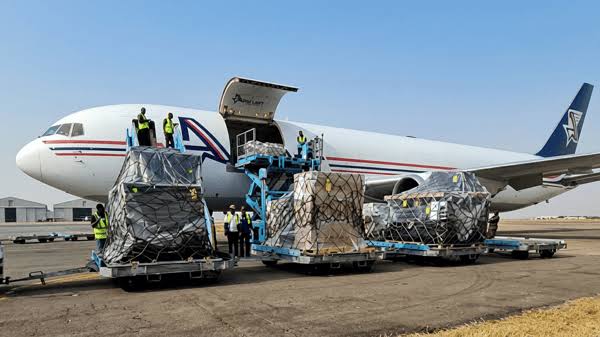
Just recently, the U.S. sent some operational equipment to Nigeria to assist the ongoing fight against insecurity. On January 15, 2026, engagement with the U.S. Defence Attaché, Nigeria’s Chief of Army Staff, Lieutenant General Waidi Shaibu, emphasised the importance of sustained cooperation, noting that the Nigerian Army remains keen on leveraging American experience in both kinetic and non-kinetic operations and that “international military partnerships remain critical to complementing Nigeria’s internal security architecture and advancing sustainable peace and stability.”
The United States also reaffirmed its support in intelligence sharing, capacity building, humanitarian assistance and troop welfare — areas considered crucial for long-term operational effectiveness rather than short-term battlefield gains.
Conclusion
Nigeria enters 2026 with insecurity still persisting, as there are intensified operations and expanded international partnerships. The violence that surged in late 2025 which prompted unprecedented rhetoric and foreign military action, has not disappeared. It has instead migrated into new territories like Kwara State and created tension towards some southern states and continues to erode social cohesion, economic stability and public confidence.
And of course, cooperation with the United States enhances Nigeria’s tactical capabilities, but lasting peace may depend on intelligence-driven strategies, stronger inter-state coordination, and economic recovery in rural communities. Without these reforms, Northern Nigeria may risk remaining trapped in a cycle of violence that military force alone cannot resolve.