
On July 9, US President Donald Trump welcomed five African leaders to a White House lunch, with commerce and trade expected to feature prominently amongst a mixed bag of potential agenda items.
The list of invited African leaders included President Bassirou Diomaye of Senegal, President Nyumah Boakai of Liberia, President Brice Oligui Nguema of Gabon, President Umaro Sissoco Embaló of Guinea-Bissau, and President Mohamed Ould Ghazouani of Mauritania. Their participation signifies a strategic selection by the U.S., as it was denoted from the summit proceedings that Trump’s administration shifted focus on African countries that possess specific economy and security relevance to its foreign policy protocol.
For Trump, hosting such a summit could go a long way towards shedding his image as someone largely disinterested in a continent where China has been making inroads at the West’s expense for decades. Trump did not host an African Leaders Summit during his first term—ex-president Joe Biden followed up on Obama’s inaugural effort in December 2022—or visit the continent.
Summit Revelations: A Focus on Trade and Security
At the summit, President Donald Trump laid emphasis on Africa’s great economic potential and also expressed his strong will to form mutually beneficial trade partnerships, specifically with the invited countries and the continent in general, in line with his “trade, not aid” policy. In his words, the nations represented were duly praised and described as “all vibrant places with very valuable land, great minerals, great oil deposits, and wonderful people.” The African leaders, in turn, boasted of the continent’s tremendous natural resources and also stressed the importance of harnessing them through massive investments. Each of them leveraged their nation’s resources and sought investments from the U.S. President.
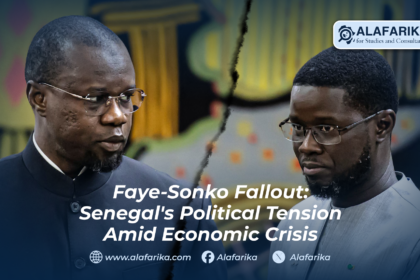
Meanwhile, Mohamed Ould Ghazouani of Mauritania noted in his remark, “We have a great deal of resources… We have a lot of opportunities to offer in terms of investment,” listing manganese, uranium, and lithium among the untapped resources in Mauritania. President Brice Oligui Nguema of Gabon emphasized his country’s need for partners ready to help with the local processing of raw materials, rather than just simply extracting them. He said, “We are not poor countries. We are rich countries when it comes to raw materials. But we need partners to support us and help us develop those resources with win-win partnerships.” Also, President Faye of Senegal presented investment opportunities in Senegal’s tourism, including a proposed golf course project.
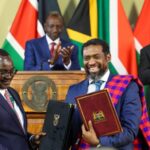
The plan to develop the Botash Banio mine project in Mayumba, Gabon, turned out as one of the tangible outcomes of the summit. The United States International Development Finance Corporation (DFC) announced its plans to fund the development of the project, signing its agreement in the presence of Gabon’s president, Oligui Nguema.
Beyond trade, discussions in the summit also highlighted crucial security concerns for the United States, such as drug trafficking and migration, which were both described as high-priority issues for Trump’s administration. President Trump also took the opportunity to highlight the U.S. efforts in resolving African conflicts. He cited as an example of American diplomatic engagement the recent peace agreement deal between the Democratic Republic of Congo and Rwanda, facilitated by his administration and signed at the White House, gaining the appraisal of the African leaders over his role in the peace deal.
Future Outlooks of U.S.–Africa Relations
“Africa can expect substantial changes from the United States over the next four years,” Rama Yade, director of the Atlantic Council’s Africa Center, wrote in a pre-inauguration analysis. While Donald Trump in his first term pursued an “America first” foreign policy, as he has committed to do again, the “new centrality” that Africa enjoys on the world stage will necessitate adaptations to the U.S. approach, Yade predicted.
Apparently, the Trump administration is accelerating its shift of focus to commercial and transactional diplomacy in its relations with Africa, making use of trade, prosperity, and power as tools to enable its influence in the continent. The summit took place just days after the U.S. Agency for International Development (USAID) was officially dissolved, after six decades of its existence. Trump’s administration cited the need for the U.S. overseas funding to align with his “America First” approach, prioritizing the country’s national interests. The move attracted wide criticism from numerous aid organizations.
Besides, the selection of the invited countries exposes the U.S. intent to prioritize economic potential, mineral prosperity, and regional significance in its engagement with African countries. While the U.S. stands to gain access to these countries’ rich mineral wealth, the invitees stand to attract massive American investments, boosting their local production and economic growth. These countries might also enjoy easy flow of their exports to the U.S., as President Trump indicated in the summit that these five African countries might be exempted from the new tariffs set to take effect on August 1.
The summit is indeed a turning point for U.S. foreign policy, and it is also a test for how the Trump administration’s new foreign policy will fare in terms of engagement with Africa. The transition from development funding to strategic trade relationships paves the way for investments and economic growth. Also, it raises concerns about broader implications for African development in future diplomatic engagements.