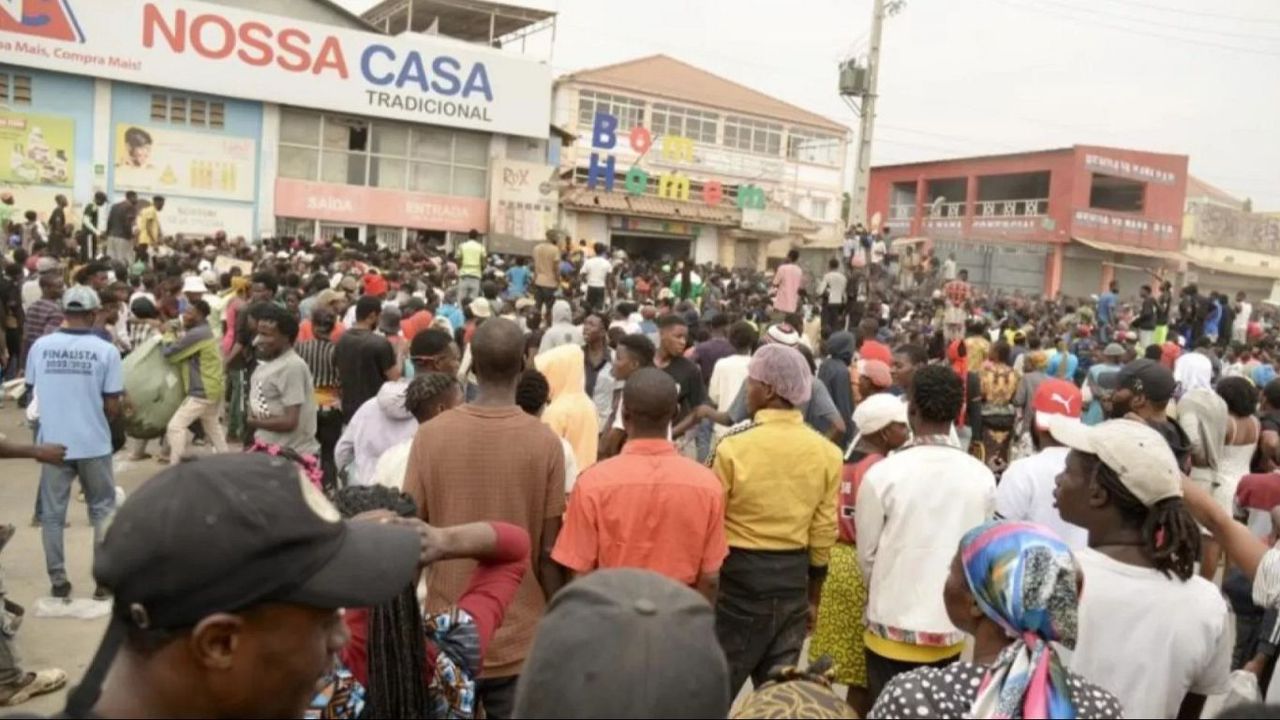
This week, Angola witnessed deadly protests that claimed the lives of 22 people, leaving over 192 others injured. The protests, planned to be held for three days, were launched by minibus taxi associations against the Angolan government’s decision to increase the price of diesel by one-third as part of its efforts to curb the costly subsidies. It then escalated into a series of violence, looting, vandalism, and clashes with security operatives in Luanda, the capital, and six other provinces, according to Angola’s government. President Joao Lourenco’s cabinet met on Wednesday and received an update on the security situation and police response. According to the presidency statement, there had been 22 deaths, 197 people injured, and 1,214 arrests. Sixty-six shops and 25 vehicles had been vandalized, and some supermarkets and warehouses looted.
Ivory Coast President Alassane Ouattara expressed his desire to seek a fourth term in Ivory Coast’s October 2025 presidential election in a televised announcement on Tuesday, amidst growing tensions over the exclusion of many heavyweight opposition candidates. Though he had been earlier officially nominated by the ruling RHDP party as its candidate, he had not yet decided if he would contest. Similarly, he won a third term in 2020 after he initially announced his non-participation in the race. However, the two main opposition parties, the People’s Party of Ivory Coast (PPACI) and the Democratic Party of Ivory Coast (PDCI), have launched a joint campaign to demand the reinstatement of their barred leaders ahead of the presidential election.
Kenya is experiencing a backlash over the proposed adoption of new measures to regulate alcohol sales and consumption, including raising the drinking age from 18 to 21. The new measures include laws prohibiting alcohol purchases in supermarkets, restaurants, and public transportation, as well as internet sales and celebrity sponsorships. The National Authority for the Campaign Against Alcohol and Drug Misuse (NACADA) has defended the restrictions as vital to combat substance misuse, but critics say these measures may result in job losses and drive consumers to the illicit alcohol market. The proposed policy has been described as “exclusionary” and “unrealistic” by the Alcoholic Beverage Association of Kenya (ABAK).
Ethiopia has planted 700 million tree seedlings in a single day as part of its Green Legacy Initiative, launched in 2019. Prime Minister Abiy Ahmed declared that the project has evolved into a national culture centered on ecological restoration and sustainability, with the country on target to plant 48 billion trees by the conclusion of the rainy season. The effort aims to prevent climate change, deforestation, and land degradation while also restoring ecosystems. With approximately 15 million Ethiopians participating, the program has garnered international attention for its scope, with diplomats and foreign leaders attending each year. The country’s forests have shrunk dramatically over the last century, resulting in soil erosion, reduced agricultural production, food insecurity, and greater vulnerability to climatic extremes.
The paramilitary Rapid Support Forces (RSF) has formed a civilian-led administration in Sudan, further escalating the civil war crisis and raising concerns of a permanent split. A 15-member presidential council, led by RSF leader Mohamed Hamdan Dagalo, was proclaimed, with rebel leader Abdelaziz al-Hilu as vice president, while a civilian politician, Mohamed Hassan al-Taishi, was appointed as prime minister. Also, new regional governors have also been announced, with one for Darfur. The African Union’s Peace and Security Council has urged member states and the international community to avoid recognizing the parallel government, which could fragment Sudan and risk its future.
Morocco’s King Mohammed VI marked his 26th Throne Day by highlighting the country’s thriving economy and calling for an end to hostilities between the kingdom and Algeria over Western Sahara and Rabat’s proposal for limited self-rule in the disputed territory. Morocco claims control of the land, but Algeria supports the Polisario Front liberation movement fighting for their total sovereignty. In 2007, Morocco offered autonomy, but with Western Sahara remaining under Rabat’s sovereignty but with some degree of self-government. The autonomy initiative gained worldwide support and was widely regarded as the sole solution to the dispute over the Western Sahara.
Tanzania has prohibited foreign investment in 15 critical areas of the economy, including salons, small retail stores, restaurants, and mobile money kiosks. Violations can result in fines of up to 10 million Tanzanian shillings or six months in prison, as well as the loss of residency permits and visas. Tanzanian residents who aid non-citizens in these restricted companies incur fines of up to 5 million shillings or a three-month jail sentence. The measure is intended to improve local job creation and revenue, but there are fears in the East African Community that it will act as a non-tariff barrier to regional trade and integration. The measure follows another economic step taken in May, which prohibited the use of foreign currencies in domestic transactions.
Ghana’s central bank has cut its benchmark interest rate by 3%, the highest drop in its history, as inflation falls and the country emerges from its worst economic crisis in decades. The decision was adopted by a majority vote of the monetary policy committee, which ascribed the move to greater confidence in the disinflationary trend. Consumer inflation fell to 13.7% year-on-year in June, marking the sixth straight monthly reduction. Since the beginning of the year, the local currency, the cedi, has risen by more than 40% versus the US dollar. However, many ordinary Ghanaians are still struggling as living costs grow.
A deadly gunfight along the Uganda-South Sudan border killed at least six soldiers this week, according to Uganda’s military. The clash took place in Uganda’s West Nile region, where South Sudanese military stormed into Ugandan territory and refused to leave. Maj. Gen. Felix Kulayigye, Uganda’s army spokesman, claimed three South Sudanese troops were slain in retaliation for a Ugandan soldier’s death during the raid. South Sudanese officials, however, claimed that five of their soldiers were killed in a surprise attack. Both forces agreed to a cease-fire and committed to investigate the situation.
South Africa will face a 30% tax on products shipped to the United States effective August 7, the highest rate in sub-Saharan Africa. This decision is a severe blow to South Africa, as the United States is its second-largest trading partner. Prior to Trump’s deadline, South Africa had been negotiating a trade agreement with the US, which included purchasing US liquefied natural gas, relaxing poultry import laws, and investing in US sectors. President Cyril Ramaphosa has stated that his administration will continue to negotiate and is putting together a package to assist companies that are vulnerable to tariffs.