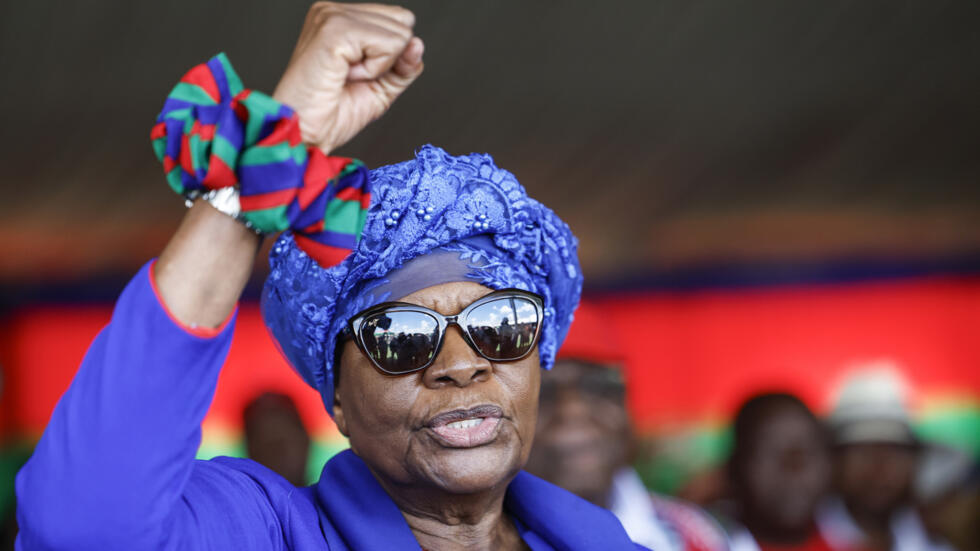
Namibia on Wednesday elected its first female president, Netumbo Nandi-Ndaitwah, who won 57% of the vote despite opposition allegations of irregularities during last week’s election. Nandi-Ndaitwah, 72, a former independence activist, will lead the ruling SWAPO party, which narrowly retained its parliamentary majority. Technical glitches and a three-day voting extension drew criticism and calls for legal challenges from opposition parties, claiming the process violated electoral laws. Namibia, known for its political stability, faces economic challenges like unemployment and discontent among youth. SWAPO’s worst parliamentary performance reflects regional shifts away from long-ruling parties in Southern Africa.
South African President Cyril Ramaphosa on Tuesday announced that Nigerian tourists can now apply for South African visas without submitting their passports. Speaking at the Nigeria-South Africa Bi-National Commission in Cape Town, attended by President Bola Tinubu, Ramaphosa detailed simplified visa processes, including five-year multiple-entry visas for Nigerian businesspeople. He emphasized removing investment constraints and enhancing business cooperation, citing the growing presence of South African companies in Nigeria. Ramaphosa also highlighted South Africa’s focus on promoting the AU’s Agenda 2063 and Global South interests at the upcoming G20 Summit, aiming to foster stronger bilateral ties and attract Nigerian investments.
President Joe Biden announced over $1 billion in humanitarian aid to address food insecurity and displacement caused by drought across 31 African nations during his historic visit to Angola on Tuesday. Meeting Angolan President João Lourenço, Biden emphasized economic ties, security, and the US-backed Lobito Corridor project, aimed at boosting regional trade and countering China’s influence. Visiting the National Slavery Museum, Biden reflected on Angola’s transatlantic slave trade history, calling slavery “our nation’s original sin.” Advocacy groups urged him to address Angola’s human rights issues. Biden will next attend a regional infrastructure summit in Lobito.
Nigerian President Bola Tinubu made a historic two-day state visit to France this week, marking the first official trip by a Nigerian leader to Paris in over two decades. French President Emmanuel Macron welcomed Tinubu warmly, including a greeting in Nigerian Pidgin English. The visit aims to deepen economic and diplomatic ties, with both leaders participating in the Nigerian-France Business Council meeting. France is Nigeria’s top trading partner in sub-Saharan Africa, with bilateral trade exceeding $5 billion in 2023, driven by crude oil exports. Discussions also addressed Nigeria’s economic challenges, including poverty and insecurity, highlighting opportunities for strengthened collaboration.
South Sudanese government and opposition groups not party to the 2018 Revitalised Agreement have resumed peace talks this week in Nairobi after previous delays. The Tumaini talks, initiated in May, aim to address concerns of holdout groups without replacing the 2018 peace deal, which sought to end South Sudan’s five-year civil war that claimed over 400,000 lives. President Salva Kiir replaced the initial government delegation, causing disruptions. While the 2018 agreement remains unimplemented, the country’s first national elections, originally set for December 2024, have been postponed to December 2026 following a two-year extension of the transition period.
The African Development Bank (AfDB) committed €350 million ($370 million) to Morocco on Thursday to enhance economic governance, strengthen water infrastructure, and establish an industrial zone at the Nador West Med port, as announced during the Africa Investment Forum in Rabat. Additionally, the bank is evaluating a further €650 million loan to support Morocco’s rail and airport infrastructure development in preparation for co-hosting the 2030 FIFA World Cup with Spain and Portugal. These initiatives aim to bolster Morocco’s economic framework and global competitiveness, aligning with the country’s broader infrastructure and development goals.
The Central Bank of Libya (CBL) this week contracted British banknote printer De La Rue to print 30 billion dinars ($6.25 billion) in an effort to address the country’s ongoing liquidity shortage. The CBL had previously announced a plan to gradually resolve the liquidity issue starting in January. Despite Libya’s oil wealth, citizens have long faced difficulties accessing cash and salaries, with long queues outside banks since the fall of Muammar Gaddafi in 2011. The country’s economy relies heavily on oil revenues, with state payrolls consuming a significant portion of these funds. CBL Governor Naji Issa met with De La Rue’s CEO and regional manager to discuss the implementation of the contract and the timeline for receiving the currency shipments. The central bank also plans to withdraw old banknotes, though no further details were provided.
The International Monetary Fund (IMF) has approved the third review of Ghana’s $3 billion lending programme, unlocking an immediate disbursement of approximately $360 million. The IMF stated that Ghana’s performance under the programme has been generally satisfactory, with all quantitative performance criteria and targets for the third review being met. Ghana, recovering from its 2022 debt default, is set to hold its presidential and parliamentary elections on December 7. Finance Minister Mohammed Amin Adam highlighted the government’s commitment to turning the economy around, emphasizing discipline in fiscal management. The current IMF programme, approved in May 2023, runs until 2026. As part of the restructuring, Ghana’s debt to bondholders will be reduced by $4.7 billion, providing cash flow relief of $4.4 billion during the programme period.
A controversial refereeing decision during a soccer match in Nzerekore, southeastern Guinea, led to violence and a deadly crush, killing at least 56 people, according to the government on Monday. The violence erupted after a disputed red card in the 82nd minute of the final match, triggering stone-throwing by fans and panic. Police intervened with tear gas, further escalating the chaos. As the crowd rushed to escape, many were trampled, including girls and children, according to witness Amara Conde. A police source confirmed that the crowd’s scramble for the exits led to a dangerous crush, and a video showed people climbing walls to flee. Ousted President Alpha Conde criticized the event’s poor organization amid ongoing tensions in the country, which is awaiting promised elections after a 2021 coup. Local officials reported that many victims were minors, and confusion ensued as parents retrieved bodies before they were officially counted.
At least 79 people this week died from an unidentified disease exhibiting flu-like symptoms in southwestern Democratic Republic of Congo, with most victims aged between 15 and 18. Over 300 people have been infected, showing symptoms such as fever, headaches, coughs, breathing difficulties, and anaemia. The disease is most prevalent in Kwango Province, particularly the Panzi health zone, prompting health response teams to investigate and manage cases. The local healthcare infrastructure faces challenges, including a shortage of medicines. A World Health Organization (WHO) team has been dispatched to collect samples for lab analysis. Authorities have advised the public to stay calm, wash hands regularly, avoid mass gatherings, and refrain from handling bodies without proper medical supervision.