Violent protests erupted across Senegal over the postponement of presidential elections, resulting in the country’s first reported fatality. A student died in clashes with police in Saint-Louis, while security forces in Dakar used tear gas to disperse crowds. President Macky Sall, denying accusations of clinging to power, delayed the February 25 elections to December 15, citing disputes over candidate eligibility. Lawmakers extended Sall’s mandate by 10 months, sparking opposition criticism and warnings about Senegal’s democratic reputation. Opposition leader Khalifa Sall labeled the delay a “constitutional coup,” while President Sall stressed his commitment to stability. The death in Saint-Louis drew condemnation from democratic voices, with authorities yet to comment publicly. Ecowas urged Senegal to restore the electoral calendar, underscoring the nation’s historical stability and democratic resilience.
As Israel ramps up military operations in Gaza, Egypt this week said it has rushed to secure the volatile Sinai border region. Over the past two weeks, Egypt has deployed some 40 tanks and armored vehicles to the northeastern Sinai to reinforce its Gaza border. This escalation comes as Israel strikes Gaza’s southern city of Rafah and warns it may evacuate Palestinians en masse. Alarmed by the prospect of an influx of Gazan refugees, Egypt has taken drastic measures to tighten Sinai border security. Recently constructed fortifications include a six-meter concrete wall fitted with barbed wire, surveillance-enhanced border posts, and multi-layered subterranean barriers.
UNICEF on Friday warned that 700,000 children in Sudan face severe malnutrition, with tens of thousands at risk of dying amid a 10-month conflict between Sudan’s armed forces and the paramilitary Rapid Support Forces. The war has ravaged infrastructure, displaced millions, and prompted famine warnings. UNICEF’s James Elder highlighted the urgent need for access and support to treat malnourished children, emphasizing the severe consequences of untreated acute malnutrition. UNICEF seeks $840 million to aid over 7.5 million Sudanese children, but previous appeals fell short. The United Nations urged nations to address the humanitarian crisis in Sudan, where half the population requires assistance and over 1.5 million have fled to neighboring countries.
A rocket struck near a university in Goma, Congo, on Wednesday amid a renewed advance by M23 rebels, heightening fears of isolating the city of two million people. No casualties were reported, but the incident highlighted the threat to Goma, a strategic hub in the conflict-ridden east. M23’s offensive, preceded by a major 2022 attack, led to military intervention and failed mediation attempts. While Rwanda denies support, Congo, Western powers, and the UN accuse M23 of Rwandan backing. Clashes between rebels, army forces, and self-defense groups have intensified, forcing mass displacements. UN peacekeeping officials expressed grave concern, urging the M23 to cease its offensive and calling for diplomatic dialogue. Congo pledged to prevent Goma’s fall to M23, as occurred briefly in 2012. Civilians have suffered the most, enduring bombings and reprisals, with over 42,000 displaced since Friday, according to OCHA.
ECOWAS on Thursday urged Burkina Faso, Niger, and Mali to reconsider their withdrawal from the political and economic alliance, warning of hardships for citizens. The junta-led nations announced their departure after pressure to restore constitutional order post-coups. ECOWAS, grappling with democratic setbacks since Mali’s 2020 coup, convened in Abuja to address the issue and Senegal’s election delay. Council chairman Yusuf Maitama Tuggar stressed the adverse effects of withdrawal on citizens and emphasized diplomatic efforts for reconciliation. ECOWAS Commission President Omar Touray criticized the hasty decision, citing a failure to follow withdrawal rules. The juntas cited ECOWAS’ punitive sanctions and asserted treaty non-bindingness, complicating disentanglement from regional trade worth $150 billion annually. The swift exit raises concerns for millions of nationals settled in neighboring states under visa-free travel. Officials refrained from discussing Senegal’s election delay publicly, though Touray labeled it a threat to regional stability.
Zimbabwe’s cabinet on Tuesday decided to abolish the death penalty, opting for lengthy prison terms instead for severe offenses. The move follows months of parliamentary debate and the passage of a private member’s bill in the National Assembly to end the death penalty, a relic of British colonial rule. The cabinet emphasized the need to retain deterrence while respecting the right to life, suggesting that aggravating circumstances could lead to life imprisonment. Zimbabwe’s last execution occurred in 2005. President Emmerson Mnangagwa, who once faced death row during the fight for independence, has been advocating for the abolition of the death penalty.
A U.S. museum on Thursday returned a collection of royal regalia looted by British colonial soldiers 150 years ago to Ghana, marking a significant repatriation of stolen artifacts to the West African nation. The Fowler Museum at UCLA returned royal objects from the Asante kingdom, which were acquired by an American collector and later donated to the museum. The artifacts were handed over to the Asante king, Otumfuo Osei Tutu II, in Kumasi. This return reflects a global trend of demands for the repatriation of colonial-era artifacts. While some museums cite legal restrictions on permanent returns, London’s British Museum and Victoria & Albert Museum recently agreed to loan 32 objects taken during the Anglo-Asante wars to the Manhyia Palace Museum in Kumasi. The items returned by the Fowler Museum include significant cultural pieces such as an elephant tail whisk and royal stool ornaments. Some were taken during the 1874 sacking of Kumasi, while others were part of an indemnity payment by the Asante kingdom to the British. The return is considered permanent and voluntary by the Fowler Museum, aligning with a shift towards museums’ ethical responsibility to their communities of origin.
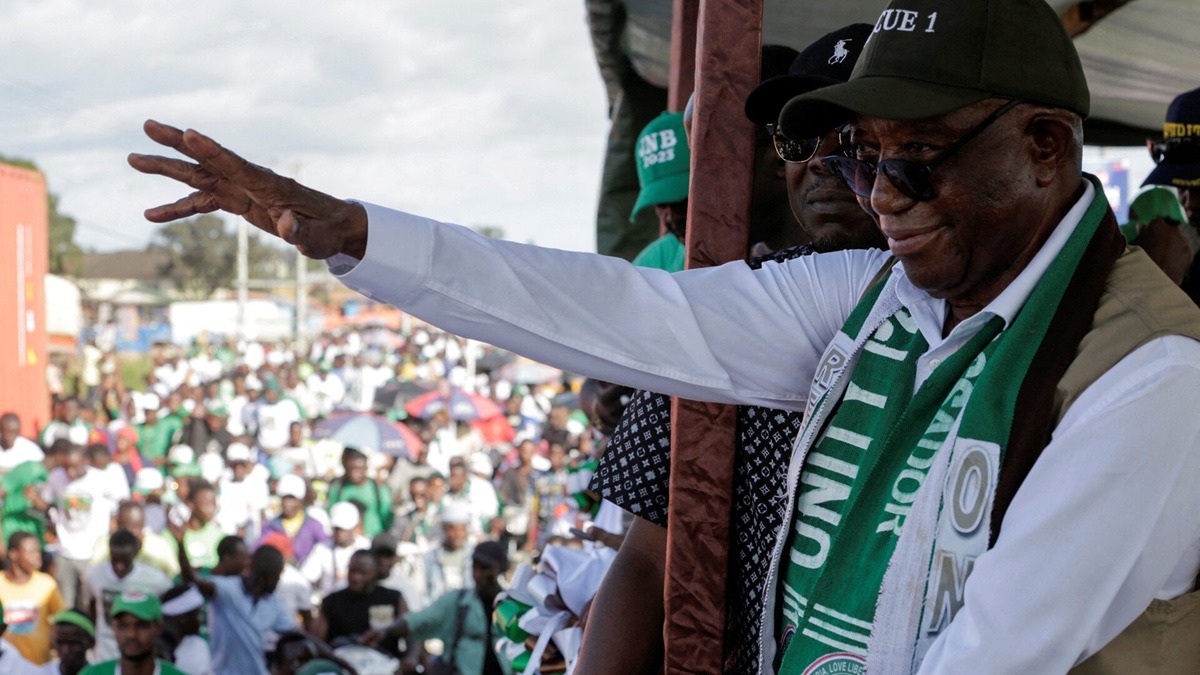
Liberia’s President Joseph Boakai launched a significant anti-corruption effort on Thursday by ordering audits of three key government institutions, including the central bank. The presidency disclosed that Boakai instructed the General Auditing Commission to conduct thorough examinations of the central bank, the national security agency, and the executive protection service. The audits, spanning from 2018 to 2023, aim to provide findings within three months. This move underscores Boakai’s commitment to combating corruption and enhancing transparency within government ministries and agencies.
A cult leader in Kenya, Paul Mackenzie, and 29 others have been charged with murder after over 400 bodies were discovered buried in shallow graves in a remote forest in eastern Kenya. Survivors and victims’ families allege that Mackenzie encouraged followers to fast in order to “go see Jesus.” Mackenzie and his co-accused pleaded not guilty to charges of murder, as well as previous charges of committing acts of terror, child cruelty, and torture. Police and prosecutors suspect that some victims were strangled, suffocated, or beaten to death. The accused face charges related to the murder of 191 people. Survivors like Neema, not her real name, described horrific conditions in the forest where they were held against their will and subjected to rape and starvation. The forest, now under 24-hour police guard, has been declared a crime scene. Many victims, including children, were allegedly forced to fast until they “went to sleep.”
Prime Minister Rishi Sunak faced criticism after agreeing to a £1,000 bet with TalkTV’s Piers Morgan regarding his Rwanda policy. Sunak, who claimed to be “taken by surprise,” defended the bet as a demonstration of his commitment to the policy. The bet revolves around deportation flights before the next election, and Sunak emphasized his dedication to stopping asylum seekers from crossing the Channel. However, legal challenges have stalled the policy, with no deportation flights taking off yet. Sunak’s willingness to make such a bet drew backlash from opposition parties, who accused him of being out of touch with working people. The Liberal Democrats and the SNP have raised concerns over potential breaches of ministerial rules, with the SNP calling the bet “grotesque” and urging an investigation into Sunak’s actions.