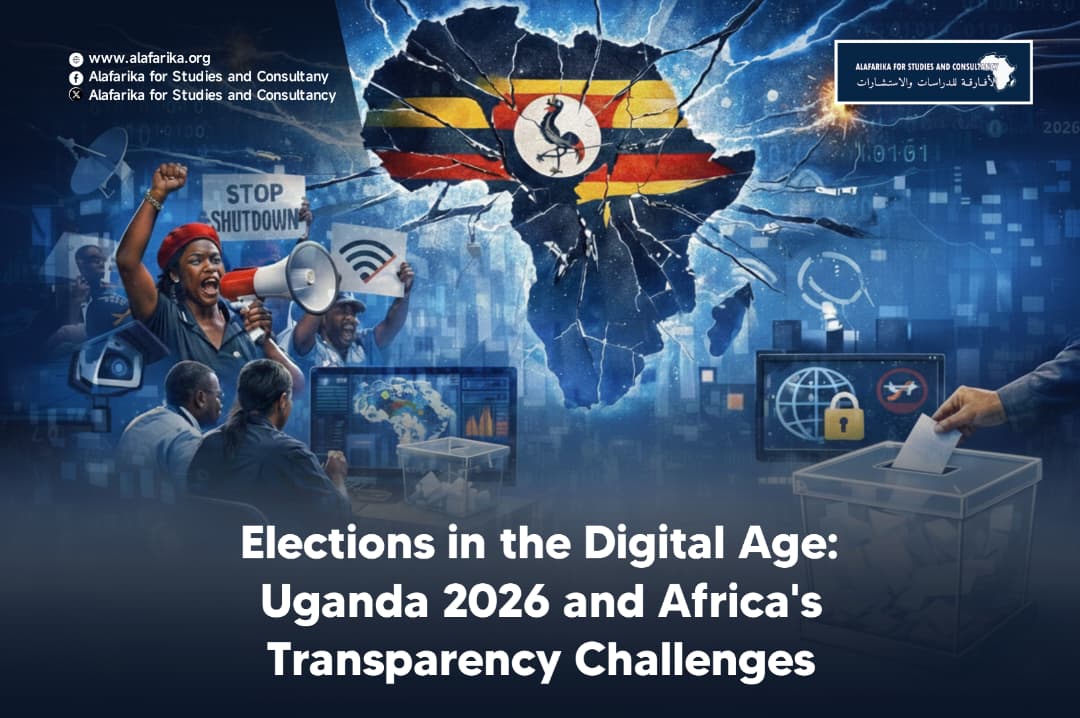
Uganda, an East African country, held its January 15, 2026 presidential election, presented by state authorities as a continuation of democratic tradition. Yet the pre-vote period, election day, and immediate aftermath exposed intense tensions between entrenched power and citizens’ expectations of a free and fair democratic contest. Meanwhile, at its centre was a nationwide internet blackout ordered days before Ugandans went to the polls, a move that critics argue undermined transparency just as voters were attempting to participate in one of the most consequential elections in recent Ugandan history.
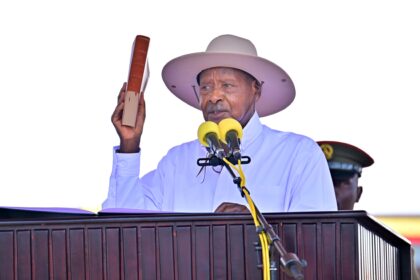
President Yoweri Museveni, 81, has ruled Uganda since 1986 and secured the top office for a seventh term, winning about 71.6% of the vote according to the country’s Electoral Commission, a result swiftly rejected by the opposition. Opposition leader Robert Kyagulanyi Ssentamu, also known as Bobi Wine, trailed behind with roughly 24.7%. He faulted the declared figures as “fake” and alleged fraud, intimidation, and suppression.
He said via video: “I know they are looking for me, but even if they succeed and get me, and do whatever, I want to say this to you fellow Ugandans,” “We reject whatever is being declared by Mr Simon Byabakama [the chair of the Electoral Commission] because those so-called results that they are declaring are fake and they don’t in any way reflect what happened at the polling stations.”
Political analysts were of the opinion that the historic significance of Uganda’s 2026 election is twofold: the first is, Museveni’s prolonged rule ignites debates on long-term incumbency and succession, while the second which is about internet restrictions highlights digital control’s impact on democratic transparency in Africa. It is pertinent to note that Uganda’s case mirrors the complex interplay between elections, digital communication, and governance in a region (trying to) balancing democratic aspirations and authoritarian resilience.
The Internet Blackouts and the Election
On January 13, 2026, just two days before voting, the Uganda Communications Commission (UCC) directed telecom companies to limit public internet access across the country, citing concerns about “misinformation,” “electoral fraud,” and the risk of “incitement to violence.” Pro-government institutions defended the move as a necessary step to control digital communication during what they called a sensitive period.
By most accounts, the shutdown had a real impact. Aftermath of the election, the news flew out that it disrupted social media, cut off web access, slowed messaging platforms, and also affected outbound data roaming, leaving many Ugandans suddenly cut off from the online world. Reports further revealed that only essential services like banking and critical utilities stayed online. Independent network measurements confirmed a sharp and deliberate drop in internet traffic across the country.
This was not Uganda’s first electoral internet shutdown. Previous general elections, including 2021, also saw similar measures, and in that instance the blackout ushered in a ban on Facebook that remains in force today. In each case, authorities argued that such actions were necessary to maintain order. Human rights organisations and democracy advocates, however, warn of troubling patterns.
“Uganda’s constitution and international human rights obligations guarantee access to information and freedom of expression, rights that are especially critical to protect during election periods,” said Tomiwa Ilori, a senior technology and rights researcher at Human Rights Watch. He called for “immediate restoration of full connectivity” and cautioned that shutdowns “undermine fundamental rights and threaten the integrity of the vote in Uganda.”
Echoing this concern, the African Union (AU) Election Observer Mission also criticised the internet blackout. Former Nigerian President Goodluck Jonathan, who led the AU mission, said the decision by the UCC to cut connectivity contradicted earlier assurances that internet access would remain available through the full electoral period.
“Although the Uganda Communications Commission had assured observers that internet services would remain available throughout the electoral period, the Mission observed that the internet was shut down two days before polling,” Jonathan said.
Behind these statements lies a deeper problem: when governments control access to digital communication during the most critical democratic moments, they also shape what citizens know, how they organise, and how the world witnesses the process.
Voter Experience in an Atmosphere of Mistrust
On election day, Uganda’s voting process was marked by logistical problems and a growing sense of unease triggered by the internet shutdown, even as reports showed that many citizens turned to VPNs and an app developed by Bobi Wine to stay connected. Polling stations were reportedly opened late or faced delays because of biometric system failures, forcing officials to switch to manual checks.
Reports further claimed that thousands queued patiently, but many were anxious about not being able to communicate or verify updates in real-time. The internet shutdown hindered voter groups, some observers, and opposition agents from sharing updates, fueling transparency concerns.
For many observers and citizens, the blackout did more than inconvenience mobile apps or social feeds, it created a communication vacuum at the moment when real-time reporting and access to information were most needed. Civil liberties groups warned that “blanket shutdowns disrupt people’s mobility, livelihoods and their ability to access vital information” and noted that such actions are “inherently disproportionate under international human rights law.”
After ballots were cast and counting began, provisional results placed Museveni far ahead, securing his seventh term and extending his rule into a fifth decade. Bobi Wine’s camp rejected these figures outright, denouncing them as “fake” and alleging irregularities and suppression. He claimed that polling agents had been detained and that the internet blackout hindered communication among opposition observers.
Within hours of result declarations, reports emerged of heavy security operations around Wine’s residence in Kampala, with his team’s movement and communication reportedly curtailed, further intensifying narratives of mistrust and suppression.
And as it appeared, when citizens cannot reliably share information, when party agents are handicapped to communicate from polling stations, and when internet access is limited at strategic moments, allegations of irregularity are (would be) amplified and harder to independently verify.
Question of Succession Politics and the Shadow of Entrenched Power
One of the underlying factors that gave birth to issues of controversy over transparency and internet access is a long-running political narrative, which is the “Uganda’s extended incumbency and the question of generational leadership.”
In power since 1986, he has reshaped Uganda’s politics, altering the constitution to remove term limits and consolidate power with little turnover. Critics point to this pattern as reflective of broader succession politics not just in Uganda but in several African states where extended tenures are justified as sources of stability yet criticised as mechanisms for entrenched leadership.
Museveni’s possible succession plan, grooming his son Muhoozi Kainerugaba, seems to have raised concerns about democratic legitimacy. When elections appear tilted toward those already in power, public trust begins to fade. Bobi Wine’s surge, in contrast, was driven by young people tired of Museveni’s long rule, drawn to his focus on rising living costs and the scarcity of jobs. Still, the final result has revived wider worries about systems where incumbents dominate and the space for civic participation continues to narrow.
And more so, restricting internet access during elections tips the scales, weakening real-time reporting, accountability, and transparency. In today’s digital age, this limits the public’s ability to verify events, making elections feel like a done deal.
For scholars and analysts of African democratisation, Uganda’s 2026 election illustrates how control over communication technologies intersects with political power and succession politics. If opposition voices cannot reliably share information, if observers cannot digitally document occurrences, and if citizens cannot independently access data and news, transparency is already a fragile democratic element; it is further diminished.
What Uganda’s Election Mean for Electoral Transparency in Africa
What happened in Uganda echoes far beyond its own borders. Across the continent, arguments over election-time internet shutdowns keep resurfacing — and similar blackouts have been recorded in places like Zimbabwe, Ethiopia, and Cameroon. To many civil liberties groups, these moves point to deeper, systemic threats to electoral openness and basic rights.
International institutions have been clear about this. The African Charter on Human and Peoples’ Rights protects the right to receive information and to speak freely — freedoms that, as rights advocates note, are “especially vital during election periods.” Broad, unchecked internet shutdowns can violate those guarantees and steadily chip away at public confidence in electoral bodies.
From a governance standpoint, the issue is complicated. Authorities usually defend communication limits as tools to fight misinformation or prevent unrest. In reality, though, such limits can muffle dissent, block independent monitoring, and make it harder for voters to get the information they need, when they need it.
Uganda’s experience makes one thing clear: technology can either deepen democracy or quietly undermine it. When it is allowed to work, it opens space for more voices, improves accountability, and draws citizens closer to the process. When it is switched off or tightly controlled at key moments, however, it does the opposite by breeding suspicion and reinforcing the feeling that the contest is not being played fair.
For African democracies seeking lasting credibility, that tension cannot be ignored. Security matters, but so does the public’s right to communicate and stay informed while voting is underway. It is crystal clear that Uganda’s January 15, 2026 election tells the importance of protecting open communication which is not optional as it is a core part of building trust, reform, and democratic strength.