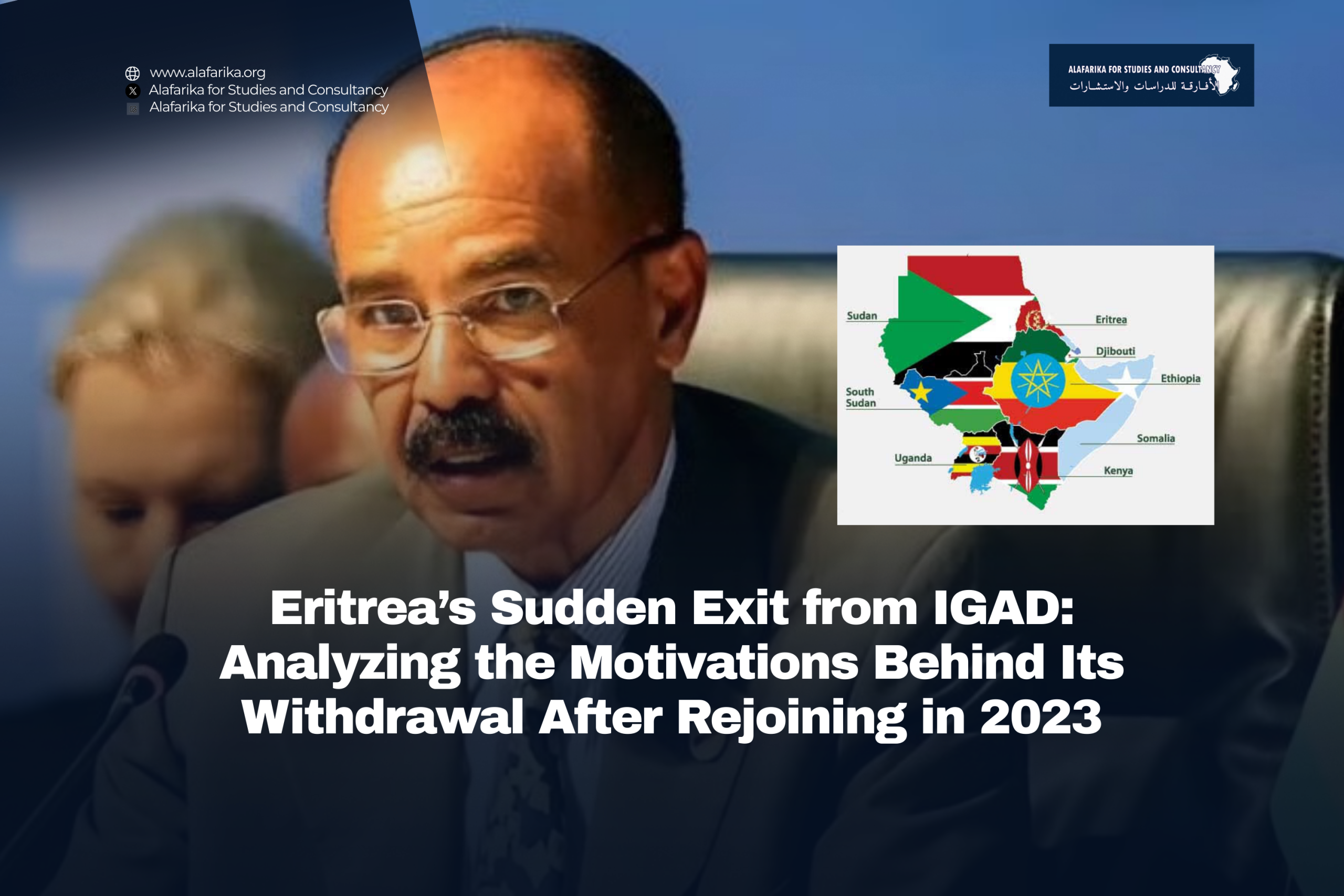
The origins of economic integration initiatives in Africa trace back to the continent’s historical antecedents, with a multitude of trade agreements establishing the foundation for a complex network of overlapping regional entities. At present, every African nation is involved in at least one regional economic accord, with numerous countries participating in multiple economic unions. Despite these unified endeavours, the level of intra-African trade remains regrettably low.
Eastern Africa, part of sub-Saharan Africa comprising two traditionally recognised regions: East Africa, made up of Kenya, Tanzania, and Uganda; and the Horn of Africa, made up of Somalia, Djibouti, Eritrea, and Ethiopia. While the Intergovernmental Authority on Development (IGAD) in Eastern Africa was created in 1996 to supersede the Intergovernmental Authority on Drought and Development (IGADD) which was founded in 1986 to mitigate the effects of the recurring severe droughts and other natural disasters that resulted in widespread famine, ecological degradation and economic hardship in the region.
Djibouti, Ethiopia, Kenya, Somalia, Sudan and Uganda – took action through the United Nations to establish the intergovernmental body for development and drought control in their region. Eritrea became the seventh member after attaining independence in 1993 and in 2011 South Sudan joined IGAD as the eighth member state. The organization works on regional policies concerning trade, customs, transport, communications, agriculture, natural resources and the environment, according to its website.
Meanwhile, IGAD has also achieved commendable strides in fostering energy cooperation through the establishment of regional power pools; however, the overarching challenge of energy security persists as a formidable obstacle, highlighting the necessity for coordinated efforts to enhance energy accessibility and reliability throughout the region. IGAD’s engagement in conflict resolution and peacebuilding endeavours has constituted another fundamental aspect of its mandate. The successful negotiation of the Comprehensive Peace Agreement in 2005 serves as a testament to the organization’s dedication to promoting stability within the region.
Though, Eritrea has once again walked away from IGAD, reviving long-standing frictions in one of Africa’s most volatile regions. According to a media report, Asmara’s decision, announced by the foreign ministry recently, comes amid a fierce war of words between Eritrea and its neighbour, Ethiopia. Addis Ababa has intensified its demand for access to the Red Sea through Eritrea, eliciting a fierce response from Asmara and raising fears of a renewed armed conflict. After a decades-long battle for independence, Eritrea officially seceded from Ethiopia in 1993, leaving the latter landlocked.
What are the motivations behind the withdrawal?
The government accused the bloc of failure to contribute to the stability of the region amid tensions with neighbouring Ethiopia. In a statement, the government accused the bloc of failure by the body to contribute to the stability of the region. “Eritrea finds itself compelled to withdraw its membership from an organization that has forfeited its legal mandate and authority; offering no discernible strategic benefit to all its constituencies,” the foreign ministry said. The government argued that IGAD “has and continues to renege on its statutory obligations, thereby undermining its own relevance and legal mandate”.
But IGAD said Eritrea’s decision was taken without any proposals on reforms, noting that the country had not participated in meetings, programmes or activities of the bloc since it rejoined in 2023. It added that since June 2023, IGAD notes with regret that Eritrea has not participated in IGAD meetings, programmes, or activities. Throughout this period, the Secretariat has exercised patience and goodwill, while remaining open and available for constructive engagement. IGAD further regrets that the decision to withdraw was taken without the submission of tangible proposals or engagement on specific institutional or policy reforms. The Organisation has consistently remained open to dialogue through its
established consultative mechanisms.
The Implications for IGAD and the Region
Eritrea’s withdrawal was announced on a day that marks the 25th anniversary of the Algiers Agreement, a landmark peace treaty that formally ended a bloody border conflict with its southern neighbour Ethiopia. The two countries signed another peace deal in 2018, which won Ethiopian Prime Minister the Nobel Peace Prize. Meanwhile, the following are the implications for IGAD and the region:
– Weakening Regional Unity
The region has been undergoing significant geopolitical and geo-economic changes in recent years, which have led to increased competition among regional and international powers. Nonetheless, ongoing conflicts and precarious political contexts within various member states have substantially limited IGAD’s capability to facilitate seamless economic integration. The enduring instability not only disrupts economic activities but also undermines the essential trust required for collaborative initiatives among member states. The challenges that IGAD confronts in advancing regional economic cooperation are multifaceted. Political disunity and instability within member states engender an atmosphere of uncertainty that complicates collaborative undertakings.
Eritrea and Ethiopia have in recent months accused each other of interference, sparking concerns over the possibility of a return to hostilities. Ethiopia said it wants to peacefully gain Red Sea access through Eritrea, which it relied on heavily for trade before the secession. Ethiopian Prime Minister Abiy Ahmed said in September it was a “mistake” to lose access to the sea when Eritrea gained independence in 1993 by seceding from Ethiopia to form a separate nation. Abiy’s rhetoric has been seen as provocative by Eritrea.
While Eritrea accused Ethiopia in June of having a “long-brewing war agenda” aimed at seizing its Red Sea ports. Ethiopia recently claimed Eritrea was “actively preparing to wage war against it,” as well as supporting Ethiopian rebel groups. Over the past two decades, multiple UN Security Council Monitoring Group reports, as well as AU Peace and Security Council briefings, documented Eritrea’s support for armed groups operating in Ethiopia, Somalia, Sudan and Djibouti. In response, IGAD consistently condemned these actions and supported UN sanctions. Eritrea’s exit highlights the fragile cohesion within IGAD, especially amid crises in Sudan, South Sudan, and Somalia. It raises concerns over the bloc’s legitimacy as a neutral forum for regional diplomacy.
– Missed Opportunities for Economic and Security Cooperation
Due to the strategic significance of the Red Sea and the rivalry for influence over the states that border it and depend on it for trade and transit, the Horn of Africa is now an essential component of and the link between the security systems of the Middle East, the Indo-Pacific, and the Mediterranean. The Red Sea geopolitical map is beginning to include strategic regions of the western coast and the Horn of Africa, and Sudan, Djibouti, Somalia, and Eritrea have changed into battlegrounds for a fresh scramble in the Horn of Africa.
IGAD has made strides in reducing non-tariff barriers to trade, but intra-regional trade remains low compared to other African blocs. For instance, The African Continental Free Trade Area (AfCFTA) presents both opportunities and challenges for IGAD, with member states’ economic policies, infrastructures, and priorities affecting regional integration efforts. Political dynamics within the region, particularly in countries like South Sudan and Somalia, have also posed challenges to IGAD’s economic initiatives.
Nevertheless, Eritrea’s strategic location on the Red Sea could have made it a vital partner in regional trade, maritime security, and infrastructure integration. Its exit limits IGAD’s collective potential.
– Signal to Other Discontented Members
The heterogeneity of economic structures and varying levels of development among member states further complicate the formulation and implementation of cohesive economic policies. External factors, encompassing global economic transitions, climate change, and foreign influences, also exert a significant impact on shaping the region’s economic landscape, frequently obstructing IGAD’s initiatives.
These interrelated challenges hinder the organization’s capacity to effectively implement agreed-upon economic policies and promote long-term regional economic integration. Despite these impediments, IGAD has achieved significant progress in various domains, including trade facilitation, infrastructure development, and conflict resolution. The organization’s endeavors in these areas have established a foundation for prospective economic collaboration among member states.
However, the future efficacy of IGAD in promoting regional economic cooperation is contingent upon its ability to effectively address these constraints. By fostering deeper regional integration and enhancing collaboration among member states, IGAD can better position itself to unlock the economic potential of the Horn of Africa. Asmara’s decision may embolden other states with grievances against regional institutions, creating a dangerous precedent of selective engagement.
Conclusion
The Intergovernmental Authority on Development (IGAD) has assumed a crucial role in advancing economic collaboration within the Horn of Africa, a region distinguished by its intricate dynamics and urgent challenges. Eritrea’s withdrawal from IGAD is not just a diplomatic move; it echoes deeper issues of trust, regional competitions, and the strain between sovereignty and integration. In order to make IGAD remain active, the regional body must reform its internal processes, ensure equitable participation, and also rebuild confidence among all member states including Eritrea.
To boost trade potential in the Horn of Africa region, it is suggested that IGAD should invest in cross-border infrastructure projects, particularly in transport, energy and ICT, strengthen regional conflict resolution mechanisms and peace-building efforts in crisis-ridden member countries and allow countries to specialize in sectors with comparative advantages. Streamlining trade regulations, reducing non-tariff barriers, and harmonizing customs procedures across the region can reduce transaction costs and foster regional integration. Strengthening institutions, governance, and the rule of law across IGAD countries can also help.