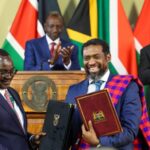
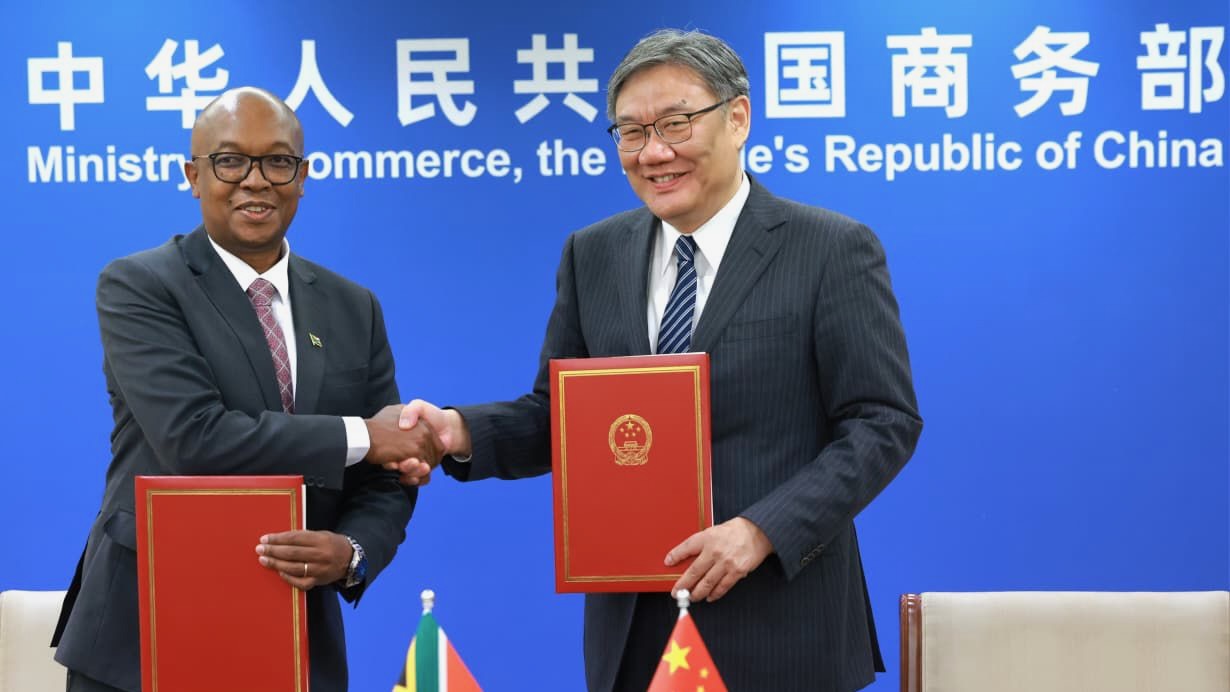
South Africa’s trade minister officially signed a comprehensive economic partnership agreement aimed at bolstering bilateral trade and industrial cooperation. The deal, signed during a high-level visit to Beijing, focuses on expanding South African exports to China, particularly in the agricultural and manufacturing sectors, while encouraging Chinese investment in South Africa’s energy and infrastructure projects. This agreement marks a strategic pivot for South Africa as it seeks to diversify its economic dependencies and address chronic domestic unemployment. The partnership also includes provisions for technology transfer and green energy collaboration, reflecting China’s ongoing commitment to the Belt and Road Initiative and its role as South Africa’s largest trading partner.
The military junta in Guinea-Bissau has released a prominent opposition leader from detention, signaling a potential move toward reconciliation. The junta leaders issued a statement vowing to form an inclusive government that represents various political interests to guide the country toward future elections. This concession comes after mounting pressure from the Economic Community of West African States (ECOWAS) and domestic protests demanding a return to civilian rule. Also, international observers are calling for a clear transition timeline to ensure that the promise of an inclusive government leads to a stable and democratic administration.
The Eastern region of the Democratic Republic of Congo witnessed a catastrophic landslide this week at the Rubaya coltan mine, claiming the lives of more than 200 people. The disaster occurred during the peak of the rainy season when fragile soil gave way, burying miners, children, and market women in deep shafts. The Rubaya site is strategically critical, accounting for roughly 15% of the world’s coltan—a mineral essential for global electronics production. However, the mine is currently under the control of the M23 rebel group, which has complicated rescue efforts and raised concerns regarding the plundering of mineral wealth to fund regional conflict.
The Moroccan government issued an urgent directive for residents to flee flood-prone areas as the number of evacuees surpassed 108,000 due to torrential rains. Emergency services are working around the clock to relocate families from vulnerable valleys and coastal regions where rising water levels threaten to submerge entire villages. The Ministry of Interior warned that the extreme weather system is expected to persist, posing a severe threat to infrastructure and agriculture. Large-scale rescue operations are being conducted with the help of the military to provide food, shelter, and medical assistance to those displaced.
The Nigerian government has deployed military units to Kwara State following a brutal insurgent attack that left 170 villagers dead. The assault, characterized by its extreme violence, saw armed groups storming several communities, burning homes, and targeting residents. The scale of the massacre has sent shockwaves through the country, prompting President Tinubu to order a full-scale security sweep of the affected border regions. While no group has officially claimed responsibility, security analysts suggest the involvement of bandit groups or extremist factions expanding their reach. The deployment aims to stabilize the region and provide security for thousands of displaced survivors who are now living in temporary camps, fearing further incursions.
Reports from Libya this week indicate that Saif al-Islam Gaddafi, the son of the late Muammar Gaddafi and a one-time heir apparent, has been killed. Sources suggest that his death occurred during a targeted strike or armed clash in the country’s volatile southern region. For years, Saif al-Islam had been a shadowy but influential figure, occasionally emerging to claim he would lead Libya back to stability through national elections. His death marks the end of an era for Gaddafi loyalists and removes a significant wildcard from Libya’s complex political landscape. While his influence had reduced in recent years, he remained a symbol of the old regime, and his passing is expected to trigger a realignment among various militias and political factions vying for control over the oil-rich nation.
The United Kingdom has expanded its sanctions list for Sudan, adding six new designations targeting businesses and individuals tied to the warring Sudanese Armed Forces (SAF) and the Rapid Support Forces (RSF). The sanctions are designed to freeze the assets of entities that provide financial and logistical support to the factions responsible for the devastating civil war. British officials stated that the measures aim to squeeze the war chests of the military leaders and push them toward a meaningful ceasefire. The move comes as international humanitarian organizations warn of a looming famine and continued human rights abuses in Darfur and Khartoum. The UK reaffirmed its commitment to working with international partners to hold those obstructing peace in Sudan accountable.
This week, a federal judge in Boston issued a stay against the Trump administration’s plan to terminate Temporary Protected Status (TPS) for over 5,000 Ethiopians. The ruling delays a mid-February deadline that would have forced these individuals to leave the United States or face immediate arrest and deportation. The judge noted that the Department of Homeland Security (DHS) failed to provide adequate records explaining the decision to end protections while Ethiopia remains embroiled in violent conflict and civil unrest. Advocacy groups argued the termination was motivated by “unconstitutional animus” and ignored the State Department’s own travel warnings.
Also, President Donald Trump signed an extension of the African Growth and Opportunity Act (AGOA), maintaining duty-free access for eligible African nations to the US market. The extension is intended to preserve supply chains and counter the growing economic influence of China on the continent. The U.S. Trade Representative (USTR) emphasized that while the program remains in place, the administration will continue to review eligibility based on fair trade practices and national security interests. For many African economies, AGOA is a vital lifeline that supports thousands of jobs in the apparel, automotive, and agricultural sectors. The extension provides a degree of certainty for businesses that had feared a sudden shift in US trade policy toward the region.
Russia’s Ministry of Foreign Affairs has confirmed that its Africa Corps personnel collaborated with the Nigerien military to repel a sophisticated attack by ISIS on the Diori Hamani International Airport. The late-January assault involved dozens of fighters and resulted in 20 attackers being killed, including one French national. The incident highlights the growing military partnership between Niger’s military government and Moscow, which has effectively replaced Western influence in the Sahel. General Abdourahamane Tchiani personally visited the Russian base to express gratitude for their professionalism in defending the capital. The attack, which featured the use of motorbikes and potentially drones, has raised alarms about the increasing tactical capabilities of extremist groups in the region.