Home to a diverse array of mainly Nilotic ethnolinguistic groups that settled in the territory in the 15th through 19th centuries, South Sudanese society is heavily dependent on seasonal fluctuations in precipitation and seasonal migration. The land comprising modern-day South Sudan was conquered first by Egypt and later ruled jointly by Egyptian-British colonial administrators in the late 19th century. Christian missionaries propagated the spread of English and Christianity, rather than Arabic and Islam, leading to significant cultural differences between the northern and southern parts of Sudan. As Sudan prepared to gain independence from joint British and Egyptian rule in 1956, southern leaders accused the new authorities in Khartoum of backing out of promises to create a federal system.
As always, numerous discussions, cease-fires, and agreements between southern leaders and their northern counterparts occurred but yielded very little success until the 2005 Comprehensive Peace Agreement (CPA), which ended warfare and generated an outline of new measures to share power, distribute wealth, and provide security in Sudan. Significantly, it also granted southern Sudan semiautonomous status and stipulated that a referendum on independence for the region would be held in six years. Despite some obstacles, the eagerly awaited referendum did take place: a weeklong vote on independence for southern Sudan was held January 9–15, 2011, with the results indicating the south’s overwhelming preference to secede. The country of South Sudan declared independence on July 9, 2011.
On paper, the country was set to hold its maiden election in 2015, but civil war broke out in 2013. President Salva Kiir and rebel leader Riek Machar, Kiir’s former vice president, were locked in a power struggle, triggering fighting between forces loyal to each man. President Salva Kiir’s Sudan People’s Liberation Movement in Government (SPLM-IG) started using the election card as a negotiation tactic during the peace process leading up to the 2015 Agreement on the Resolution of the Conflict in South Sudan. It remains an asset for him. Salva Kiir Mayardit became president of South Sudan – then still part of Sudan – and head of the Sudan People’s Liberation Movement (SPLM) in 2005, succeeding long-time rebel leader John Garang, who died in a helicopter crash.
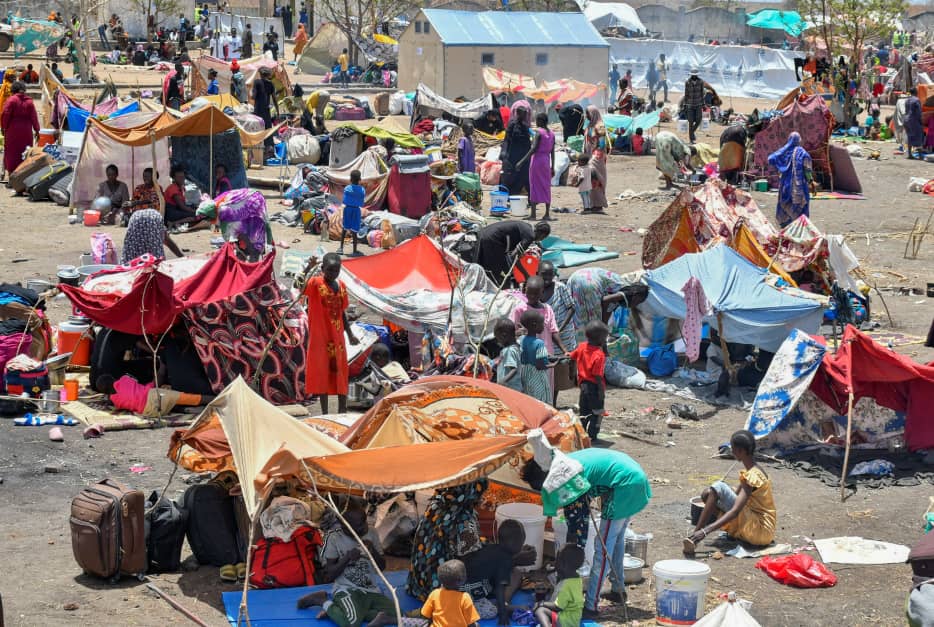
As Sudan’s fighting continues there’s concern that it’ll inflate prices — the cost of a food basket has risen nearly 30% in South Sudanese states along the border since the conflict broke out — and that traders, who get much of their goods from Sudan, won’t have anything to sell. The ongoing Sudan conflict has compounded the situation by driving over 1 million people into South Sudan (World Food Programme, 2025). This has contributed to an increase of eight per cent of the total population in South Sudan. Many arrive in dire need of humanitarian assistance, with high rates of malnutrition evident among new arrivals. Many women and adolescent girls arriving are survivors of gender based violence.
Relatedly, the surge in violence in Upper Nile State, escalating political tensions in Juba, and other political intrigues are threatening to derail South Sudan’s Revitalized Peace Agreement and inflict more pain and suffering on citizens, warns the UN Commission on Human Rights in South Sudan, in a statement issued in Geneva on recently. However, Kenyan President William Ruto has urged South Sudan President Salva Kiir and the first Vice President Riek Machar to engage in dialogue in a bid to foster peace. President Ruto implored the two leaders to put their differences aside as the region works towards the stabilization of South Sudan under the Intergovernmental Authority on Development (IGAD) Strategic Framework. Consistent with Article 7 of the Agreement Establishing the Intergovernmental Authority on Development (IGAD), the IGAD Strategy 2021-2025 is anchored on the overarching aim and objective of building and accelerating regional integration and cross border cooperation among Member States.
What is the reason for conflict in South Sudan?
Conflict and insecurity continue to be significant drivers of people’s needs. Incidents of violence attributed to conventional parties to the conflict remained relatively low due to general compliance with the Revitalized Agreement on the Resolution of the Conflict (R-ARCSS) in the Republic of South Sudan. However, entrenched patterns of violence involving armed youth, such as cattle raiding, border disputes and retaliatory attacks, are predominant drivers of violence. The agreement was meant to see the two warring factions unite their armies under a single unit, write a new constitution, prepare for general elections, organise a census and disarm all other armed groups. However, none of the reforms have been instituted. Despite a revitalized peace agreement and an ostensible coalition government, South Sudan continues to be racked by insecurity. Persistently high levels of violence and trauma—which has caused an estimated 400,000 fatalities—continue to grip the population and underscore the unresolved nature of this conflict.
The status of the military forces was also a major issue in the negotiating process; there are an estimated 200,000 fighters on both sides, and there were questions abouthow to integrate the forces, with Riek Machar advocating a policy of keeping the forces apart for some time until integration is possible. Such a contradiction can be understood in the light of the protracted rivalry that has emerged from the experience of horrific and unreliable inter communal clashes between their respective followers across South Sudan. As of December 2016, when the Second Civil War broke out, Kiir repeatedly stated his reluctance and unwillingness to work with Machar, citing the latter’s ruthlessness. What is more, Dinka-Nuer predominate the political spaces, military and public services as well as the economic sources of the state, which are mentioned as the main obstacle to peace and stability in South Sudan. The dominance is construed as the highest form of fighting between the two major tribes, which continues to lead to confusion and mistrust among government officials who believe their people are not represented. Moreover, this dominance weakens the inclusiveness of its public services, active institutions and multi-governance development.
Earlier this month, Daniel Akech Thiong, senior analyst on South Sudan at the International Crisis Group, said the oil-rich country appeared to be on the brink of war, fuelled by increased access to weapons due to the conflict in neighbouring Sudan. “The fragile peace that has maintained a delicate balance among competing armed leaders since 2018 is at risk of collapsing,” he told Reuters new agency.
Towards the stabilization of South Sudan
Peace, always shaky, has been severely tested in the past two years as the civil war in Sudan, to the north, has wounded South Sudan’s weak economy by cutting the oil production that produces most of the country’s revenue. Presidential elections, which have been postponed repeatedly, are now scheduled to take place next year. Analysts said tensions in Juba are likely to keep delaying crucial tasks ahead for the young country, including the signing of a permanent constitution and the holding of elections. Although polls were originally planned for December, Kiir’s government postponed them, citing funding challenges and “unpreparedness”. South Sudan needs to reassess its commitment to peace. It can do this by including all aggrieved parties in the political peace process. This will help ensure that the country returns to normalcy under a government that’s legitimately in power after credible polls.
Now, it is becoming ever clearer that the leaders of the bloated transitional government – most notably rivals President Salva Kiir Mayardit and Vice-President Riek Machar – do not see any self-interest in rushing into elections. As long as the transition remains in force, they remain in power, unelected but willing and able to plunder public resources. While a more appropriate strategy would be centred on winning over the hearts and minds of the key actors, the current climate suggests that the key leaders are unable or unwilling to protect the population and restore peace, and as such effective enforcement action appears necessary to find a lasting solution. Protecting civilians in South Sudan is, and should be, classified as a priority and justice must be served to the victims of the alleged international crimes in the country. Given that the crisis has a strong regional dimension, particularly in terms of refugee flows across borders, and the potential (and actual) spill over of armed violence into neighbouring countries, which is a cause for sub- regional tension, a comprehensive regional effort, supported by global partners, should be the focus of efforts to address the crisis and ensure that South Sudan experiences peace, paving the path to prosperity.