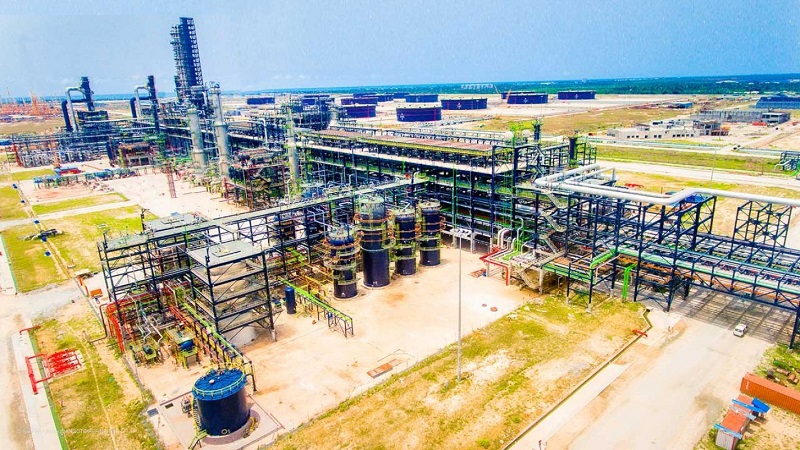
President Muhammadu Buhari inaugurated Nigeria’s first indigenous refinery, the Dangote Refinery, in a historic event on Monday. Costing $19 billion and owned by Africa’s richest man, Aliko Dangote, the refinery aims to address fuel shortages, boost domestic refining capacity, and reduce import dependency. With a capacity of 650,000 barrels per day, it plans to export surplus petrol and diesel, turning Nigeria into a petroleum product export hub. The refinery is expected to stimulate economic growth and transform Africa’s downstream petroleum product market. President Buhari hailed it as a significant milestone for Nigeria’s economy.
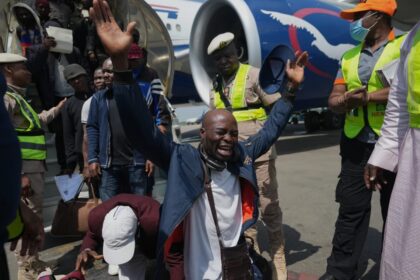
In a separate incident, Fulgence Kayishema, one of Rwanda’s most wanted suspects for the 1994 genocide, was arrested in South Africa on Wednesday. Kayishema, a former police officer, is accused of orchestrating the killings of over 2,000 people seeking refuge in a church during the early days of the genocide. After evading justice for nearly three decades, he was apprehended in a small town east of Cape Town. During his court appearance, Kayishema confirmed his identity and displayed religious books to those present. He faces charges of genocide and crimes against humanity and is expected to be extradited to Rwanda for trial. South African prosecutors have also brought charges against him for making false statements on immigration forms. The arrest resulted from a collaboration between the International Residual Mechanism for Criminal Tribunals, Interpol, and multiple countries, including Rwanda, South Africa, and the United States.
On Thursday, May 25, the United States accused Russia’s Wagner Group of supplying surface-to-air missiles to Sudan’s paramilitary Rapid Support Forces (RSF), contributing to the ongoing conflict. The US Treasury Department has imposed sanctions on Wagner’s leader in Mali for attempting to obtain weapons for Russia’s war in Ukraine. Despite ceasefire agreements, clashes persist, and the US aims to reduce violence and restore civilian rule in Sudan. Concerns were raised over the potential humanitarian catastrophe, and Secretary of State Antony Blinken emphasised the need to prevent Wagner’s further engagement in Sudan.
In other news, Namibia confirmed an outbreak of Crimean-Congo hemorrhagic fever (CCHF) following the death of a patient in Gobabis. The Ministry of Health and Social Services reported 27 identified contacts, including 24 health workers. People who had direct contact with the patient are urged to seek medical attention. CCHF is transmitted by ticks or livestock and primarily affects those involved in the livestock industry. Symptoms include fever, aches, nausea, vomiting, and a bleeding skin rash, with the potential for severe organ damage and fatality.
It was a moment of celebration and reflection on Thursday as delegates from across Africa gathered in Addis Ababa to celebrate the 60th anniversary of the Organisation of African Unity (OAU), now known as the African Union (AU). The ceremony commemorated the signing of the OAU charter on May 25, 1963, by heads of state from 32 independent African nations. The OAU aimed to eliminate colonisation and apartheid, promote unity and solidarity, facilitate development cooperation, protect member states’ sovereignty, and encourage international collaboration. In 1999, the decision was made to establish the AU, focusing on African integration and economic development. During the event, AU Commission Chairman Moussa Faki Mahamat emphasised the importance of honouring the organisation’s founders and warned against external interference, cautioning against Africa becoming a battleground for global powers.
On a different note, Germany extended its military mission in Mali for an additional year on Thursday, aiming to conclude the decade-long operation by May 2024. The decision comes amid challenges posed by the ruling military junta in Bamako and the presence of Russian forces. German lawmakers approved the extension with a vote of 375 to 263, while one member abstained. The German troops, numbering around 1,000, are primarily stationed near Gao in northern Mali, providing reconnaissance support for the UN peacekeeping mission MINUSMA.
Meanwhile, the Democratic Republic of the Congo (DRC) seeks to strengthen its partnership with China as they renegotiate mining contracts. DRC’s President, Félix Tshisekedi, visited China and upgraded the bilateral relationship to a comprehensive strategic cooperative partnership. China is a significant investor in the DRC’s mining industry. Tshisekedi aims to improve his country’s conditions by renegotiating mining contracts, including those signed in 2008. Talks on renegotiations are going well, with hopes for a state-to-state agreement by year’s end. This visit follows similar diplomatic exchanges between African leaders and China. The African continent is a battleground for influence among global powers, including China, Russia, and the United States.
In another development from Somalia, on Friday, Al-Shabab militants attacked a military base operated by African Union forces from Uganda in Bulo Marer. Multiple explosions were detonated, followed by a firefight. The militants managed to penetrate the base and were seen inside the town. The situation at a nearby base manned by Somali forces is unclear. Al-Shabab claimed responsibility for the attack, stating they were “overrunning” the base. The African Union mission confirmed the attack, while the Somali government assessed the security situation. This attack occurs as the government prepares for the second phase of military operations against Al-Shabab, aiming to take over security responsibilities by December 2024.
On a different note, over 30 women who were abducted by separatist rebels for protesting illegal taxes were released on Friday, according to the government. The women were taken from a farming village and subjected to various forms of abuse during captivity. The separatists imposed taxes on the local population, including monthly payments, marriage taxes, and burial fees. The conflict between English-speaking separatists and the government has been ongoing since 2017, resulting in thousands of deaths and displacements. The government has accused the separatists of committing atrocities, and releasing these women highlights the ongoing challenges civilians face in the region. The government has called for community collaboration to address the situation and protect women from further brutality.
On Thursday, Eritrean forces reportedly obstructed an UN-led humanitarian mission from entering a village in Ethiopia’s Tigray region, violating a peace deal signed last year. The agreement aimed to end the conflict in Tigray and involved withdrawing all foreign forces from the area. Aid workers reported that the Eritrean troops prevented officials from the UN Office for the Coordination of Humanitarian Affairs (UNOCHA) and other NGOs from reaching the village of Gemhalo. The Eritrean forces were accused of committing various violations and denying humanitarian access to the region. Similar incidents involving the obstruction of peace monitoring teams have also occurred recently. The Tigray conflict has caused significant casualties, displacement, and food insecurity, with various parties accused of atrocities. The Eritrean and Ethiopian governments have been approached to comment on the recent incident.