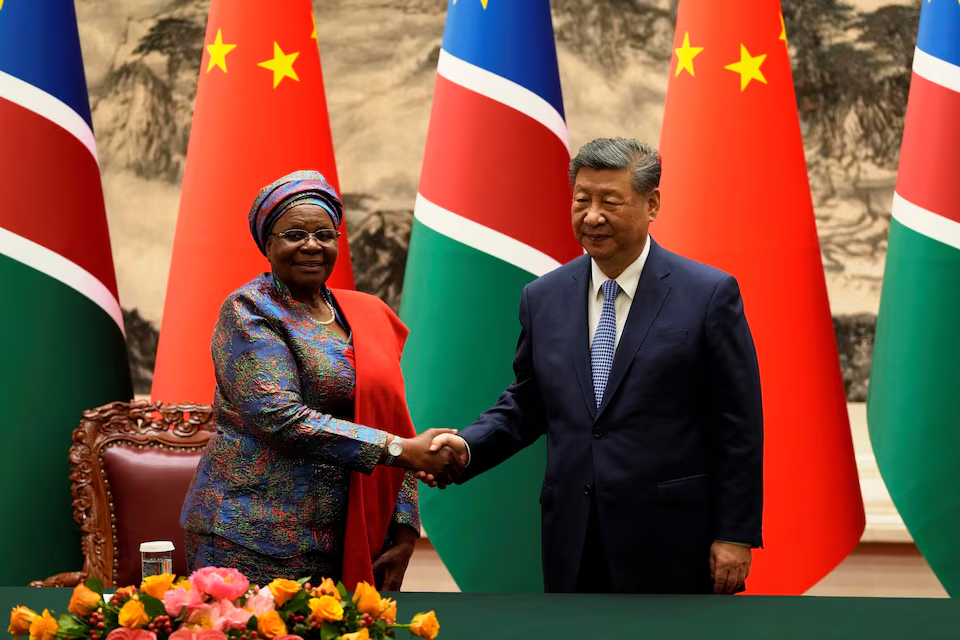
This Week, China pledged to deepen cooperation with Namibia across energy, agriculture, infrastructure and minerals during talks in Beijing between President Xi Jinping and Namibian President Netumbo Nandi-Ndaitwah, who is on a seven-day state visit — her first outside Africa since taking office. The two countries signed eight documents, including agreements on green minerals and an economic partnership framework. A joint statement highlighted plans to strengthen cooperation on critical minerals, including uranium, lithium and rare earths, with an emphasis on local processing, technology transfer and skills development. China already buys about a quarter of Namibia’s exports, with uranium accounting for 85% of the $1.3 billion in goods purchased last year, and Chinese firms have invested $4.2 billion in the country, mostly in the metals sector. Namibia is also emerging as a major oil and gas prospect.
Security operatives in Nigeria have rescued at least 39 schoolchildren and six teachers kidnapped on May 15 from three schools in Oyo State’s Oriire district after 56 days in captivity. According to presidential spokesperson Bayo Onanuga, eight kidnappers were arrested, while several others were reportedly neutralised during the operation. One teacher was killed shortly after the abduction, and another died in captivity, triggering nationwide outrage and a teachers’ strike in Ogbomoso. President Bola Tinubu, describing himself as “profoundly happy”, thanked the military, police and intelligence agencies, stressing that no ransom or prisoner exchange was involved despite kidnappers’ demands for a jailed gang leader’s release.
Senegal’s Constitutional Court struck down a constitutional amendment adopted by the parliament on June 29, ruling it “contrary to the Constitution” following an urgent appeal filed by President Bassirou Diomaye Faye. The proposed reform would have barred a sitting president from simultaneously leading a political party — a provision seen as significant since Faye recently announced plans to launch his own party. The push for the amendment was driven by the leader of the ruling Pastef party and former prime minister Ousmane Sonko, whom Faye dismissed as head of government in May. The court found the adoption process violated procedure, including failing to identify funding sources for new public spending and ignoring a government request to apply a “blocked vote” procedure, halting the reform process amid rising tension between Faye and Sonko.
Angola’s central bank has expanded the list of currencies banks can use to meet foreign-currency reserve requirements to include China’s yuan, alongside the U.S. dollar, euro and South African rand. The Bank of Angola announced the change in a directive dated July 2 and published on Thursday. China has long been Angola’s largest trading partner, buying the bulk of its crude oil exports while financing billions of dollars in roads, railways, power projects and other infrastructure over two decades. The move, while framed as a technical regulatory adjustment, reflects Angola’s deepening economic ties with Beijing and fits into China’s broader campaign to internationalise the yuan across African economies, following similar moves involving Egypt, Nigeria and South Africa.
Algeria has fully reopened its national airspace to air traffic from Mali, effective Friday, July 10, allowing all flights to and from the West African country. Both nations had closed their airspace to each other’s aircraft in April 2025 after Algeria said its military had shot down a Malian surveillance drone that had violated its territory – an account Mali rejected, insisting the drone had crashed inside its own borders. Algerian President Abdelmadjid Tebboune has now also ordered the return of his country’s ambassador to Bamako, having recalled him for consultations in April last year. Mali’s government also confirmed the reciprocal reopening and the mutual return of ambassadors.
Kenya’s economy is projected to grow 4.3% in 2026 and 4.4% in 2027, the World Bank said, a downward revision of 0.6 percentage points from its November forecast due to fallout from the U.S.-Israeli war on Iran driving up global energy prices. This would mark the slowest growth since the pandemic, down from 4.6% in 2025. However, the World Bank warned that higher fuel and transport costs could push Kenya’s poverty rate up by 2 to 4.5 percentage points, driving between one million and 2.4 million more people below the poverty line. It also flagged risks from Kenya’s August 2027 elections, which could delay investment decisions and structural reforms, though easing monetary policy, a stable exchange rate and agricultural recovery are expected to provide some cushion.
The African Development Bank approved €205 million (about $234 million) for Morocco to support its Rail Infrastructure Development Support Project, aimed at extending the country’s high-speed rail network and upgrading the busy Kenitra-Marrakech corridor, a key route for passenger and freight traffic. The funding will finance new rails and track components for both conventional and high-speed lines, plus upgrades around the Casablanca rail hub. It also supports Morocco’s broader $10 billion rail expansion plan, including a new 430-kilometre high-speed line, and its Rail 2040 modernisation strategy ahead of the 2030 World Cup, which Morocco co-hosts with Spain and Portugal.
Eleven more migrants deported by the Trump administration under a policy of sending them to third countries arrived in Eswatini from the United States, a U.S. lawyer following the case confirmed. This brings to 29 the total number sent to the small southern African monarchy under a $5.1 million agreement with Washington. Of those 29, only two have been released and repatriated — one to Jamaica and one to Cambodia — while the rest remain detained at Eswatini’s Matsapha correctional facility despite having already served sentences for crimes committed in the US.
Tanzania’s central bank has purchased approximately 28 metric tonnes of gold over the past 18 months, worth roughly $3.68 billion, to bolster international reserves and support the Tanzanian shilling, Governor Emmanuel Tutuba announced at an IMF-World Bank meeting in Gambia. The Bank of Tanzania has been building gold reserves since 2023, accelerated by a 2024 regulation requiring mining firms and traders to sell at least 20% of exported gold to the central bank at competitive, same-day London market prices. Tanzania, one of Africa’s top ten gold producers, has seen its total foreign exchange reserves climb to about $6 billion, covering roughly 4.3 months of imports.
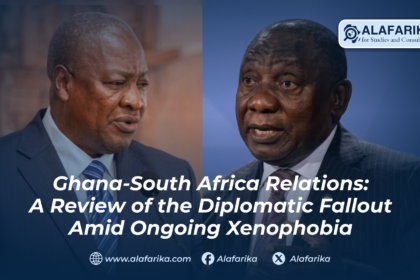
Ghana has postponed bilateral meetings with South Africa originally planned for August, citing a surge in anti-migrant violence, government spokesperson Felix Kwakye Ofosu said. The talks were to be hosted by Ghana and co-chaired by Presidents John Dramani Mahama and Cyril Ramaphosa under the South Africa-Ghana Bi-National Commission. Kwakye Ofosu said the violence would likely have overshadowed the discussions, adding it would be more appropriate for Ramaphosa to visit once xenophobic tensions ease. South Africa’s presidency said it learned of the deferral only when confirming arrangements but would continue engaging diplomatically to reschedule them.