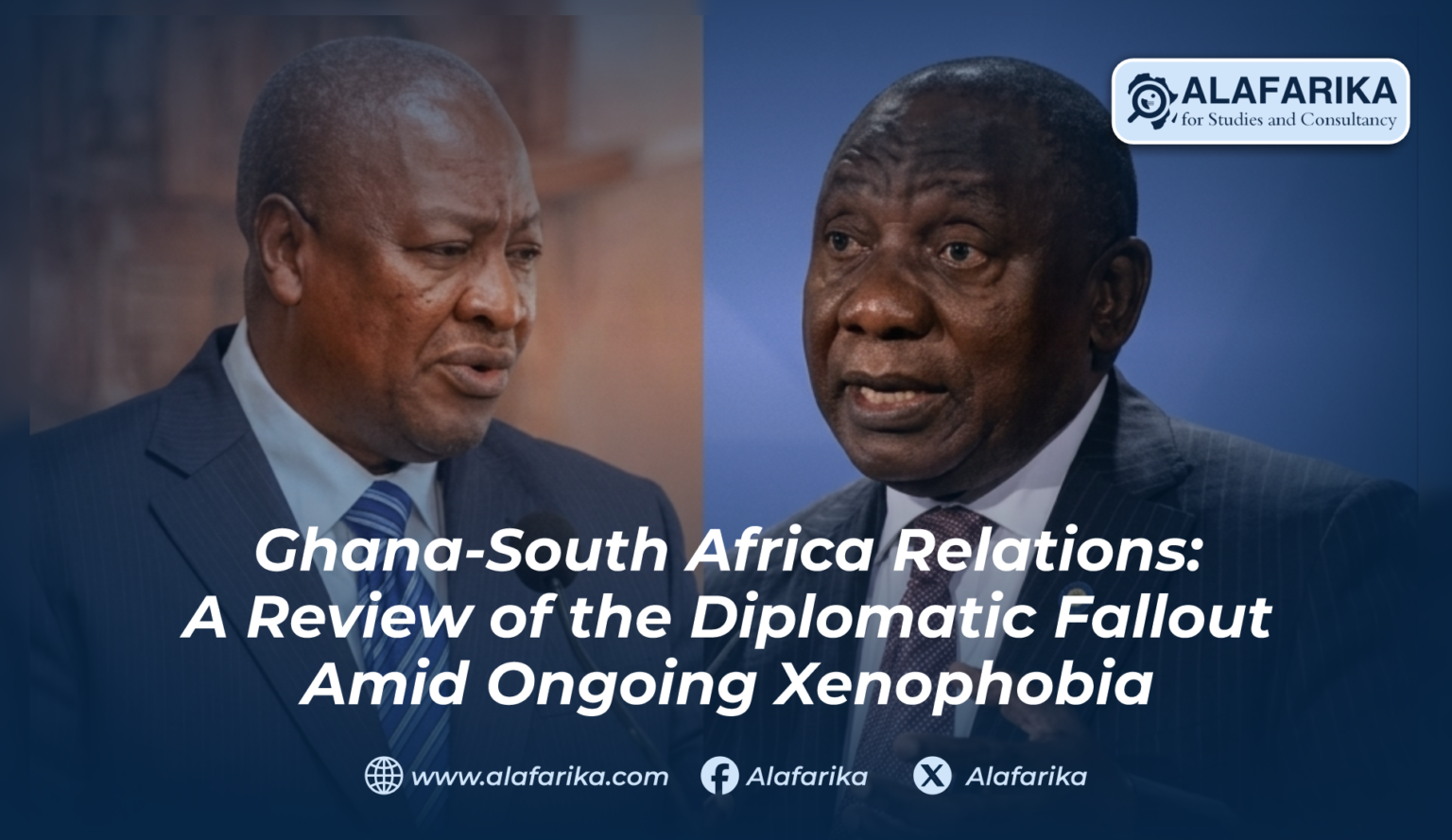
A diplomatic rift has emerged between Ghana and South Africa, two of Africa’s most prominent economies, after the Ghanaian authorities called off a planned visit by South African President Cyril Ramaphosa, originally scheduled for the first week of August 2026 in Accra.
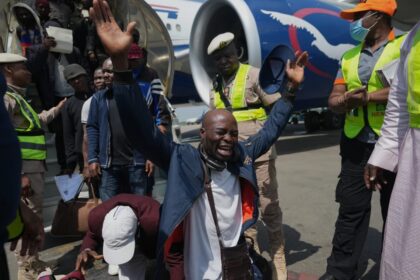
The deferral followed a surge of xenophobic violence across South Africa, which has displaced migrants from Ghana, and other African countries, including Nigeria, Zimbabwe, and Malawi. The escalating attacks and mass protests have prompted several African governments to organize emergency repatriation exercises for their citizens.
The Visit, which had been widely reported as a state visit, was intended to reinforce the longstanding relationship between the two countries and provide an opportunity for discussions on bilateral cooperation.
This report examines the factors behind the ensuing diplomatic row, the official positions of both governments, the current state of their relationship, and the likely trajectory of their dispute.
Ghana’s Official Position
According to the Ghanaian authorities, the decision to decline President Ramaphosa’s visit to Accra comes as a result of the surge in anti-foreigner violence in parts of South Africa in recent weeks. This situation has led to the repatriation of approximately 1,000 Ghanaians, with an additional 900 Ghanaians said to be registered for repatriation. A 40-year-old Ghanaian named Bashiru Isak was also reported to have been killed in Khayelitsha, in the attacks on June 30, when South Africans escalated their crackdown against African migrants in the country, an incident that the Ghanaian authorities described as “a senseless act of violence and the rising tide of xenophobia.”
Government spokesperson Felix Kwakye Ofosu confirmed that Accra had formally communicated the deferral to Pretoria, explaining the reasoning directly. He said: “We sent them a communication indicating that it would be best to defer the visit in view of the present climate around xenophobia.” Reports explained that “the Ghanaian government was deeply concerned about the safety and dignity of its citizens in South Africa” and could not proceed with the planned high-level visit scheduled for August “under the current circumstances.”
A Ghanaian diplomatic source described the government’s stance bluntly: “The government’s position on the protection of Ghanaians abroad is non-negotiable.” This source emphasized that this message was clearly communicated to South Africa, and they were urged to take real action against the attacks and secure the safety of Ghanaian citizens, which has to happen before any official visit can take place.
South Africa’s Counter-Narrative
South African authorities responded to Ghana’s rejection of President Ramaphosa’s visit by pushing back on both the factual basis and the diplomatic framing of the dispute. On the disputed killing, South African police said they have no record of any incident in Khayelitsha and insisted that the only Ghanaian victim was 35-year-old Kwabena Boagen, whose death was completely unrelated to the protests, as he was shot on June 29 in a suspected extortion-related attack at a barbershop in Nyanga, Cape Town.
South Africa’s Justice Minister, Mmamoloko Kubayi, directly accused Ghana of disinformation. She stated: “It is concerning that Ghanaian authorities continue to communicate false information about South Africa regarding developments on irregular migration.”
“The spread of false information to perpetuate the false narrative that South Africa is xenophobic is unacceptable,” she added.
Pretoria has also challenged the notion that a “state visit” was ever on the table. Presidential spokesman Vincent Magwenya clarified that the visit is exclusively related to the Ghana-South Africa Bi-National Commission, not a formal state visit. He said: “The request was to confirm the seating of the BNC, which was to be co-chaired by both presidents and had already been agreed upon after the last BNC meeting. There was no request for a state visit.”
Magwenya also brushed off any talk of a diplomatic crisis, reassuring reporters that South Africa doesn’t see any reason for a diplomatic row with Ghana. He said, “We don’t believe there should be any tension whatsoever with Ghana.”
Current Status of the Diplomatic Fallout
Beneath the official statements lies a fundamental disagreement over the underlying facts. Ghana’s position rests on the killing of a citizen amid xenophobic unrest, and a government that felt it had no choice but to prioritize the safety of its diaspora over the optics of a high-profile visit.
On the contrast, South Africa’s position characterizes the visit as a routine bi-national commission session rather than a state visit, and regards the broader narrative around it as factually inaccurate and reputationally damaging.
Neither governments have moved from its position to date. What is currently being witnessed is a standoff less about the visit itself and more about whose version of events gains wider acceptance across the continent.
What Comes Next?
The rejected visit is unlikely to be the end of this diplomatic tension. Ghana had already taken this dispute beyond bilateral channels well before the visit was declined. In May 2026, Ghana’s Foreign Affairs Minister Samuel Okudzeto Ablakwa formally petitioned the African Union. He wrote to the Chairperson of the AU Commission requesting the inclusion of xenophobic attacks in South Africa be placed on the agenda of the Eighth Mid-Year Coordination Meeting in El Alamein, Egypt.
The petition described the violence as a matter of “urgent continental interest” and warned that it “weakens the spirit of Pan-Africanism,” while calling on the AU to strengthen monitoring mechanisms and establish a formal fact-finding mission to investigate the root causes of the attacks. Ghana argued the crisis violates the African Charter on Human and Peoples’ Rights and undermines the free-movement goals of the African Continental Free Trade Area.
South Africa’s response to Ghana’s petition was equally sharp, calling Ghana’s move to escalate the matter to the AU “regrettable.” Pretoria’s Ministry of International Relations and Cooperation countered that it had already acted decisively against the unrest, with Minister Ronald Lamola stating, “We are a people who live the value of ubuntu. We should never allow the legitimate concerns of our communities about illegal migration to breed prejudice towards our fellow Africans.”
However, Ghana is not alone in calling out the South African government over the wide crackdown on migrants. Other nations with large diasporas in South Africa, such as Zimbabwe, Nigeria, and Mozambique, are facing similar domestic pressure to protect their citizens and are joining voices to condemn the attacks. Nigeria summoned South Africa’s High Commission over the deaths of two Nigerian nationals and has begun facilitating voluntary repatriation. Mozambique has also lodged formal complaints over the treatment of its citizens, while Kenya, Malawi, Lesotho, and Zimbabwe issued travel advisories warning their citizens of the risks.
Looking ahead, whether the African body formally takes up Ghana’s petition or whether South Africa succeeds in reframing the debate around irregular migration rather than xenophobia will shape how much diplomatic pressure Pretoria faces going forward.
Also, if the fact of the June 29/30 killing is independently resolved and South Africa shows measurable progress on migrant safety, the supposed planned visit, which pertains to the Ghana-South Africa Bi-National Commission, may become the venue where the two governments attempt to reconcile their conflicting accounts and where Ghana’s demand for concrete safety guarantees is tested.
With Nigeria, Mozambique, and others voicing similar grievances, South Africa faces a broader credibility challenge across the continent, not just with Ghana, raising the stakes for Pretoria to demonstrate visible accountability rather than rely on denials alone.