In political philosophy, one of its powerful core concepts is a classic realist principle, attributed to Lord Henry John Temple, popularly known as Palmerston: “We have no eternal allies, and we have no perpetual enemies. Our interests are eternal and perpetual, and those interests it is our duty to follow.” This philosophy depicts politics as a constantly shifting terrain of interests, power relations, and structural necessity. When the objectives or ambitions of two heads of state change, even the closest political friendships can break down under the pressure of governing a country.
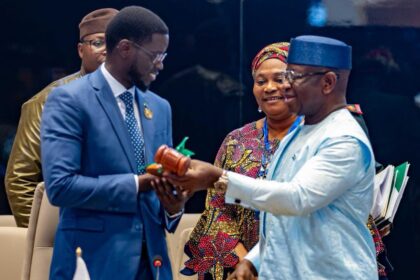
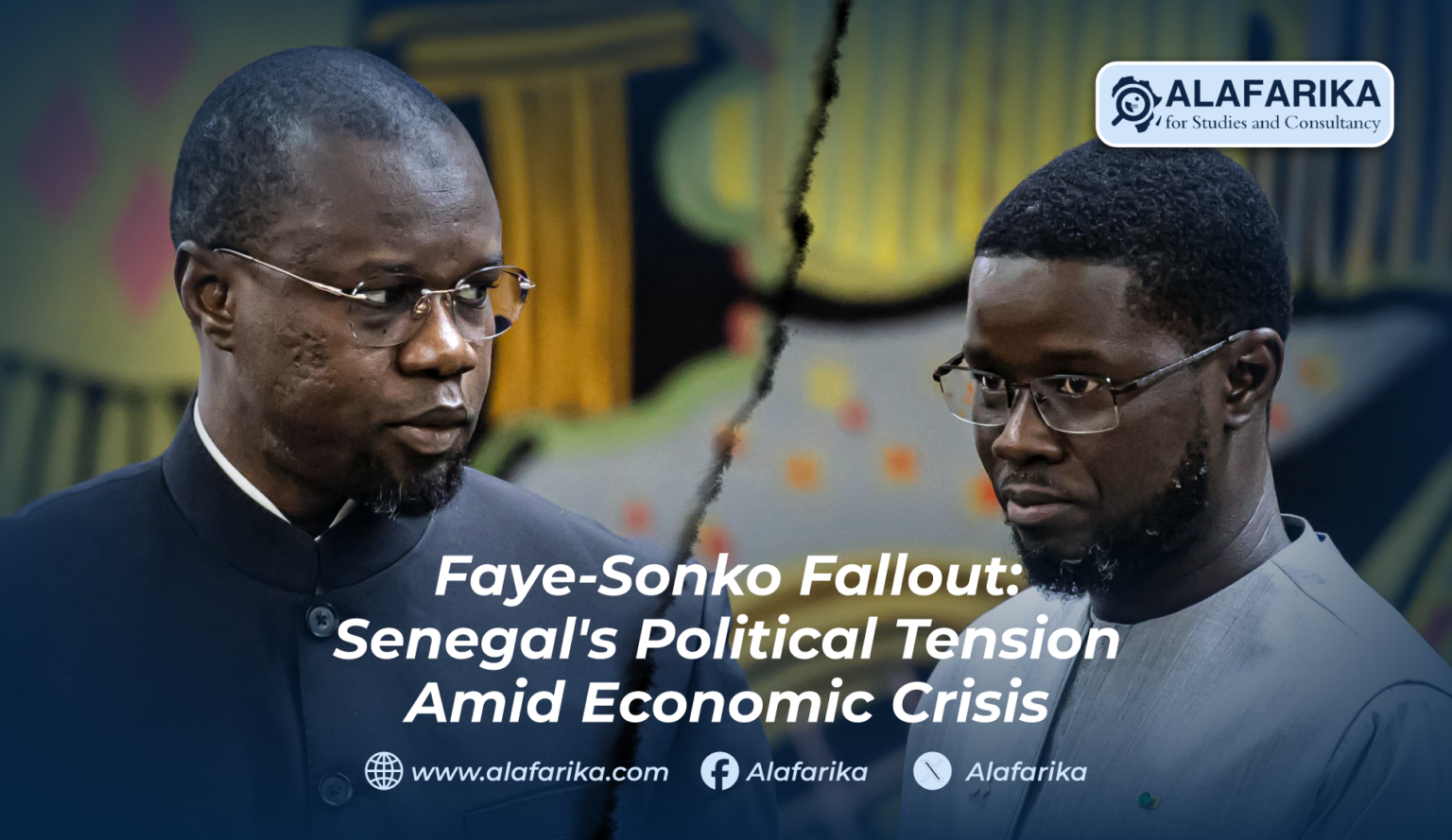
Senegal’s political scene recently offered a perfect example of this philosophy. The country has been shaken by the sudden, dramatic fallout between President Bassirou Diomaye Faye and his prime minister, Ousmane Sonko. It ended with President Faye using his executive powers to dismiss Sonko and dissolve the entire government.
For years, these two men were political partners who built strong bond that took over from the former ruling party. But the shift from political activism to real governance has created a serious divide between the two allies. This significant fallout has placed one of West Africa’s most stable democracies at a crossroads, raising a crucial question, which this analysis seeks to answer: What lies ahead for Senegal’s political landscape after the Faye-Sonko fallout?
Faye-Sonko Alliance
In recent African political history, there are only a few alliances that carry as much symbolic weight as that between Bassirou Diomaye Faye and Ousmane Sonko. The political partnership between them was not formed in backroom political deals; rather, it was forged through a decade of shared ideological struggle and structural resistance. They were both former tax officials, jailed by the Macky Sall administration ahead of the 2024 elections, and both released just ten days before the rescheduled presidential vote.
Due to a defamation conviction, Sonko was barred from running in the presidential election. He then anointed Faye as his proxy candidate and threw his full support behind Faye, whose campaign slogan signifies a strong bond between them both. The slogan “Diomaye mooy Sonko” (Diomaye is Sonko) sent a strong message that a vote for Faye is a vote for Sonko’s agenda, values, and visions. Many Senegalese citizens who are already frustrated with the Sall administration saw Faye and Sonko’s political activism as an opportunity to seek redemption. As a result, Faye won the election decisively in the first round with 54.28% of the vote.
Upon taking office as Africa’s youngest elected president, Faye immediately appointed Sonko as his prime minister. This was celebrated as a great victory for loyalty and teamwork. It showed the world a unique system where two leaders ran the country together, and it seemed like nothing could break their bond, until the difficult, stressful realities of governance began to set in.
How the Partnership Fell Apart
The Faye-Sonko alliance did not disintegrate overnight. Rather, the fallout was the product of structural contradictions and disagreements that had been growing for months. Apparently, the alliance was built on a very fragile foundation; while it helped them win the election, it quickly turned into an awkward struggle for control over who was actually running the country. For months, President Faye and Prime Minister Sonko operated almost separate administrations within the same government, only for tensions to break out into the open eventually.
The first major cracks appeared over political control and leadership styles. By early May 2026, Faye had begun criticizing what he described as Sonko’s “excessive personalization” of the ruling movement after what appeared to be discomfort with how the PASTEF’s affairs still revolved entirely around Sonko. In a televised interview, Faye cautioned that the party “risks being destroyed if its participants don’t change course.”
He said further: “The sacrifices, which resulted in deaths, injuries, and imprisonments, were not made for the sake of any one man but for the very essence of the project.” Afterwards, President Faye issued the clearest threat, which highlights the extent to which the alliance has been fractured. He said, “As long as he remains prime minister, it is because he has my confidence. When that is no longer the case, there will be a new prime minister.”
On the other side, Sonko equally fired back after feeling unsupported by Faye. He openly accused the president of a “failure of leadership” for not defending him against political critics. He had earlier signaled in March 2026 that he would be willing to take PASTEF back into opposition if Faye’s administration shifted away from its founding principles. Just days before his dismissal, he publicly declared: “I am not a prime minister who blindly obeys and agrees to everything.”
The Economic Factor behind the Fallout
Reports revealed that the real breaking factor that brought the alliance to an abrupt collapse was a disagreement between President Faye and Sonko over measures to address Senegal’s severe economic crisis. Faye’s administration, shortly after taking office, discovered that the previous government had hidden billions in liabilities, revealing an actual public debt of $13 billion, equivalent to 132% of Senegal’s GDP. This discovery forced the International Monetary Fund (IMF) to freeze a crucial $1.8 billion loan program that Senegal applied for. To save the near-bankrupt economy, two visions emerged within the government for how to respond, causing disagreement within the two leaders.
Sonko, being a fiery populist, firmly rejected the IMF’s demands for economic reforms and debt restructuring. He even blocked requests from his own finance minister, Cheikh Diba, to raise domestic fuel prices, despite warnings that fuel subsidies could overrun the national budget by $2 billion (1.15 trillion CFA francs). As for President Faye, he favored a more realistic, conventional approach, showing a willingness to work with international lenders to stabilize the country’s finances before a critical June 30 negotiation deadline.
On the very day of his dismissal, Sonko gave an intense speech condemning Western countries for pressuring Senegal about a new law that increases punishments for same-sex relationships. He boldly stated, “If they have chosen these practices, that is their problem, but we have absolutely no lessons to learn from them.” While this speech was locally celebrated in the streets of Dakar, it carries serious diplomatic problems for a government that was urgently trying to win back the financial support of international lenders.
At this point, the alliance had become unsustainable. President Faye then issued a sharp executive decree on May 22, 2026, which ended Sonko’s term and dissolved the entire cabinet, bringing a dramatic and permanent end to Senegal’s most famous political friendship.
President Faye’s Path Forward
For President Faye, firing Sonko is both a major declaration of independence and a massive gamble. He has made it clear that the president’s authority is absolute and that the era of running the country as a duo is officially over. Senegal’s constitution gives the president wide-ranging powers, including the right to fire a prime minister by simple decree without needing parliament’s approval. Faye has now used that exact power against the very man who put him in office.
In the short term, this move gives Faye a clear advantage. He can now choose a new prime minister who agrees with his realistic economic goals, making it much easier to secure a deal with the IMF. The Finance Minister had already hinted that bailout talks would resume in the week of June 8, with the goal of reaching a final agreement by June 30. Without Sonko there to block adjustments to fuel prices and debt negotiations, those economic meetings will be much smoother.
However, the political cost for Faye is incredibly high. Faye’s support from the public was never based on his personal popularity; it was tied to the emotional energy of Sonko’s political movement. By cutting ties with Sonko, Faye has separated himself from the most charismatic and energetic leader within the PASTEF party. His new government will likely struggle to inspire the same passionate public support that swept him into power in 2024.
The Path Forward for Ousmane Sonko
Ousmane Sonko responded to his firing with surprising calm. “Alhamdulillah (Praise be to God). Tonight I will sleep with a light heart,” he posted on Facebook from his home in Dakar. Instead of showing anger, he showed the quiet confidence of a man who believes time is on his side. Despite being freed from office, Sonko returns to the role that comes most naturally to him: being the face of the political opposition. He still has a massive following among young people, a powerful pro-Africa message that appeals to a generation tired of Western influence, and a proven ability to mobilize crowds on the streets and on social media.
There are strong indications that his path back to official power is already being prepared. In April 2026, the Senegalese National Assembly—which is controlled by his party, PASTEF—passed changes to the election laws that could allow Sonko to run for president in 2029. During his time as prime minister, his major achievement was challenging a major gas project contract and revoking about 71 mining licenses. This already portrayed him as a leader who fights for Senegal’s natural resources and opposes foreign control—qualities that will strongly unite his supporters.
However, the losses for him are equally real. He leaves the government without fixing a single major economic problem. His time as prime minister will not be remembered for getting things done, but rather for his constant defiance—defying the IMF, defying his own finance minister, and ultimately defying the president. For a man who helped run Senegal for over two years, having no real policy successes is a major weakness that his political rivals will use against him.
His legal troubles have not gone away either. Even if the new election laws seem to clear the way for him in 2029, Senegal’s courts could act against him. A new legal challenge—whether politically motivated or not—remains a threat for him. Perhaps the biggest damage to his reputation is publicly accusing President Faye of a “failure of leadership” instead of handling the matter privately. Also, His aggressive speech about the country’s same-sex relationship laws—delivered on the exact day he was fired—gave President Faye a perfect excuse to justify the dismissal to international partners.
Can Sonko Weaponize Parliament Against President Faye?
As it turns out, losing the prime minister’s office did not mean Ousmane Sonko was out of the fight. Within 48 hours of his dismissal, the Speaker of Senegal’s National Assembly, El Malick Ndiaye – a loyal Sonko ally – resigned from his post. He claimed that his resignation was a personal decision, citing the “higher interest of the nation” as a reason for his departure. Lawmakers were immediately called to a full session on Tuesday, May 26, to vote on reinstating Sonko as a member of the parliament and vote on a new Speaker. However, some critics say reinstating Sonko would be illegal as he has never been a member of parliament.
This development implies that what President Faye intended as a permanent firing is being turned by Sonko into a strategic transfer of power, moving his base from the executive branch directly into the legislature—a move that poses threats for the president. The ruling PASTEF party enjoys a comfortable majority in the parliament, as it currently holds 130 out of the 165 seats in the National Assembly. If Sonko gets reinstated as a member and voted as the speaker, he completely controls the lawmaking process. Any fuel price changes, debt reforms, or budget adjustments that Faye’s new government needs to satisfy the IMF must go through a parliament where Sonko, as Speaker, would control the votes.
The symbolic damage to Faye’s authority would be huge because the position of Speaker is incredibly powerful and far from being ceremonial. As President of the National Assembly, Sonko would occupy Senegal’s second-highest constitutional office, placing him just one step away from the presidency. Through the office, he would quickly gain a powerful platform to present himself as the true voice of the people, directly challenging a president he has already accused of weak leadership.
However, the parliamentary weapon, for all its potency, is not without its dangers for Sonko. To start with, the 130 PASTEF lawmakers are not guaranteed to blindly follow Sonko. Faye is still the president, and he commands the official power, resources, and influence of the state. There is a probability that some lawmakers will take side with the president over their former prime minister, and Faye’s team will likely try to quietly break Sonko’s grip on parliament.
Also, President Faye still has in his favor a constitutional counter weapon. Under Senegal’s constitution, the president has the power to dissolve parliament and call for early elections. If Sonko’s continues to weaponize the parliament against President Faye, by obstructing his policies and deepening economic crises, President Faye could dissolve the parliament and gamble on a new election to completely reset the legislature, just as he dissolved the opposition-led National Assembly in September 2024. This would test whether Sonko’s popularity can still win votes when he is actively blocking the government. Although, there is a two-year constitutional protection shielding the parliament from dissolution until November 2026.
The Future of Senegal’s Leadership
Barring any major unexpected events, the clash between Faye and Sonko is far from over—it has simply moved to a new battleground. The 2029 presidential election is now the clear stage where Senegalese voters will ultimately decide the winner of this rivalry. The most immediate expression of that battleground has shown to be the parliament, which showcases Sonko’s influence within 48 hours of his dismissal, clearing his path to being the speaker.
For President Faye, the next three years offer both great opportunity and serious danger. If he can stabilize the economy, fulfill his promises to fight corruption, and build a working government without Sonko, he will enter the 2029 election as an incumbent with real achievements to show. On the other hand, if the economy fails, his political coalition breaks apart, and public frustration grows, he will likely face a powerful challenge from Sonko running directly against his record—and winning it.
For Sonko, the strategy is different but just as risky. The changes to the election laws already work in his favor, and his rapid move toward the National Assembly speakership signals that he intends to fight this battle on every front simultaneously—not just in the streets but also inside the very institutions that Faye now leads. His biggest challenge now is keeping his massive support alive for three years without having a government position, while also avoiding the legal troubles that kept him out of the 2024 race. His calm reaction to being fired suggests he is already planning for this long-term fight.
What remains certain is that Senegal’s political environment has changed forever. The political movement that brought both men to power is now turning on itself—just as many revolutions eventually do. The real question for Senegal is not whether this period will be rocky, but whether its democratic institutions, independent organizations, and voters are strong enough to get through it without much damage.