Introduction
Landlocked Mali is part of the Sahel, a vast strip of land south of the Sahara Desert that has become the epicentre of extremist violence in recent years. According to last year’s Global Terrorism Index by the Institute for Economics and Peace, the region now accounts for 51% of deaths worldwide caused by violent extremism, up from 1% almost two decades ago. Deaths from extremist attacks have increased nearly tenfold since 2019.
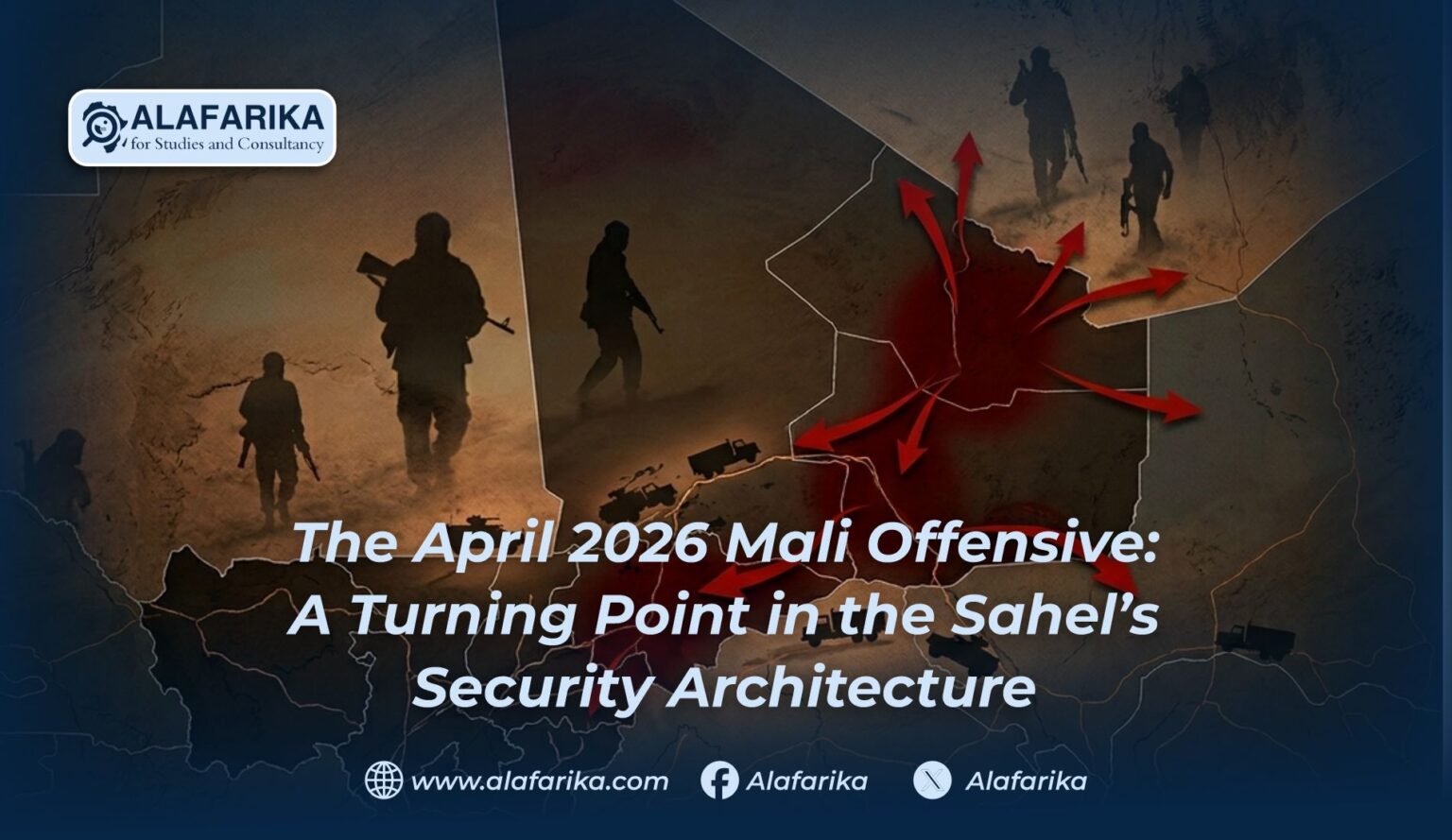
The coordinated attacks carried out by the al-Qaeda-linked Jama’at Nusrat al-Islam wal-Muslimin (JNIM), in coalition with the Tuareg-led Azawad Liberation Front (FLA) in April 2026 exposed the fragility of Mali’s military government and established the developing sophistication of insurgent warfare in the Sahel. The offensive besieged strategic military bases, airports, political centres, and urban areas as well as Bamako, Kidal, Gao, Mopti, and Sévaré. Analysts described the attacks as “unprecedented” in scale and coordination.
However, despite the instability, most mining companies have maintained operations, industry executives and analysts told Reuters. While Mali remains one of Africa’s top gold producers at a time when global prices are near record highs. The country also holds significant deposits of lithium and uranium, reinforcing its strategic importance in global commodity markets. The Malian government said operations to counter insurgents are ongoing and that the situation is under control, although concerns persist within the industry.
Why is this attack different?
Mali is undergoing a profound transformation in the nature of its security threats, having shifted from a state of limited local insurgency to a cross-border jihadist space, where armed groups now function as complex actors combining combat, economic, and social roles.
Multiple structural factors have driven this shift — foremost among them state fragility, high youth unemployment, recurring political crises, and exceptional demographic pressure — turning West Africa into a centre of gravity for a globalised and constantly regenerating jihadist movement. This unfolds against a backdrop of declining traditional international engagement, the rise of local and regional dynamics that further complicate the landscape, and a conspicuous expansion of Russian and Chinese presence that has become an independent variable in the stability equation.
Jama’at Nusrat al-Islam wal-Muslimin (JNIM) represents the most widespread and influential force, with approximately 6,000 fighters deployed across Sahel states including Burkina Faso, Niger, Benin, Togo, and Ghana, and has recently announced its first attack inside Nigeria. The ISIL affiliate in Sahel Province (ISSP) is also active in northern Menaka. JNIM and ISSP assault military bases while punishing communities seen as collaborating with the government.
It was JNIM that forced people in Moctar’s village to leave. The group initially targeted fringe areas with little government control, but as its forces and technical abilities, such as the use of drones, have grown, JNIM has become more daring. Late in September, its fighters attacked tankers carrying oil into the landlocked country from neighbouring Senegal, in effect laying siege to the capital, Bamako. Fighting is also ongoing between Malian troops and rebels of the Azawad Liberation Front (FLA), which is fighting for an independent region in northern Mali.
For more than a decade, Mali has been plagued by militants affiliated with al-Qaida and the Islamic State group, as well as a separatist rebellion in the north. Tuareg separatists and jihadi groups worked together before, in 2012, when they seized much of northern Mali, triggering a collapse of the state’s authority that prompted a French military intervention. In recent times, Tuareg separatists have again partnered with armed groups who have a different objectives but with whom they share a common enemy: the Malian government.
Since their movement was hijacked in 2012, Tuareg rebels were careful not to associate with armed groups. But they are intertwined. Both draw fighters from the same northern communities that have long decried marginalisation. The rebels are now “throwing caution to the wind”, however, Beverly Ochieng, a Senegal-based West Africa analyst at the intelligence firm Control Risks, told Al Jazeera.
Malian armed forces (FAMa) on April 28, 2025, reported heavy fighting with militants from JNIM in the western town of Sebabougou. The military claimed to have recaptured the area with the help of drone strikes, leaving 21 militants dead and five soldiers injured. The clash highlights JNIM’s increasing reach toward the capital, Bamako, and southern regions such as Sikasso.
At the same time, attacks were reported in Gao in the north and Sévaré and Mopti in central Mali. These locations are strategically significant, linking northern conflict zones with the country’s economic and population centres in the south.
In the north, FLA forces have regained control of Kidal, a longstanding symbolic and strategic stronghold. Kidal has been at the centre of repeated struggles for control between the Malian military and Tuareg separatist groups. Its loss would represent a major setback to the junta’s narrative of consolidating territorial authority.
Table 1: Comparative Scale of Major Attacks in Mali (2015–2026)
|
Source: Compiled from ACLED (2026), regional security reports
“This alliance is not surprising,” Ochieng said, explaining that both sides have always coexisted in the north. “FLA has had to gauge what works, and this is more tactically advantageous to them because they have the same interests. FLA cannot defeat the Malian army alone.” Their political interests are aligning too, Ochieng said, as JNIM in recent years has softened its rhetoric around strict religious rules and focused on campaigning against the Malian army’s rights violations.
Ulf Laessing, head of the Sahel programme at the Konrad Adenauer Foundation, said the group had a “full war chest” ahead of the attacks, after reportedly collecting at least $50 million in ransom for the release of a member of the royal family in Dubai, United Arab Emirates, and two of his business associates kidnapped near Bamako last year. The UAE never confirmed the abduction nor the ransom paid, and The Associated Press could not confirm the report.
Collapse of Traditional Counterterrorism Models
The African neighbours Mali, Burkina Faso and Niger together make up the Alliance of Sahel States (AES), which created a joint force against jihadist groups of 5,000 men, increased to 15,000 in mid-April. The three AES nations are all led by juntas that came to power through coups between 2020 and 2023.
The attacks against the Malian military junta and its Russian paramilitary backers have plunged the former French colony into a major security crisis. Authorities in Niger have accused foreign powers, primarily France, of sponsoring the weekend attacks in Mali. Niger has repeatedly accused France of seeking to destabilise it, a charge Paris denies.
Up to 2,000 Russian fighters are deployed in Mali. They were initially from the private Wagner Group, which was largely taken over by the Russian government and transformed into the Africa Corps. The Russians first arrived in Mali in 2021, a year after the military seized power from a civilian government, promising to stop spiralling violence.
After the coup, about 4,000 French soldiers deployed in Mali withdrew as did a UN peacekeeping force. The use of Russian fighters has had mixed results, analysts said. They have helped push rebels or armed groups back in some areas in northern and central Mali, but the lack of a sustained military presence sometimes means these territories fall again.
Refugees in Mauritania said the Russians, sometimes with their Malian counterparts, executed, raped or tortured victims. Several said Wagner mercenaries arrested suspects in raids during which they lined people up, barked at and hit them. Some said Wagner mercenaries decapitated suspects or buried men alive.
JNIM has also been accused of violations. Its fighters, like those from the Mali-Russia alliance, have been accused of attacking civilians, but the Armed Conflict Location & Event Data monitoring group found that in 2024 and 2025, the government and its allied forces killed three to four times more civilians.
Implications for ECOWAS, AU, and Global Actors
The security situation in Sahel has worsened since the military governments took power — starting with Mali in 2020 — with record numbers of attacks and civilians killed by both Islamic fighters and government forces, analysts say. Laessing said French forces and the U.N. peacekeepers had effectively filled the vacuum left by a largely absent state, particularly in central and northern Mali. Their withdrawal left people vulnerable and made them targets for jihadi recruitment, he said.
These trends underscore the need for a course correction. The insurgent threat exceeds the capacity of the Mali military to counter on its own—and is now posing heightened risks for Mali’s coastal West African neighbours. The consequences of a destabilised Mali could quickly be felt in the wider region and beyond, said Laessing. “The risk of insecurity spreading across West Africa’s porous borders, even affecting stable democracies such as Senegal and Ghana, is real,” he wrote. “The misery wrought by insurgents in largely ungoverned spaces will push people to flee.”
Laessing warned that European countries needed to brace themselves for more migration from the Sahel — with people following smuggling routes to Libya and Mauritania — at a time when the Middle East conflict is pushing the eurozone into “a toxic mix of low growth and high inflation.”
Expanding political space and reintroducing credible civilian leadership options could help ease pressure on military authorities facing simultaneous security, economic, and governance challenges. In conclusion, engaging a broader coalition of domestic stakeholders can help mobilise wider popular support to counter the threats faced. This, in turn, can facilitate rebuilding security and economic cooperation efforts regionally—among neighbouring countries, ECOWAS, the United Nations, and other international partners.
Possible Future Scenarios
Scenario 1
The April 2026 Mali Offensive signals a major change in the Sahel’s security landscape, revealing stronger organisation among jihadist and separatist groups and exposing the weakness of current counterterrorism strategies. In the short to medium term, the most likely trajectories include a spreading insurgency across the Sahel, deeper instability in Mali that may perhaps lead to state fragmentation or de facto partition, and the blow-out of violence into urban centres.
Scenario 2
Similarly, the crisis may activate new regional intervention by ECOWAS or the African Union, though such efforts may face logistical and political constraints. External powers—predominantly Russia, Western states, and emerging actors—may also intensify their contribution, spinning the Sahel into a zone of geopolitical competition.
Scenario 3
In the longer term, outcomes will be contingent on whether actors adapt to the shifting nature of the conflict. The attacks have raised the prospect of significant territorial gains by armed groups that have increasingly struck neighbouring countries and, analysts say, could eventually set their sights further afield.