بالعربي
Facebook Twitter Linkedin Youtube
Alafarika for Studies and Consultancy
Library
0

No products in the cart.

مكتبتنا (عربي)
  • Home
  • Reports
    • Geopolitics & Governance
    • Economy & Trade
    • Security & Conflict Resolution
    • Regional Integration & Global Cooperation
    • Education, Science & Technology
    • Culture & Media
  • Analyses
    • Geopolitics & Governance
    • Economy & Trade
    • Security & Conflict Resolution
    • Regional Integration & Global Cooperation
    • Education, Science & Technology
    • Culture & Media
  • Weekly Brief
  • Data
    • Charts
    • Infographics
  • Journals
  • Events
  • Country Profile
    • Nigeria
Font ResizerAa
Alafarika for Studies and ConsultancyAlafarika for Studies and Consultancy
Search
  • Home
  • بالعربي
  • Reports
    • Geopolitics & Governance
    • Economy & Trade
    • Security & Conflict Resolution
    • Regional Integration & Global Cooperation
    • Education, Science & Technology
    • Culture & Media
  • Analyses
    • Geopolitics & Governance
    • Economy & Trade
    • Security & Conflict Resolution
    • Regional Integration & Global Cooperation
    • Education, Science & Technology
    • Culture & Media
  • Weekly News Brief
  • Journals
  • Data
    • Infographics
    • Charts
  • Events
  • Country Profile
    • Nigeria
Follow US
  • About
  • Request A Report/Study
  • Consult With Us
  • Call to Host/Train
  • To Publish With Us
All Rights Reserved | Alafarika for Studies and Consultancy © 2026.
Situation Reports

Dramatic Turn in South Africa’s Budget Battle: What it Means for the Economy

The budget negotiations have exposed fissures within the coalition between the left-leaning ANC and the center-right DA, its longtime rival. The second biggest party in the coalition, the Democratic Alliance, which opposes tax hikes, is calling for a complete revision of government spending. The African National Congress (ANC), the Patriotic Alliance (PA), and the Inkatha Freedom Party (IFP) are the main parties in favour of the budget, with around 196 votes. This means that to pass the budget, the ANC needs to secure at least five additional votes.

By
Oyebamiji Adesoji
Last updated: April 8, 2025
6 Min Read
Share
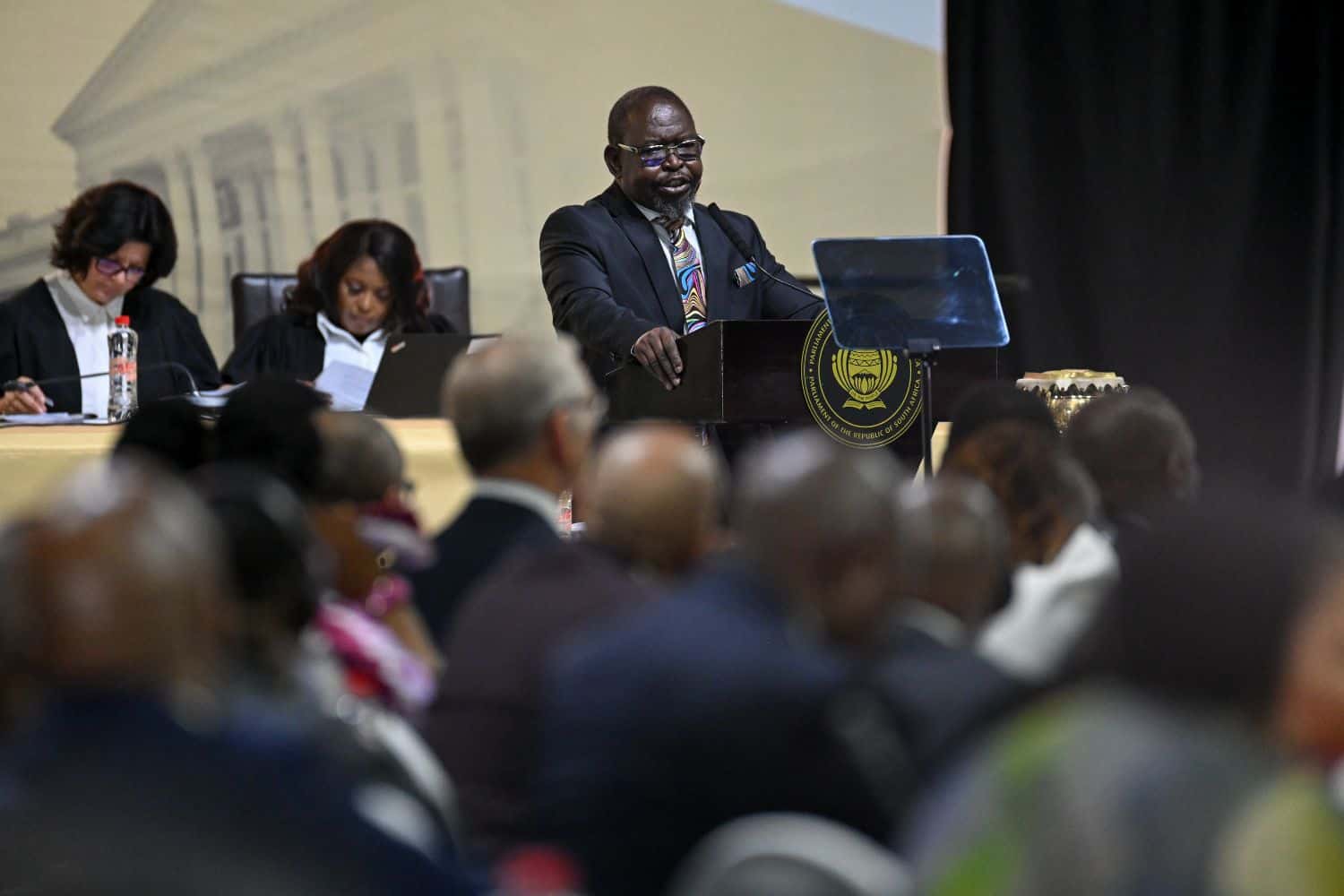
Finance Minister Enoch Godongwana at the 2025 Budget Speech at Nieuwmeester Dome on 12 March 2025. Image Source: Gallo Images/Jeffrey Abrahams.
TOC
  • The Struggles and Strategies SA’s Coalition Government
  • What Lies Ahead for South Africa’s Economy?

The national budget process is a continuous cycle that runs from April to March every year. This process is crucial to good governance because it ensures that government spending remains aligned with South Africa’s policy goals and objectives. It is one of the most critical functions of Parliament. The South African budget approval process is accompanied by an extensive public consultation process, required by the Constitution and Money Bills Act. While the Minister of Finance asks for public input prior to the budget speech, there is only so much scope for him to accommodate suggestions. Given how technical the budget is, the National Treasury has to focus its drafting efforts on engaging with national, provincial, and local government. The parliamentary process therefore ensures that the public gets the opportunity to make inputs into the final decisions.

The SA authorities indicated that the 2025 budget lays the foundation for faster economic growth and continues to stabilise the public finances. South Africa’s economic outlook is slowly improving, with GDP growth expected to average 1.8 percent over the next three years. Next year, debt will stabilise at 76.2 percent of GDP. Debt-service costs, which consume 22 cents of every rand of revenue, stabilise in the current year. In light of new and persistent spending pressures, the government has decided to raise additional tax revenues, including proposed value-added tax (VAT) rate increases of half a percentage point in each of the next two years. Investing in strategic infrastructure, supporting job creation, and maintaining a growth-friendly fiscal policy will underpin government policy over the medium term.

The Struggles and Strategies SA’s Coalition Government

South Africa’s Finance Minister Enoch Godongwana delivered the country’s 2025 Budget Speech on March 12, and strong reactions followed the minister’s announcement of the 0.5% increase to Value Added Tax (VAT) for the current financial year. While the Trump administration has now imposed tariffs of 30% on all South African imports, in a move that is likely to be a huge blow to its already floundering economy. The South Africa’s coalition government was formed after the African National Congress lost its majority last year for the first time since the end of apartheid in 1994. The budget negotiations have exposed fissures within the coalition between the left-leaning ANC and the center-right DA, its longtime rival. The second biggest party in the coalition, the Democratic Alliance, which opposes tax hikes, is calling for a complete revision of government spending. The African National Congress (ANC), the Patriotic Alliance (PA), and the Inkatha Freedom Party (IFP) are the main parties in favour of the budget, with around 196 votes. This means that to pass the budget, the ANC needs to secure at least five additional votes.

The government’s broad structural reform plans have identified increasing the performance of the country’s logistics infrastructure by attracting private sector equity partners, as well as through the devolution of the political oversight of the Cape Town port from the national to the Western Cape province, which the Democratic Alliance (DA) controls. Experts say SA’s economic future hangs in the balance — VAT hikes, modest growth projections, and a precarious parliamentary vote. What does this mean for the country’s financial destiny? Meanwhile, Finance Minister Enoch Godongwana raised doubts about the DA’s ability to remain in the government. “I don’t think you can vote against a budget, and tomorrow you want to grow and be part of its implementation. It can’t be,” Godongwana said. Helen Zille, chairperson of the DA’s federal council, said the party was seeking an interdict to stop South Africa’s tax service from implementing the 0.5% increase to VAT on May 1. “This interdict request is based on our legal challenge to suspend the finance minister’s announcement of the VAT hike and overturning Parliament’s adoption of the Fiscal Framework,” she said.

What Lies Ahead for South Africa’s Economy?

However, Professor William Gumede, an academic at Wits University’s School of Governance in Johannesburg, told the BBC it was unclear whether the DA would quit the government at this stage. “It will be asking itself whether this is the tipping point or whether it should wait – at least until the outcome of the court case,” Prof. Gumede said. An observer says privatizing aspects of the public rail infrastructure is one of the government’s plans to improve the economy’s performance. Most of the infrastructure is owned by state rail and ports company Transnet, which is facing a debt cliff. Therefore, the government needs to recapitalize it as a shareholder or strategic equity partner. But for many South Africans, the tariffs signal the need for the two biggest parties to resolve their differences and work together – or risk seeing the nation sink into a deeper economic crisis at a time when the unemployment rate is already at more than 30%.
Keywords:2025 BudgetSouth AfricaTax

Sign Up For Weekly Newsletter

Subscribe to our newsletter to get our weekly briefs, reports, and analysis instantly!

By signing up, you agree to our Terms of Use and acknowledge the data practices in our Privacy Policy. You may unsubscribe at any time.
Share This Article
Facebook Whatsapp Whatsapp LinkedIn Reddit Threads Email Copy Link Print
ByOyebamiji Adesoji
Writer and researcher at Alafarika for Studies and Consultancy.

SUBSCRIBE NOW

Subscribe to our newsletter to get our weekly briefs, reports, and analysis instantly!

WHAT OTHERS ARE READING

Chad and the Crisis of Statehood in the Sahel: Collapse, Resilience, or Transformation?

AnalysesSecurity & Conflict Resolution
June 2, 2026

Can the 2026 Ethiopia General Election Secure a Fractured Nation?

On June 1, 2026, Ethiopia is scheduled to hold its 7th General Election to fill…

May 31, 2026

Faye-Sonko Fallout: Senegal’s Political Tension Amid Economic Crisis

In political philosophy, one of its powerful core concepts is a classic realist principle, attributed…

May 25, 2026

Africa This Week (23/05/2026)

This week, the death toll from the ongoing Ebola outbreak in the eastern Democratic Republic…

May 23, 2026

From The Same Section

AnalysesSecurity & Conflict Resolution

Nigeria-US Elimination of ISWAP’s Abu-Bilal Al-Minuki: What Does It Mean, and What are the Future Expectations?

For over 50 years, the United States of America and the Federal…

By
Ahmadulbadawy AbdulRaheem
May 18, 2026
Weekly News Brief

Africa This Week (16/05/2026)

This week, Uganda's long-serving leader Yoweri Museveni took the oath of office…

By
Ahmadulbadawy AbdulRaheem
May 16, 2026
AnalysesRegional Integration & Global Cooperation

Africa Forward Summit: A New Policy for The Continent or A Familiar Script?

For decades, France’s relationship with the African continent was shaped by a…

By
Ahmadulbadawy AbdulRaheem
May 14, 2026

Discover More

Africa This Week (07/02/2026)

Weekly News Brief
February 11, 2026

Assessing the Northern Nigeria’s Persistent Insecurity and the New US-Nigeria Strategic Partnership

Situation Reports
February 11, 2026

Trump’s “Christian genocide” claim and “guns-a-blazing” threat to Nigeria: What do they mean?

Situation Reports
February 5, 2026

How Gen-Z is Influencing Political Reforms: Lessons from Madagascar

Situation Reports
October 24, 2025
Registered and Certified by:

Follow us: 

Other Pages

  • About
  • Request A Report/Study
  • Consult With Us
  • Call to Host/Train
  • To Publish With Us

Quick Links

  • Events
  • Library
  • Journals
  • Privacy Policy
  • Contact
All Rights Reserved | Alafarika for Studies and Consultancy © 2026.
Get Updated!
Subscribe to our newsletter and never miss our latest reports, analyses, publications, and other events.

Zero spam, Unsubscribe at any time.
Welcome Back!

Sign in to your account

Username or Email Address
Password

Lost your password?