Introduction
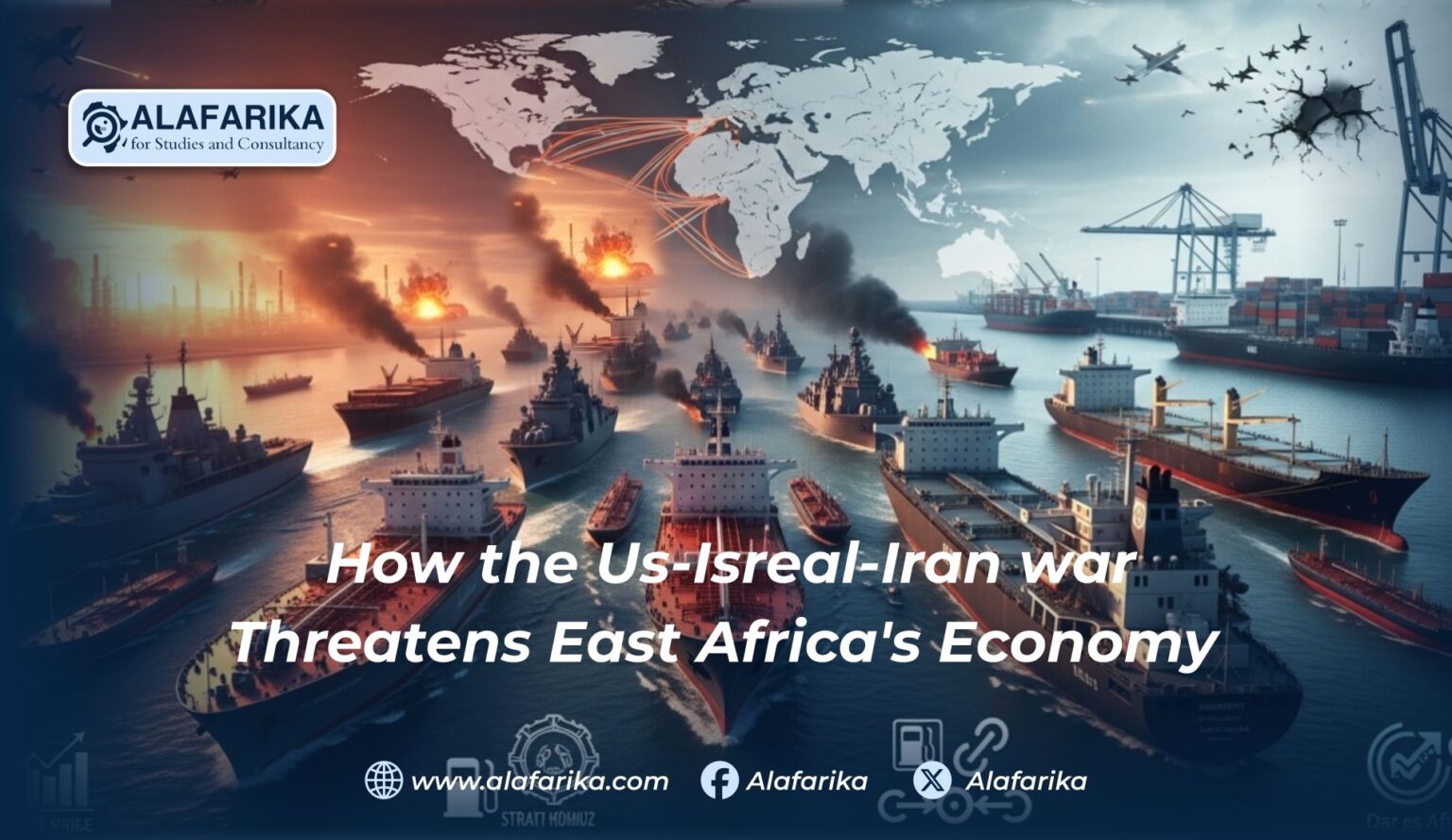
The current hostility concerning the United States, Israel, and Iran is not just a regional military crisis but it is a systemic shock to global trade, energy flows, and financial stability. Global oil prices have already surged by more than 50 percent as of late March.
Since the US and Israel launched Operation Epic Fury and Operation Roaring Lion against Iranian targets, the missiles have been landing in the Middle East. Iran has responded with strikes across the Gulf, hitting the United Arab Emirates, Saudi Arabia, Qatar, Kuwait, Bahrain, Jordan, and Iraq.
The African Development Bank (AfDB) has warned that the ongoing conflict in the Middle East could weaken Africa’s economic growth, with potential losses of up to 1.5% if the crisis persists beyond six months. Also, the AfDB had projected 2026 growth of 4.3% before the strikes on Iran by the US and Israel.
Chief Economist Kevin Urama now expects the war could shave 0.2 percentage points if the conflict ends within three months, and 1.5 percentage points if it lasts twice as long. The multilateral lender joins the International Monetary Fund and several African central banks in warning that a prolonged conflict could weaken Africa’s growth outlook.
Table 1: East Africa’s Dependence on External Energy Imports
| Country | % of Fuel Imported | Main Source Regions | Vulnerability Level |
| Ethiopia | 100% | Gulf (UAE, Saudi Arabia) | Very High |
| Kenya | 80–90% | Middle East | High |
| Tanzania | 85% | Middle East | High |
| Uganda | 90% | Imports via Kenya | High |
| Somalia | 100% | Gulf States | Extreme |
Key Insight: East Africa is structurally energy-insecure, making it disproportionately vulnerable to Gulf disruptions.
Fuel-importing countries like Malawi, Sierra Leone, and Ethiopia are especially vulnerable—higher living costs, weaker trade balances, and tighter financing all at once, according to the IMF. What’s different this time is that planners have tool kits. Lessons learnt from Covid and the war in Ukraine mean Africa is better prepared than it was for previous shocks. Below is a rigorous analysis of how this war threatening East Africa’s economic stability.
The Impact on East African Economies
More than 80 percent of global trade moves by sea, according to the World Bank, meaning disruptions in the waterway could increase freight costs and delay deliveries of goods. For East Africa, whose economies are deeply integrated into international supply chains and maritime routes, the consequences are equally immediate and structural.
SBM Intelligence warns that early military success for Washington and Tel Aviv may not settle the conflict. The report adds: “The medium term will bring severe global economic disruptions as oil markets convulse and the Strait of Hormuz emerges as a critical vulnerability for energy importers, including many African countries.”
Kenya, for example, gets upwards of 80% of its refined petroleum products from the Gulf. Furthermore, many African countries lack strategic fuel reserves (the wages of elite complacency). Unless things change, biting shortages — like what we’ve already seen in some Asian economies— will hit some countries in about two to three weeks. Second, Asia is the world’s factory. And so, we should expect that the inflationary pressures on Asian economies will soon find their way into the global goods markets, and into African economies.
Table 2: Transmission of Oil Price Shock in East Africa
| Economic Variable | Pre-War Trend | Post-War Impact | Mechanism |
| Fuel Prices | Stable/moderate | +30–150% | Import cost surge |
| Transport Costs | Moderate | High increase | Diesel dependency |
| Food Prices | Rising | Accelerated inflation | Logistics + fertilizer |
| Inflation Rate | 5–10% | 10–25% (projected) | Cost-push inflation |
Analytical Insight: This is a classic cost-push inflation shock, where energy acts as the primary transmission channel.
Maritime Trade Disruptions and Supply Chain Interruption
In Shipping and Port Management, Mira Harrison notes that shipping is often the least expensive way of moving large quantities of goods over long distances. The existence of reliable water transportation has been a key to the economic and political well-being of most nations throughout history.
Today, East Africa is facing rising fuel prices and inflation after US–Israel airstrikes on Iran disrupted global oil routes. With threats to the Strait of Hormuz and Red Sea shipping, regional economies reliant on imported petroleum are under pressure.
In March, Djibouti’s finance minister, Ilyas M. Dawaleh, warned that the fighting would “bring severe economic consequences for developing countries”. Small states which depend on maritime trade “risk being pulled into deeper economic uncertainty as external shocks ripple across the region and #Africa”, he wrote on X.
For instance, Kenyan tea farmers are facing a crisis after the US-Israeli war on Iran disrupted key export routes to the Middle East. More than eight million kilogrammes of tea are currently held in warehouses in the country. The Kenya Tea Development Agency (KTDA) says at least 10 million kilogrammes of tea valued at about Sh3 billion is stuck in warehouses in Mombasa due to logistical disruptions linked to the war.
A regional trade body said the losses amounted to roughly $8 million a week since March 1. A survey, meanwhile, found private sector activity in Kenya contracted in March for the first time since August, in part due to the war. But whereas the upending of global shipping has been a blow to East Africa’s biggest economy, which relies heavily on fuel imports, the disruption has had the opposite effect elsewhere on the continent. Maritime traffic to South Africa has jumped as shipping companies look for safer routes around the Cape of Good Hope — even if the journey is much longer and pricier — while Tanger Med, Africa’s largest container port, is bracing for a surge in demand.
Table 3: Trade Disruption Channels
| Channel | Impact on East Africa | Example |
| Shipping delays | Slower imports | Fuel, machinery |
| Insurance premiums | Higher costs | Maritime risk |
| Port congestion | Logistics inefficiency | Djibouti bottlenecks |
| Reduced canal traffic | Revenue loss (Egypt) | $10 billion Suez losses |
Food Security and Agricultural Emergency
One of the biggest challenges for African economies and households will be the potential impact on food prices. The closure of the Strait of Hormuz will hit the price of food via two channels — rising fuel costs (which impact processing, transportation, storage, etc) and rising fertiliser costs/shortages (which will impact productivity and supply).
Analyst says, disruptions linked to Gulf energy supplies limit access to ammonia and urea during the critical March–May planting season. This will affect agricultural production, compounding risks of crisis and emergency levels of food insecurity, especially for low‑income households and import‑dependent economies.
The crisis in the Gulf also opens up an opportunity for a network of the Continent’s ports to market themselves as a more reliable alternative route for global trade. Again, such an effort doesn’t require endless summits in Addis Abbas, and could be championed by a few ambitious governments (or network of privately-managed ports).
Table 4: Food Inflation Transmission Chain
| Stage | Mechanism | Outcome |
| Oil price rise | Transport cost ↑ | Food distribution cost ↑ |
| Fertilizer shortage | Production ↓ | Crop yields ↓ |
| Currency depreciation | Import cost ↑ | Food prices ↑ |
| Combined effect | Supply shock | Food insecurity |
Fiscal and Macroeconomic Crisis
In order to understand how the war and its blockades are affecting some African countries, The Guardian Nesrine Malik’s interview with Dr. Zainab Usman, senior research scholar at the Centre on Global Energy Policy at Columbia University. “If this conflict becomes prolonged, then we are looking at deeper impacts on African economies,” Dr Usman said.
One would be that governments will start thinking about cushioning the higher prices across the board that arise from higher energy costs, and so would raise subsidies.
“Subsidies are quite expensive and would put a strain on budgets,” Dr Usman added. On the other hand, that will get in the way of prudential public finance management. Subsidies are rarely temporary, and come with lots of leakages.
Furthermore, millions of Ethiopians live and work in Gulf countries and remittances are a lifeline for the economy. Red Sea security and Gulf stability are tied to foreign exchange, employment and political stability at home.
Oxford Economics similarly cautions “the immediate, near-term risks to African nations are mainly confined to upswings in global oil prices and weakening exchange rates…” It also warns that US-aligned assets in Africa could become symbolic targets and that religious tensions could intensify in multi-faith societies.
Geopolitical and Security Consequences
The US-Israel war with Iran has also raised important security considerations in Africa. The Horn of Africa and Red Sea regions, which link Africa and the Middle East, are militarily interconnected; thus, a crisis in one region could affect the other. Moreover, arms flows can easily spill across shores, further destabilising many states in the already fragile region.
Ryan Cummings, director at Signal Risk, says the danger isn’t confined to the Gulf. “One issue to watch is the future of the Chagos archipelago transfer to Mauritius given the US Diego Garcia base… Also, Houthi strikes against Israeli allies in the Horn of Africa could also escalate.”
The Horn of Africa hosts several strategic military bases within the range of the Iranian missiles, with over 4,000 US military personnel at Camp Lemonnier in Djibouti. Since the conflict escalated, Iran has systematically targeted its Arab neighbours as part of its retaliatory strategy. The Yemeni Houthis and Iran could target Emirati, Israeli, or US positions in the Horn of Africa and across the continent as part of the ongoing Iranian retaliatory campaign.
While Somaliland is emerging as a potential host for an Israeli security presence, wrote Tomi Oladipo for Semafor. Both sit at one of the world’s most important maritime chokepoints, where the Red Sea narrows into the Gulf of Aden. Meanwhile, the wider Horn of Africa grapples with fragile states, active jihadist insurgencies, and territories whose sovereignty is contested or unrecognised.
“Hosting foreign military powers brings clear financial and diplomatic benefits,” Oladipo said. “But for Djibouti and Somaliland it may also carry risks. As the Iran war widens, bases that once symbolised security may become liabilities.”
Additionally, conflict in Sudan, tensions between Ethiopia and Eritrea, and persistent instability in Somalia highlight the delicate security landscape across the Horn. Diplomatically, as “middle powers” expand their influence in the crisis, African governments will need to navigate intensifying global rivalries and the growing military interconnections between the Middle East and the Horn of Africa. This raises difficult security dilemmas for many states.
Table 5: Future Scenarios
| Scenario | Description | Impact on East Africa |
| Best Case | Ceasefire, stabilized oil prices | Moderate recovery |
| Medium Case | Prolonged tension | Sustained inflation |
| Worst Case | Hormuz closure | Severe economic crisis |
Final Assessment
Overall, the cold hard facts of the case point to a long war. Despite the amount of pain they are absorbing from the extensive U.S./Israeli bombing campaign, the government of Iran might have just enough political space to fight a long asymmetric war. Ominously, hurting the global economy will be a significant component of the guerrilla tactics involved in such a campaign. From Tehran’s perspective, the best way to establish credible deterrence against future unprovoked attacks would be via exacting a high cost on the U.S./Israel alliance, disrupting energy exports from Gulf countries that host U.S. military bases, and causing chaos in the wider global economy.
Leaders urge unity, stronger fuel reserves and measures to ease the economic shock as households feel the strain. “Africa has been hit by too many external shocks not of its making,” said Claver Gatete, UN Under-Secretary-General and Executive Secretary of the United Nations Economic Commission for Africa “This moment calls for decisive action, to protect people now, but also to accelerate Africa’s long‑term push towards energy security, food sovereignty, and financial self‑reliance. Crises like this reinforce why Africa must finance more of its own future and strengthen regional solutions that build resilience before the next shock hits.”
“This moment demands leadership, within Africa and from its partners,” stressed Ahunna Eziakonwa, UN Assistant Secretary‑General and Director of UNDP’s Regional Bureau for Africa. “With the right mix of policy choices, financing tools, and political resolve, Africa can weather this shock and emerge more resilient, more self-reliant, and better positioned to shape its own economic future.”
Observers demand for coordinated action across three horizons:
- Immediate crisis response measures to cushion households and stabilise fuel, food, and fertiliser supply by African governments and supported by development partners and the private sector.
- Medium‑term reforms to strengthen energy security, targeted social protection, and regional trade under the AfCFTA.
- Long‑term structural reforms towards stronger domestic resource mobilisation and African financial safety nets, including accelerated implementation of the African Financing Stability Mechanism.
“As global crises multiply, Africa’s response must evolve from managing shocks to fostering resilience,” emphasised Sidi Ould Tah, President of the African Development Bank Group. African institutions and development partners need to act swiftly and in concert, leveraging their comparative advantages to cushion short-term shocks while laying the foundations for long-term resilience.” By strengthening regional integration, accelerating African-led financial solutions, and investing decisively in energy, food, and trade resilience, the continent can move from vulnerability to preparedness.