The Nile River, the world’s longest river, is of unparalleled social, historic, and economic importance to the more than 300 million people who inhabit the region and rely on its waters for economic activities and basic human needs. It contains over 10 percent of Africa’s landmass and covers an area that includes Ethiopia, Sudan, South Sudan, Egypt (one of the oldest civilizations in the world), Rwanda, Tanzania, Uganda, Burundi, the Democratic Republic of Congo, Eritrea, and Kenya.
In the Holocene, abrupt climate shifts, human impacts in the form of land use change over the last few millennia, and large dam construction over the last hundred years or so have had major catchment-wide impacts on the hydrology and sediment budget of the River Nile.
The relationships among the Nile Basin’s ten countries are governed by a set of treaties and agreements signed during the 20th century (in 1902, 1929, and 1959) and are commonly known as the Nile River Agreements. They stipulate that the upstream riparian states (mainly Kenya, Tanzania, Uganda, and Ethiopia) have to respect the rights of the downstream countries (mainly Egypt and Sudan) regarding the Nile’s water.
In addition, they are prohibited from building dams or launching construction projects on the river without the approval of the downstream countries, particularly Egypt. Not only have these treaties guaranteed Egypt’s share of the Nile water over the past century and enabled it to achieve its developmental and agricultural plans—particularly after building the Aswan High Dam in the early 1960s—but they also gave Cairo and Khartoum veto power over any construction plans or projects that might affect their share of the water.
Over the years, the involved states have put agreements and treaties into place so that conflict can be controlled. Recognizing the importance of preventing water-related conflict, the nations are asked to assist collaboration in their efforts to work together in addressing existing and potential water resources conflicts, both among nations and competing sectorial users.
The Nile River basin presents a practical example of some of the challenges of developing comprehensive transboundary water management. Achieving a basin-wide agreement governing the Nile River is complicated by the competing needs of upstream and downstream users and colonial treaties. The Nile River Basin water crisis related to hydro-politics, socio-economics, water conflict, water rights, water management, drought and scarcity, water security, sustainable development, challenges and constraints, cooperation versus confrontation, and Nile water future perspectives are addressed in this article.
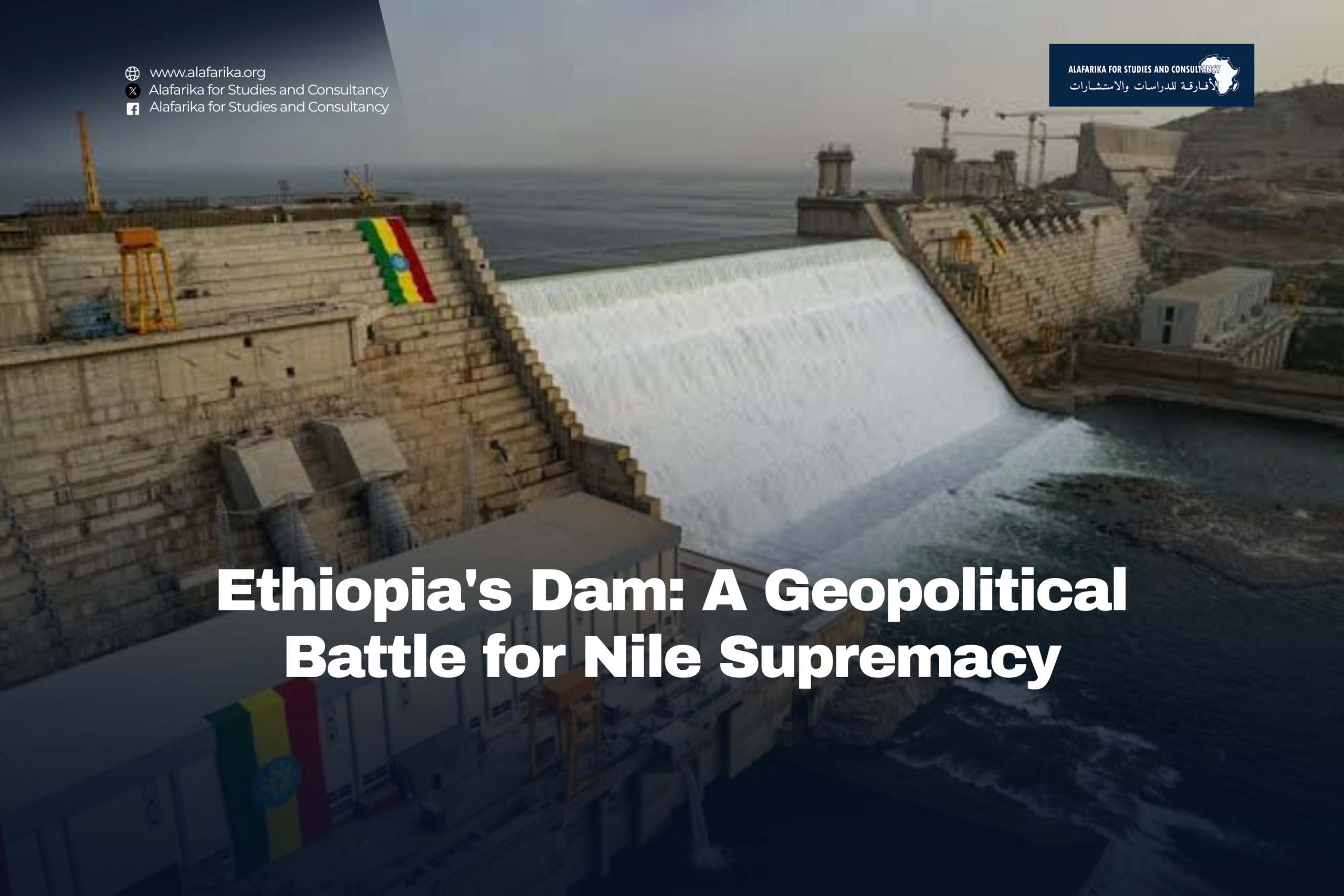
For instance, in Ethiopia, the Grand Ethiopian Renaissance Dam (GERD) is now fully complete and is scheduled for an official inauguration in September 2025. Since early power generation began in 2022, the dam will ultimately provide over 6,000 MW, effectively doubling Ethiopia’s current electricity capacity and enabling it to become a net power exporter.
Therefore, Ethiopia views GERD as essential for economic development, poverty reduction, and asserting a new energy-driven regional presence. In contrast, the dam has led to significant tensions between upstream Ethiopia and Sudan (which has realigned itself by siding with Ethiopia) and downstream Egypt, whose freshwater supply is under increasing threat from the GERD project.
Nile Waters Conflict: The Struggle for Control and Cooperation
The Nile River basin extends over 35° of latitude (4° S to 31° N), incorporating a great diversity of climates, river regimes, biomes, and terrains—including the Equatorial Lakes plateau of the White Nile headwaters, the semi-arid volcanic uplands of Ethiopia, the Sahara Desert, and the vast delta complex at the Eastern Mediterranean Sea.
The Nile is also the world’s longest exotic river—it flows for almost 2700 km without any significant perennial tributary inputs. The true desert Nile begins at Khartoum (15° 37′ N 32° 33′ E) on the Gezira Plain, where the Blue and White Nile converge. These two systems, and the Atbara to the north, are large rivers in their own right with distinctive fluvial landscapes and flow regimes. The Nile has a total catchment area of around 3.3 million km², and about one-third of this is the desert Nile of Sudan and Egypt.
Egypt has long opposed the dam because of concerns it would deplete its share of Nile River waters. Egypt has referred to the dam, known as the Grand Ethiopian Renaissance Dam, as an existential threat because the Arab world’s most populous country relies almost entirely on the Nile to supply water for agriculture and its more than 100 million people. Thus, negotiations between Ethiopia and Egypt over the years have not led to a pact, and questions remain about how much water Ethiopia will release downstream if a drought occurs.
Ethiopia and Egypt have been trying to find an agreement for years over the $4 billion dam, which Ethiopia began building in 2011. Tensions over the dam, the largest in Africa, once were so high that some observers feared the two countries might go to war over it. Even though history reminds us that there have been many wars between Egypt and Ethiopia in past centuries (both ‘cold’ and ‘conventional’), many Ethiopians feel that the international community’s support is fully behind Egypt without much consideration of Ethiopia today.
Consequently, Ethiopians, of whom 65% are not connected to the electric grid, believe that their hopes of getting light and power from hydroelectric development associated with GERD are being ignored. However, it’s not just Ethiopians that will benefit. Ethiopians believe the hydroelectricity that will be generated could be of value to all countries of the Nile basin region.
Antecedently, Egypt resorted to the UN Security Council on June 29, 2020, to warn the international community against this imminent danger in the offing. As well in 2024, the presidents of Egypt, Eritrea, and Somalia agreed to boost cooperation for the Somali army to confront “terrorism” and protect its land and sea borders, a joint statement said, leaving Ethiopia further isolated in the region.
According to the report, the security agreement will unsettle Addis Ababa, which has thousands of troops in neighboring Somalia fighting al Qaeda-linked insurgents but has fallen out with Mogadishu over its plans to build a port in the breakaway region of Somaliland. Ethiopia in 2024 signed what is known as a memorandum of understanding (MoU) with the self-declared republic of Somaliland to use one of its ports. While Ethiopia’s Prime Minister Abiy Ahmed has previously described sea access as an existential issue for his country.
But Ethiopia won the diplomatic support of upstream nations such as Uganda, home to a regional partnership of 10 countries that last year signed an accord on the equitable use of water resources from the Nile River basin. The accord of the partnership, known as the Nile Basin Initiative, came into force in October without being ratified by Egypt or Sudan. The agreement between Egypt and the United Kingdom gave downstream Egypt and Sudan rights to the Nile water, with Egypt taking the majority.
That agreement, first signed in 1929, took no account of the other nations along the river basin that have demanded a more equitable accord. But in 2013, Ethiopia’s parliament unanimously ratified a new accord that replaced previous deals that awarded Egypt veto powers over Nile projects. They said at the time that work on the dam, some 20 kilometers (12 miles) from Sudan’s eastern border, will continue during consultations with Cairo, and that experts had already agreed that the dam would not significantly affect water flow to both Egypt and Sudan.
Meanwhile, the US Department of the Treasury, which coordinated the negotiations between the three parties, issued a statement on February 28, 2020, noting that “the United States believes that the work completed over the last four months has resulted in an agreement that addresses all issues in a balanced and equitable manner, taking into account the interests of the three countries.”
However, that statement was criticized by Ethiopia’s foreign minister, Gedu Andargachew, who described it as “highly partisan.” Ethiopian analysts believe that Washington always sides with Egypt and any agreement on the GERD would tie Ethiopia’s hands. Clearly, then, Washington is seen, at least by one party, as the least suitable and effective mediator to resolve the GERD dispute.
What is next?
As the GERD transitions from construction to operation, its ultimate legacy will be determined not only by kilowatt-hours generated but by how effectively it balances national development imperatives with regional hydro-diplomacy and global environmental responsibilities. The project encapsulates the complex intersection of technical, political, and ecological considerations that characterize contemporary infrastructure development in Africa.
Ahmed Soliman, a senior research fellow at UK think tank Chatham House, noted that “with climate change resulting in more unpredictable water flows, this could impact future political tensions, especially if Ethiopia were to divert or restrict the downstream flow of water during periods of drought. ” Nevertheless, “after 15 years of stalled talks, there is little appetite or momentum to reach a successful deal,” he added.
Thus, Egypt and Ethiopia are arguably East Africa’s most consequential countries, and their amity and cooperation are essential for the region’s peace and stability. Their need for the Nile water is both mutual and urgent. But satisfying each party’s maximalist position is practically impossible considering the circumstances of the region and their inability to sustain a prolonged and unneeded conflict. It is in their mutual interest, and that of their friends and allies, especially the United States, that they find a compromise that avoids the dreaded maximalism that doubtlessly will lead to unwarranted outcomes.