Unfair trade relations to the disadvantage of African countries have overshadowed African foreign trade since colonial times. Africa is still integrated asymmetrically into global trade. Raw material and agricultural exports on the one hand and capital goods imports on the other still dominate African foreign trade. One of the origins of Africa’s current inability to benefit fully from the expansion of world trade lies in the colonial division of labour, the consequences of which persist in economic structures to a far greater degree than in other. However, Africa is far more dependent on overseas trade than other economic regions and global players, such as the EU or North America that handle 63% and 40% respectively of their business with their regional neighbors, like the EU member states, Mexico and Canada. Major reasons of Africa’s dependency are the fragmented intra-African market, decades of stagnant regional and continental integration, high transaction costs, and corresponding tariff and non-tariff barriers to trade. Most of these barriers are at least partially due to rival neo-colonial foreign trade networks of anglo-, franco- and lusophone African countries, like that of the French ‘Messieurs Afrique’.
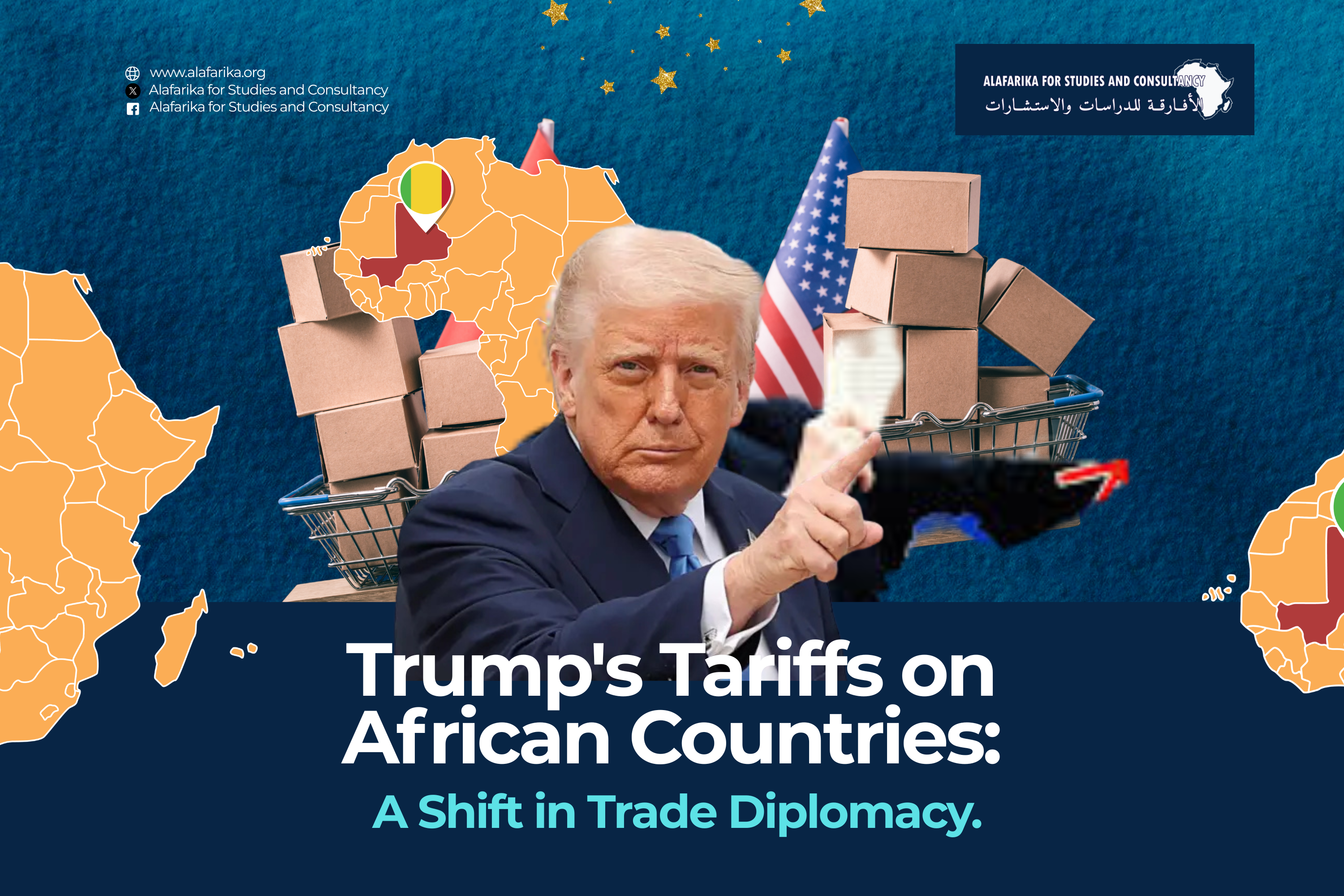
President Donald J. Trump introduced a number of economic policies aimed at prioritizing American interests, often under the slogan “America First”. While much attention was given to his trade war with China and tariff disputes with the European Union, the administration’s trade policies toward Africa also marked a significant departure from previous U.S. strategies. Of late, the Trump administration imposed significant tariffs on a wide range of goods imported from African countries as part of a broader strategy to address the U.S. trade deficit and encourage domestic manufacturing. “Our country has been looted, pillaged, raped, plundered” by other nations, Trump said. “Taxpayers have been ripped off for more than 50 years,” he added in remarks at the White House. “But it is not going to happen anymore.” While, retaliatory tariffs on the United States would predominantly affect manufacturing-heavy states. Mexico buys 70 percent of New Mexico’s exports, including billions of dollars in U.S. semiconductor chips and electrical components that later return to the United States in Mexican-made cars and appliances. Texas sends more than $20 billion in chips, auto parts, and electrical equipment to Mexico; overall, the state’s southbound exports account for 5 percent of its GDP. Tariffs would also dent Ohio’s $5 billion worth of auto and metal exports to Canada as well as Maine’s $320 million in northbound lumber and paper exports.
Trump’s Tariffs: A Tidal Wave Across African Economies
The White House said officials would start charging the 10 percent tariffs on April 5, with the higher duties starting on April 9. The sweeping tariffs are expected to produce hundreds of billions in annual revenue to fund key projects in the USA. Analyst says, the ripple effects of renewed U.S. tariff policies under President Donald Trump are weighing heavily on African markets, especially for countries that have long relied on preferential access through the African Growth and Opportunity Act (AGOA). Nations such as Lesotho and South Africa are seeking alternatives by reinforcing regional trade through frameworks like the African Continental Free Trade Area (AfCFTA) and pursuing new bilateral trade agreements.
In the face of dwindling global funding, tariffs, and geopolitical tensions, African Development Bank Group President Akinwumi Adesina said that Africa must wean itself from aid dependency and urgently chart its future through self-reliance, strategic partnerships, and leveraging its vast natural resources. Adesina said recently in Nigeria’s capital city, Abuja at the 14th Convocation Ceremony of the National Open University of Nigeria (NOUN), where he delivered a thought-provoking lecture on “Advancing Africa’s Positioning within Global Development and Geopolitical Dynamics.”
He told the audience that the recent dismantling of the official development aid agency in the US, and similar anti-aid measures in other parts of Europe, means that the old development models that Africa has always relied on will no longer work. Adding that, 47 out of 54 African countries have been placed under higher US tariffs. The immediate direct effects of the tariffs on African countries will be a significant reduction in exports and foreign exchange availability. This will send other shockwaves through African economies.
Accordingly, Lesotho was slapped with the White House’s highest tariff rates in Africa and second in the world after China on the list released by US President Donald Trump. Americans bringing goods in from the small southern African country will have to pay an additional 50% import tax. The US has a big trade deficit with Lesotho, which sells textiles – including jeans – and diamonds to America. According to the White House, in 2024 while the US exported just $2.8 million worth of goods to Lesotho, it imported $237.3 million from the country. The 50% rate for Lesotho was part of what Trump described as “reciprocal tariffs” imposed on imports from dozens of countries. All nations face a minimum rate of 10%.
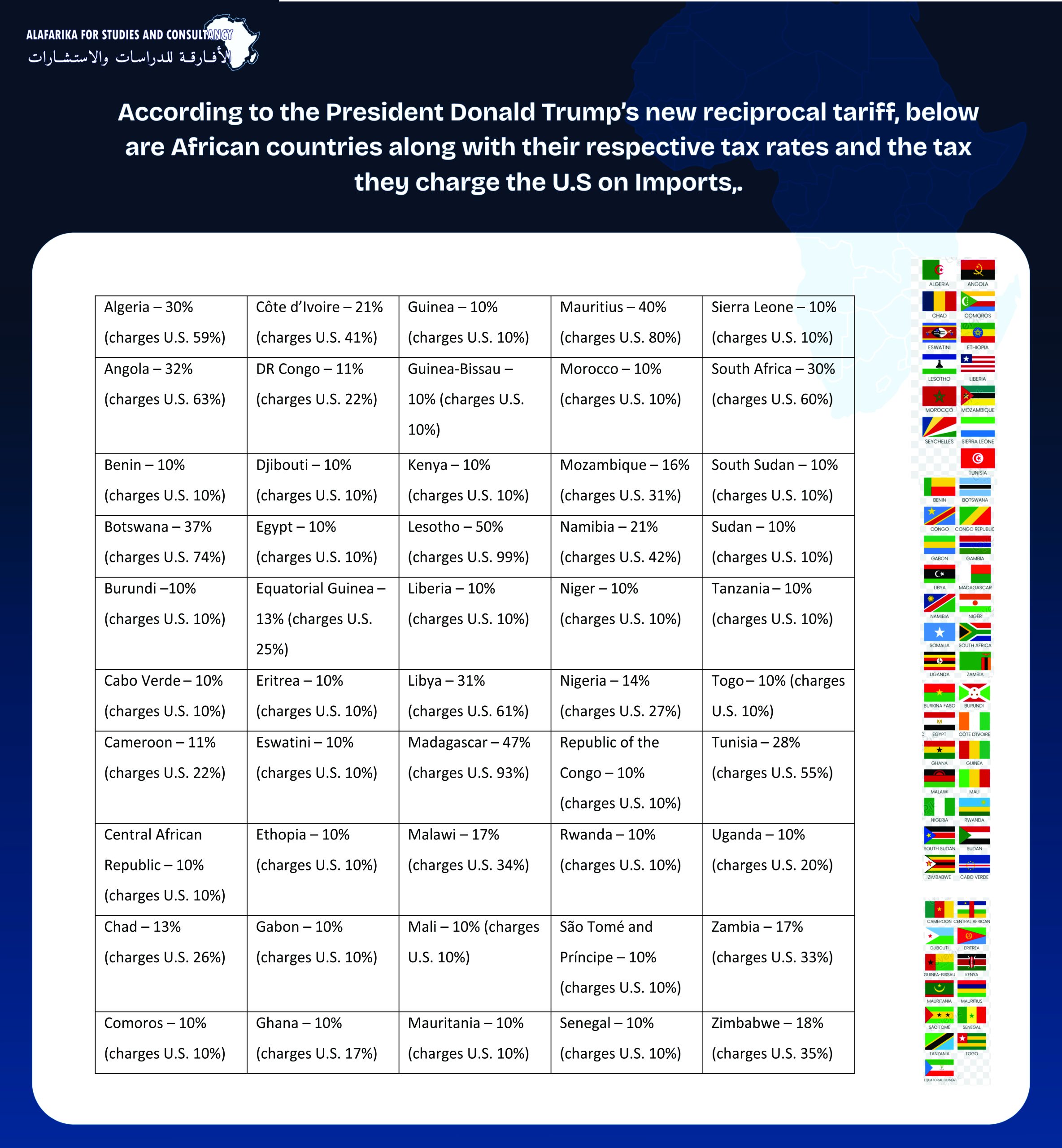
Responding to the news, Lesotho’s Trade Minister Mokhethi Shelile said his government would send a delegation to Washington to argue against the new trade measure. “My biggest concern was the immediate closure of factories and job losses,”the AFP news agency quotes him as telling journalists.” In 2022, Nigeria was the second-largest U.S. export destination in Sub-Saharan Africa. According to data from the Observatory of Economic Complexity (OEC), Nigeria exported $6.29 billion worth of goods to the U.S. in 2023, while importing $3 billion, leaving the U.S. with a trade deficit of $3.29 billion.
Trump’s Tariffs: Strategic Responses and Opportunities
An observer indicated that the US tariffs effectively nullify the African Growth and Opportunity Act (AGOA), a program that provides eligible countries in the region with tariff-free access to US markets and runs under the motto “trade, not aid”. The legislation guarantees duty-free access for African goods and helped industrialize the continent, creating hundreds of thousands of jobs. “To say we will impose reciprocal tariffs without first understanding how the U.S. arrived at 31% would be counterproductive,” trade minister Parks Tau told a press conference, saying South Africa’s average tariff on imports was 7.6%.
Foreign affairs minister Ronald Lamola, meanwhile, said Trump’s tariffs effectively nullified the benefits African countries had enjoyed under the African Growth and Opportunity Act. The actions by the United States underscored the need for South Africa to accelerate efforts to diversify its export markets, the ministers said, mentioning markets in Asia and the Middle East as potential opportunities. In the meantime, they said the government would seek to support industries most affected by the tariffs, including car manufacturing, agriculture, processed foods, and metals. The government will not remove benefits U.S. carmakers enjoy under its Automotive Production Development Programme, a production incentive scheme, Tau said. With a diversified economy and China as its top partner, South Africa may now look beyond the US for new markets.
Transforming Challenges into Opportunities with Trump’s Tariffs in Africa
Kako Nubukpo, an economist and former government minister in Togo, warned that the tariffs would hit some African nations that already suffering from political difficulties. “Those left behind by globalization appear more and more numerous. And so, we’ve seen an increase in illiberal regimes, whether that’s in Europe, Africa or America,” he told the AFP news agency. “But protectionism is a weapon of the weak and I think Trump has realized that in the competition with China, the United States is now the weaker ones”. In response, “African countries should promote their own national and regional value chains” as buffers against the tariffs, Nubukpo said. Supporters, however, claimed that Trump brought a refreshing honesty to trade relationships, demanding mutual benefit and accountability. They also noted that some countries needed to be held responsible for actions that contradicted U.S. interests or values.
However, Trump announced on April 9, a 90-day pause for his “reciprocal” tariffs on all countries but China, after bond and stock markets turned negative less than a day after they came into force. At the same time, he increased duties on Chinese goods from 104 per cent to 125 per cent, in the latest escalation of a trade war between the world’s biggest economic powers. Experts say these tariffs are expected to reduce export earnings for many AGOA-benefiting nations. In response, countries are looking to diversify their economies, strengthen regional supply chains, and engage in strategic diplomacy. Legal channels and multilateral forums are also being explored as avenues to challenge the tariffs and seek more favorable trade terms. To build resilient economies, Adesina said: “Africa must chart its future, relying not on the benevolence of others but on its own determination for self-reliance, building reliable alliances, leveraging opportunities in the global dynamics, while putting Africa first. Only then will Africa be great again!”