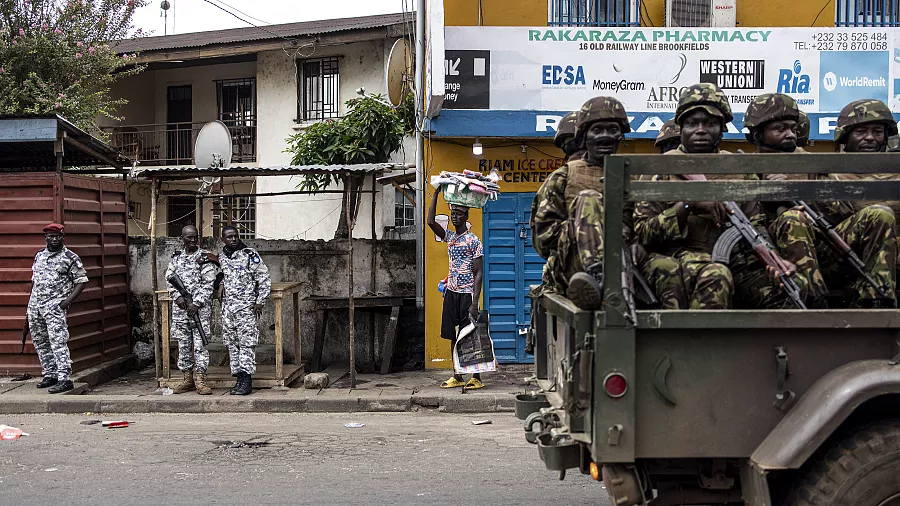
The results of the 2023 presidential election and the crisis in Ukraine have led to a dramatic increase in import costs, which has reduced purchasing power and sparked violent anti-government protests in August, as well as a recent attempted coup.
Despite increasing its stature as a key player in international peacekeeping operations and being a practicing democratic state, Sierra Leone has a lot of challenges to rebuilding its democracy. These challenges include limited accountability and transparency, participatory governance, and a commitment to uphold the rule of law. The citizens of Sierra Leone generally enjoy freedom in their political choices, although traditional chiefs and religious leaders exercise influence over voters.
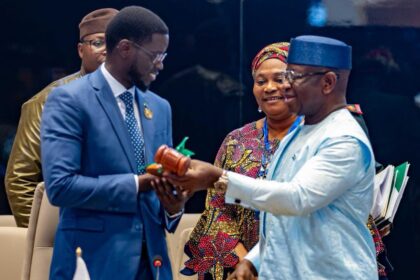
Sierra Leone is one of the oldest and smallest states in West Africa. A new president was chosen by Sierra Leoneans on June 24, 2023, when they cast their ballots. After a bloody 10-year civil war, there have been five elections. President Julius Maada Bio was re-elected with a slim margin, avoiding the necessity for a run-off election, but the political climate in Sierra Leone has remained tense since the election.
The presidential candidate of the Sierra Leone People’s Party (SLPP), Bio, 59, received 56.17 percent of the vote in the first round of voting, handily winning the election. To avoid a runoff, presidential contenders must receive 55% of the vote in the first round. In Sierra Leone, a president may only serve two terms. International observers have condemned inconsistencies and a lack of transparency in the count, as well as acts of violence and intimidation, according to the British media giant, the BBC. In contrast, 72-year-old Samura Kamara, the candidate of the opposition All People’s Congress (APC), rejected the results and said that the election had not been credible. After Sierra Leone’s 1991–2002 civil war, no incumbent has failed to secure a victory in the first round.
A local report also indicated that “many in Sierra Leone and the international community believe that President Bio has lost the moral authority to rule Sierra Leone, and the rigging of the June 24, 2023, election results by the electoral commission to keep President Bio power is now the cause of much political instability in the country. President Bio has refused to publish the results of the election that he claimed to have won.. “How could the Bio government have passed scorecards in granting democratic rights when it was under local and international censure for perhaps one of the most blatant rigging of elections ever on the continent of Africa? ” another local political commentator said.
Before the presidential election, Jamie Hitchen, an independent west Africa analyst, told the Financial Times that Bio’s tenure had been “a mixed bag,” with achievements such as increased investment in education and the repeal of the death penalty weighed against “concerns about shrinking civic space and the police’s approach to protests.” In August 2022, there were protests in Freetown and several northern towns about the soaring costs of living, resulting in more than 20 deaths as security agents fired at protesters. The British daily business newspaper also noted that rights groups called for an investigation into the police’s handling of the protests, which the government claimed was orchestrated by opposition politicians. Also, numerous independent newspapers circulate freely, and there are dozens of public and private radio and television outlets. However, public officials have previously employed libel and sedition laws to target journalists, particularly those reporting on elections and high-level corruption.
The Bite of a Flailing Economy
Sierra Leone is characterized by high poverty (59.2% in 2020), income inequality (Gini coefficient of 0.357 in 2018), and high youth unemployment (70%), compounded by skills mismatch, according to the African Development Bank (AfDB) Group. The Sierra Leone economy is held back by a narrow export base—chiefly consisting of base metals, wood, diamonds, and cocoa—poor governance and limited fiscal space. Over the next several years, growth is seen only slightly above average for Sub-Saharan Africa, leaving Sierra Leone as the third poorest country in the world in 2026.
The country’s Economic Outlook by AfDB indicated that “GDP growth is projected to increase to 3.1% in 2023 and 4.8% in 2024, driven by the mining sector and the continued recovery of agriculture, manufacturing, construction, and tourism. Inflation is projected to rise to 27.1% in 2023 but decline to 20.8% in 2024 as external shocks subside. The fiscal deficit is projected to narrow to 3.2% of GDP in 2023 and 2.3% in 2024 due to higher tax revenue supported by economic recovery and spending rationalization. The current account deficit is projected to narrow to 8.0% of GDP in 2023 and 7.4% in 2024 as the trade deficit narrows and official and private grants increase.”
Annual inflation in Sierra Leone, which is a net importer of most of what it consumes, hit 43 percent in April. While the country has also struggled with the economic fallout of the COVID-19 pandemic and Russia’s invasion of Ukraine, The World Bank report on Sierra Leone noted that the rise in the cost of living combined with weak growth and a decline in macroeconomic fundamentals threatens to increase the level of poverty within a context of inadequate social safety nets. The outlook for the economy is intertwined with both external and domestic developments. Elevated or higher inflation from fluctuations in energy and food prices and less accommodative monetary policy in advanced economies could further affect the global economy and weigh on domestic growth. Political stability and the reform appetite and effectiveness of the government’s economic agenda will contribute to domestic macroeconomic stability and resilience in the face of global uncertainties.
Between politics and protecting peace
There was a failed coup attempt in Sierra Leone that resulted in the deaths of 21 people, and around 2,200 people managed to escape from prisons that were attacked. But at least two analysts told Al Jazeera that about 50 people, including military officials and former rebel commanders, might have been involved in the attacks. “The intruders appeared to have successfully breached and removed some weapons from the barracks before a special guard attached to the presidency intervened and pushed them out of town.”
Sierra Leoneans such as Ms. Edwin have raised concerns on a number of issues that may have contributed to the recent mutiny. “One of them is politics,” she told the BBC.
The intelligence report also indicated that many Sierra Leoneans vote based on regional allegiances. The majority of people in the south and east normally vote for the ruling SLPP, while most people from the north and west normally vote for the opposition APC. Jobs and benefits are commonly perceived to flow to regions whose politicians are in power.
According to her, high unemployment means lots of people want steady government jobs. This means the stakes are high during elections; people feel they need to be affiliated with certain parties in order to have access to state jobs and other benefits. “If your political party loses, that means someone else comes in, and if you’ve been open about your political affiliation, you lose all you have: influence, opportunities, and access.”
She said further: “When a new government comes in, even within the military and the police, when it comes to promotions, transfers, and retirement, they favor certain ethnic groups.” There’s a lot of discontent among the military and police.” Ms. Edwin explains: “Other countries have put policies in place to cushion the effect as best as possible, but the current state of our economy leaves much to be desired. Something more needs to be done to cushion the impact of external shocks.”
The government of Sierra Leone must stabilize the country’s growing social and economic problems. “The government’s policy priorities should focus on restoring macroeconomic stability while protecting vulnerable households and maintaining focus on long-term reforms that are geared toward fiscal and debt sustainability,” stated Abdu Muwonge, the World Bank’s country manager for the country. “To mitigate these challenges, focus should be placed on prioritizing safety net measures to enhance short-term food availability and access for the most food-insecure and vulnerable households, as well as addressing structural challenges to improve agriculture productivity and competitiveness and enhance the livelihoods of smallholder farmers.”