بالعربي
Facebook Twitter Linkedin Youtube
Alafarika for Studies and Consultancy
Library
0

No products in the cart.

مكتبتنا (عربي)
  • Home
  • Reports
    • Geopolitics & Governance
    • Economy & Trade
    • Security & Conflict Resolution
    • Regional Integration & Global Cooperation
    • Education, Science & Technology
    • Culture & Media
  • Analyses
    • Geopolitics & Governance
    • Economy & Trade
    • Security & Conflict Resolution
    • Regional Integration & Global Cooperation
    • Education, Science & Technology
    • Culture & Media
  • Weekly Brief
  • Data
    • Charts
    • Infographics
  • Journals
  • Events
  • Country Profile
    • Nigeria
Font ResizerAa
Alafarika for Studies and ConsultancyAlafarika for Studies and Consultancy
Search
  • Home
  • بالعربي
  • Reports
    • Geopolitics & Governance
    • Economy & Trade
    • Security & Conflict Resolution
    • Regional Integration & Global Cooperation
    • Education, Science & Technology
    • Culture & Media
  • Analyses
    • Geopolitics & Governance
    • Economy & Trade
    • Security & Conflict Resolution
    • Regional Integration & Global Cooperation
    • Education, Science & Technology
    • Culture & Media
  • Weekly News Brief
  • Journals
  • Data
    • Infographics
    • Charts
  • Events
  • Country Profile
    • Nigeria
Follow US
  • About
  • Request A Report/Study
  • Consult With Us
  • Call to Host/Train
  • To Publish With Us
All Rights Reserved | Alafarika for Studies and Consultancy © 2026.
Situation Reports

African gig workers should get better benefits packages for their services

The Covid-19 pandemic has exposed the precarious nature of the gig economy.

By
Alafarika
Last updated: January 8, 2023
5 Min Read
Share

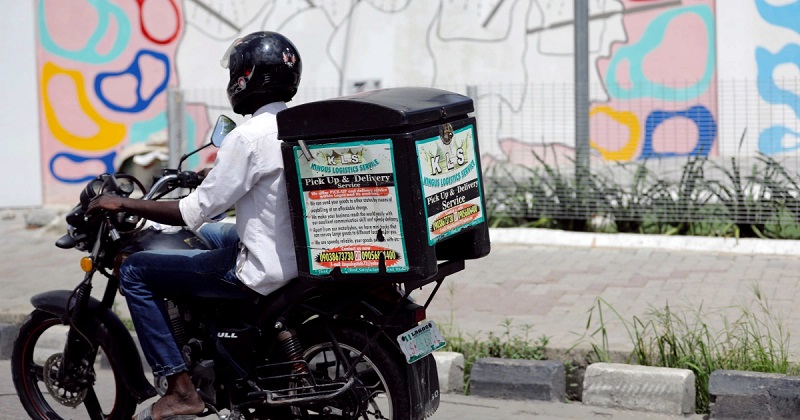
 The gig economy is a growing sector in Africa with a promising future. The gig economy is a model of independent contractual work between employers and employees. This form of contract is not a new phenomenon as Africans have always received income for informal services they render, particularly outside a full-time day job.

The significant development is the digital turn this kind of work has taken, including in Africa, where more than 280 gig platforms employ around 4.8 million people. However, as opposed to “traditional employees”, African gig workers do not receive benefits from governments or platform companies.

Where benefits are offered, they are only applicable to a particular job and cannot be transferred from one position to another. These meagre benefits leave them with very little to show for their hard work in the long run.

The Covid-19 pandemic has exposed the precarious nature of the gig economy. For example, in Kenya, drivers working for ride-hailing platforms have seen their income fall by up to 90 percent in the face of restrictions on the number of passengers, lockdowns, and curfews. Some international platforms, such as Bolt, the Estonian ride-sharing company, did introduce Covid financial relief for those at their headquarters. The company has a base in Kenya, but their drivers in Kenya did not receive the relief package.

The unpreparedness of the platform-based economy in cushioning gig workers against an economic shock the magnitude of Covid-19 highlights the more significant problem of a lack of financial security that has marred the informal sector for way too long. There should be a change now.

Gig-based companies need to partner with insurance agencies to provide benefits to their workers. A study by the Centre for Financial Regulation and Inclusion(CENFRI) revealed that this is already the case with only 6 percent of Africa’s digital platforms. An example is the South African Rent My Ride, a platform where users can list their cars for rent. It offers $365 000 liability cover while the vehicle is rented out.

This initiative is a step in the right direction, but it does not provide the best reward for gig workers. Gig workers should have social safety nets of their own such as health insurance or retirement funds. Part of their income per gig can be accrued and reserved in funds they are entitled to even if they change jobs. In Ghana, People’s Pension Trust, a for-profit company, offers retirement savings accounts to informal workers. This micro pension system is arguably not as sustainable as a tax-driven pension, mainly benefiting the traditional workforce. This system calls for introspection and innovation in creating weightier nets regarding decentralised funding of retirement.

Gig companies can also invest in financial literacy to empower them to accumulate their financial security. Most of these platforms are more likely to attract a workforce with no formal education and subsequently not much insight into personal finance issues. Why should a worker dedicate years of life to the informal sector, earn some income, and reach the peak of their life with no asset to their name? Furthermore, why should any business organisation pursue corporate social responsibility take pride in a disempowered workforce?

It is next to impossible to implement much change in the African gig sector without state governments playing their role. There should be an inclusion of the gig workforce in the employment laws and policies. In 2017, Uber South Africa drivers launched a lawsuit against the ride-hailing company following an unfair dismissal case through the Commission for Conciliation Mediation and Arbitration (CCMA). The CCMA affirmed the status of Uber drivers as employees but was met with opposition from the Labour Court, which held the view that the drivers were not Uber SA employees as they had failed to prove there was an employment relationship. These grey areas in informal employment legislation contribute to the lack of regulation of the informal sector.

The gig economy is undoubtedly picking up in Africa, and it is here to stay. To exclude this group of workers from benefits their counterpart traditional employees receive and the security and peace of mind that comes with them paints a grotesque picture of labour on the continent.

ــــــــــــــ

*Phemo Kgosi is a writing fellow at African Liberty Writing Fellowship
Keywords:African gig workersCOVID-19Gig economy

Sign Up For Weekly Newsletter

Subscribe to our newsletter to get our weekly briefs, reports, and analysis instantly!

By signing up, you agree to our Terms of Use and acknowledge the data practices in our Privacy Policy. You may unsubscribe at any time.
Share This Article
Facebook Whatsapp Whatsapp LinkedIn Reddit Threads Email Copy Link Print
ByAlafarika
News on Alafarika studies , consultancy, events, and editorials.

SUBSCRIBE NOW

Subscribe to our newsletter to get our weekly briefs, reports, and analysis instantly!

WHAT OTHERS ARE READING

Africa This Week (13/06/2026)

Weekly News Brief
June 13, 2026

President Samia’s Visit to Russia amid Western Isolation and its Geopolitical Implications for Tanzania

Tanzanian President Samia Suluhu Hassan, during the first week of June 2026, embarked on a…

June 16, 2026

The 2026 U.S. Counter-Terrorism Strategy: A Critical African Assessment

Throughout most of the post-Cold War era, Africa occupied the margins of American grand strategy.…

June 10, 2026

Africa This Week (06/06/2026)

South Africa and Kenya have signed six Memoranda of Understanding to deepen cooperation in trade,…

June 6, 2026

From The Same Section

AnalysesSecurity & Conflict Resolution

Chad and the Crisis of Statehood in the Sahel: Collapse, Resilience, or Transformation?

The Sahel has appeared as one of the most geopolitically unstable regions…

By
Oyebamiji Adesoji
June 2, 2026
AnalysesGeopolitics & Governance

Faye-Sonko Fallout: Senegal’s Political Tension Amid Economic Crisis

In political philosophy, one of its powerful core concepts is a classic…

By
Ahmadulbadawy AbdulRaheem
May 25, 2026
Weekly News Brief

Africa This Week (23/05/2026)

This week, the death toll from the ongoing Ebola outbreak in the…

By
Ahmadulbadawy AbdulRaheem
May 23, 2026

Discover More

Can the 2026 Ethiopia General Election Secure a Fractured Nation?

Situation ReportsGeopolitics & Governance
May 31, 2026

Assessing the Northern Nigeria’s Persistent Insecurity and the New US-Nigeria Strategic Partnership

Situation Reports
February 11, 2026

Trump’s “Christian genocide” claim and “guns-a-blazing” threat to Nigeria: What do they mean?

Situation Reports
February 5, 2026

How Gen-Z is Influencing Political Reforms: Lessons from Madagascar

Situation Reports
October 24, 2025
Registered and Certified by:

Follow us: 

Other Pages

  • About
  • Request A Report/Study
  • Consult With Us
  • Call to Host/Train
  • To Publish With Us

Quick Links

  • Events
  • Library
  • Journals
  • Privacy Policy
  • Contact
All Rights Reserved | Alafarika for Studies and Consultancy © 2026.
Get Updated!
Subscribe to our newsletter and never miss our latest reports, analyses, publications, and other events.

Zero spam, Unsubscribe at any time.
Welcome Back!

Sign in to your account

Username or Email Address
Password

Lost your password?