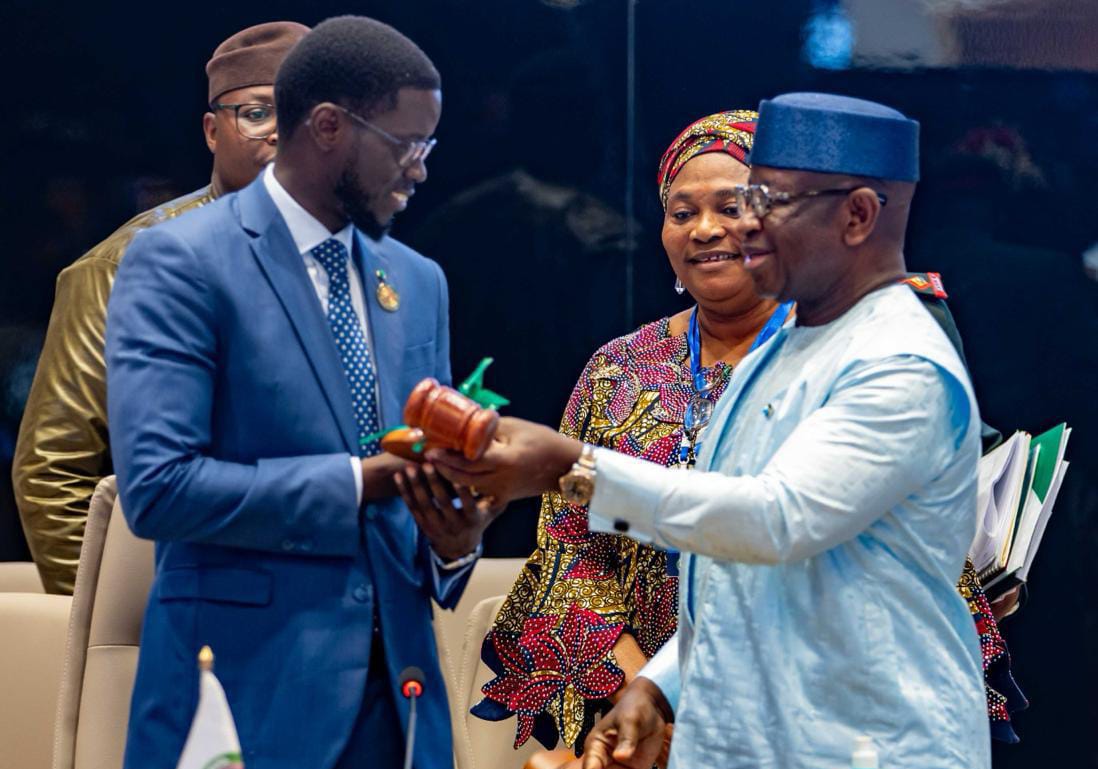
This week, Senegalese President Bassirou Diomaye Faye was elected Chairman of the ECOWAS Authority of Heads of State and Government at the bloc’s summit in Freetown, Sierra Leone, succeeding Sierra Leone’s Julius Maada Bio. Senegal’s Birame Diop was also named the next president of the ECOWAS Commission. President Faye takes over amid rising insecurity, democratic setbacks, and strained ties with Mali, Burkina Faso, and Niger following their withdrawal from the bloc, pledging to prioritize security, economic sovereignty, and unity.
The African Development Bank threw its weight behind Morocco’s electric-vehicle ambitions this week, approving a €100 million loan to help build what would be Africa’s first fully integrated EV battery gigafactory. The plant, backed by China’s Gotion High-Tech and sited in the Rabat-Salé-Kénitra Free Trade Zone, will handle everything from cathode production to finished battery cells, with much of the output destined for European carmakers. The AfDB said it also intends to rally another €141 million from partner lenders, cementing Morocco’s push to become a serious player in Africa’s clean-energy manufacturing sector.
Nigeria’s military got a significant shake-up this week after President Bola Tinubu approved the expansion of the army from eight divisions to twelve, alongside the recruitment of 28,000 fresh troops. Four new divisional headquarters are planned for Makurdi, Ilorin, Jalingo, and Benin City, rolling out in phases through the end of the year. The presidency framed the move as a direct response to the country’s persistent security crisis, pairing it with promises of better equipment and improved welfare for soldiers already stretched thin battling insurgents, bandits, and separatist violence across multiple fronts.
Liberian police pulled off one of the country’s largest drug seizures this week, recovering nearly four tons of cocaine—worth an estimated $317 million—from a house near Roberts International Airport outside Monrovia. Two foreign suspects, carrying Spanish/Colombian and Serbian passports, respectively, were arrested alongside several Liberians. Investigators say the operation exposed a “sophisticated, well-funded” trafficking network that may have been running for years. The bust adds to growing evidence that West Africa has become a critical transit corridor for cocaine moving from South America into Europe, with regional seizures climbing steadily since 2019.
Gabon and French mining group Eramet signed a memorandum of understanding to process up to 700,000 tonnes of manganese ore locally per year by 2031, during President Brice Oligui Nguema’s state visit to Paris. The deal, alongside security and energy agreements, aims to boost Gabon’s industrialization and reduce reliance on raw ore exports. Gabon wants all ore processed domestically by January 2029, while Paris is pushing for more time to build necessary infrastructure.
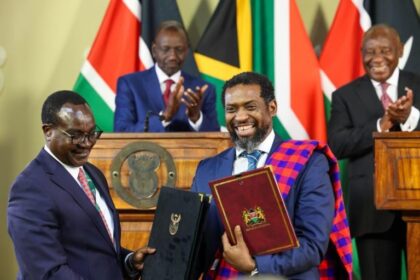
German Foreign Minister Johann Wadephul touched down in Pretoria this week for talks with his South African counterpart, Ronald Lamola, aimed at turning their newly upgraded Strategic Partnership into concrete results. The two discussed trade, clean-energy cooperation, and regional security, alongside broader flashpoints like Ukraine and the Middle East. Wadephul also sat down with President Cyril Ramaphosa during the visit, underscoring how central the continent has become to Germany’s foreign policy direction as it looks for reliable global partners.
Uganda’s government launched an emergency relief operation this week, trucking 9.4 million kilograms of maize flour and beans to more than 313,000 households across the drought-ravaged Karamoja region. The intervention follows weeks of mounting alarm after officials confirmed more than a dozen hunger-related deaths in the region. Nearly half a million people there are now classified as facing crisis-level food insecurity. Authorities have since handed distribution duties to the army and prison services, hoping tighter logistics will get food to those who need it fastest.
A Malian court sentenced former domestic intelligence chief Colonel Kassoum Goïta to 15 years in prison for conspiracy against the government, following a ten-day trial in which he accused the ruling junta of corruption and torture. Goïta, who helped overthrow President Ibrahim Boubacar Keïta in 2020, denied the charges. Prosecutors had sought 20-year sentences; defense lawyers called the case politically motivated and said they may appeal domestically and before international bodies.
Alarm grew this week over the fate of Tunisia’s jailed opposition leader Rached Ghannouchi, after his lawyers revealed the 85-year-old had fainted and was suffering severe exhaustion, leaving him in what they called “critical condition.” They also stated that authorities have refused to let either lawyers or family members visit him, calling it a clear breach of prisoners’ basic rights. Ghannouchi, the veteran leader of the Islamist-inspired Ennahda party, was speaker of parliament when President Kais Saied seized sweeping powers in 2021. Arrested in 2023, he has since been handed sentences totaling more than 40 years across several cases tied to alleged plots against the state.
Confirmed Ebola infections in Congo climbed to 2,905, including 1,269 deaths, after officials reconciled data from Ituri and North Kivu provinces, pushing the tally toward 3,000. Deaths passed 1,000 earlier in the week. The WHO warns the true scale could be two to four times higher than reported. Congo’s 17th Ebola outbreak, declared in mid-May, is driven by the rare Bundibugyo strain, which has roughly a 40% fatality rate and no approved vaccine.