Terrorism currently remains one of the major challenges being faced globally. Its constant causes and danger has evolved over time, with the advent of more complicated factors behind its surge, which stems from political, religious, and socio economic backgrounds. The 9/11 terror attack seems to be the wakeup call for all nations, as the world began to witness an increase in awareness on terrorism, resulting into the global war on terror, since then. Also, the increase in the adoption of strategic security measures, locally and internationally, was evident. In Africa, terrorism has turned out to be a complex and varied problem, which is strongly rooted in Africa’s political and socio-economic context.
The continent is currently the epicenter of global terrorism, with Sub-Saharan Africa accounting for 59 percent of all terrorism-related deaths worldwide. Being a breeding ground for numerous violent extremist organizations, the impacts of terrorism are severely felt across all African regions, territories, and communities. In the Sahel region of Africa, the situation is particularly serious, where Al-Qaida affiliate Jama’at Nusrat al-Islam wal-Muslimeen and ISGS frequently attack security forces and civilians and have previously blockaded towns in the central Sahel states of Burkina Faso, Mali, and Niger. The violence has contributed to the displacement of more than two million people and killed thousands more, leaving an adverse implication of jeopardizing regional security and causing an increase in humanitarian crisis.
Terrorist attacks in Benin and Togo
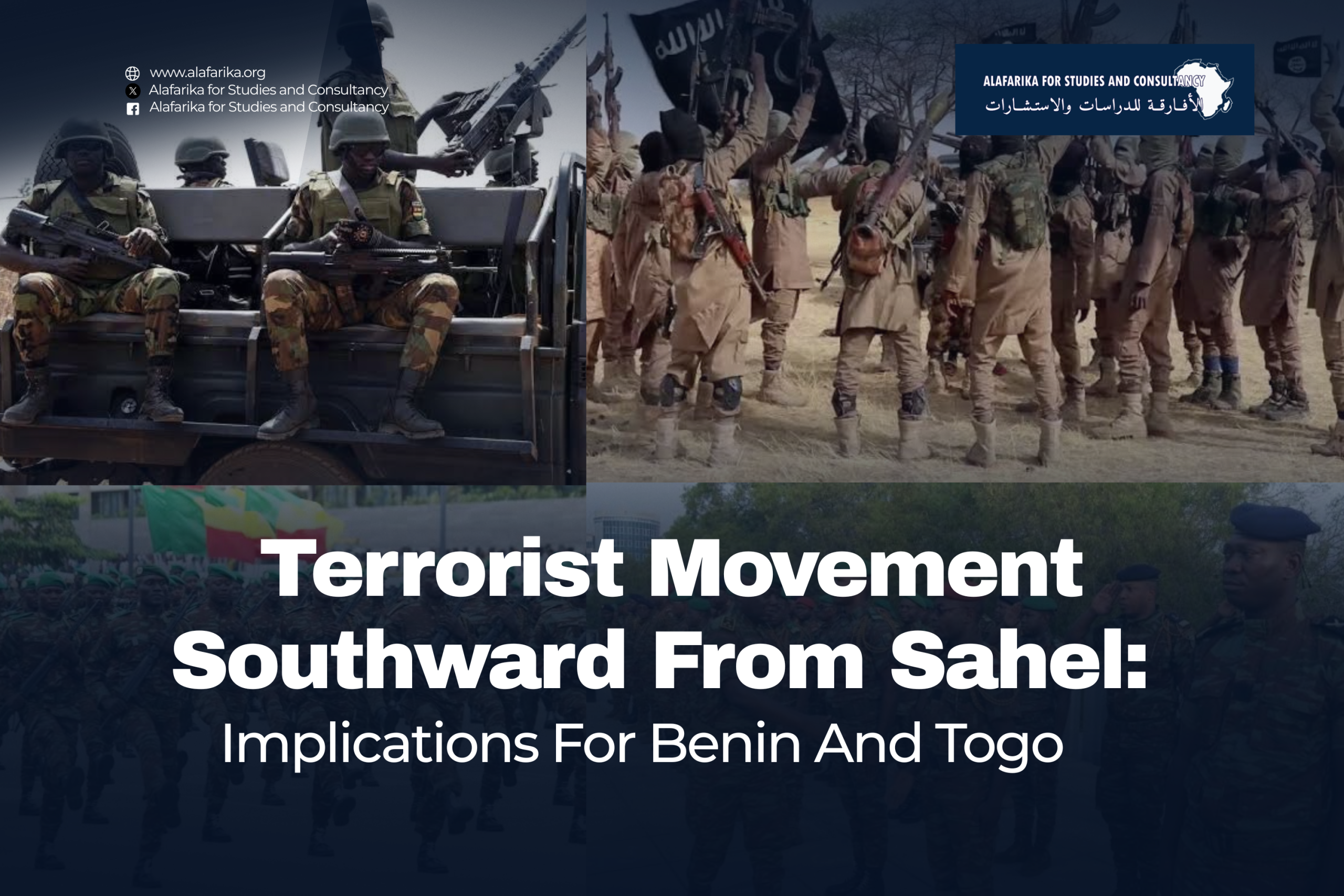
Sahel Jihadist groups like Jamaat Nusrat al Islam wal Muslimeen (JNIM) and the Islamic State Province (ISSP) have recently expanded into coastal West African countries. The terrorist threat has become more active, spreading to Benin and Togo, and raising concerns about potential spillover into previously unaffected regions. The current increase in militant Islamist group attacks in the region confirms long-held fears that unrestrained extremist violence in the Sahel may spread to its neighbours.
Benin has been the hardest hit with a doubling in the number of recorded fatalities (to 173 deaths) in 2023. According to the Beninese Army, there are three groups behind the attacks on Beninese soil: The JNIM, the Ansaroul Islam, and the ISSP, formerly known as EIGS. These jihadists’ tactics have also developed throughout time. Although they initially targeted defense and security forces, they also assaulted civilians, as evidenced by the deaths of approximately 15 persons in Kérou in May 2023.
The JNIM, which inhabited a vast strip of land beyond the Pendjari River, Benin’s national border with Burkina Faso, has recently increased its incursion into Beninese territory in an attempt to expand its influence to the Gulf of Guinea. The JNIM has also taken the “neutral zone,” a disputed border territory between Benin and Burkina Faso located less than three kilometers from the Beninese town of Porga. Most of the attacks on Benin’s territory comes from this area, since terrorists penetrated through the area, after Burkinabé defensive force’s retreat from the area. The latest reported terror attack on Benin took place on January 8, 2025, whereby jihadist groups launched an attack on the Beninese Anti-terrorism force at the WAP National Park, killing more than 50 Beninese soldiers – the highest loss ever recorded.
To address the jihadist threat, the government has put in place a dedicated military strategy. At the beginning of 2022, following the attack on a military post located on the border with Burkina Faso, the Beninese army launched Operation Mirador to fight jihadist groups and secure its borders. This includes the positioning of troops in specific zones where the army was not initially present, as well as the acquisition of new material, including drones, armoured vehicles and surveillance helicopters. Other measures include initiatives aimed at involving populations in the search for solutions, in particular to provide intelligence.
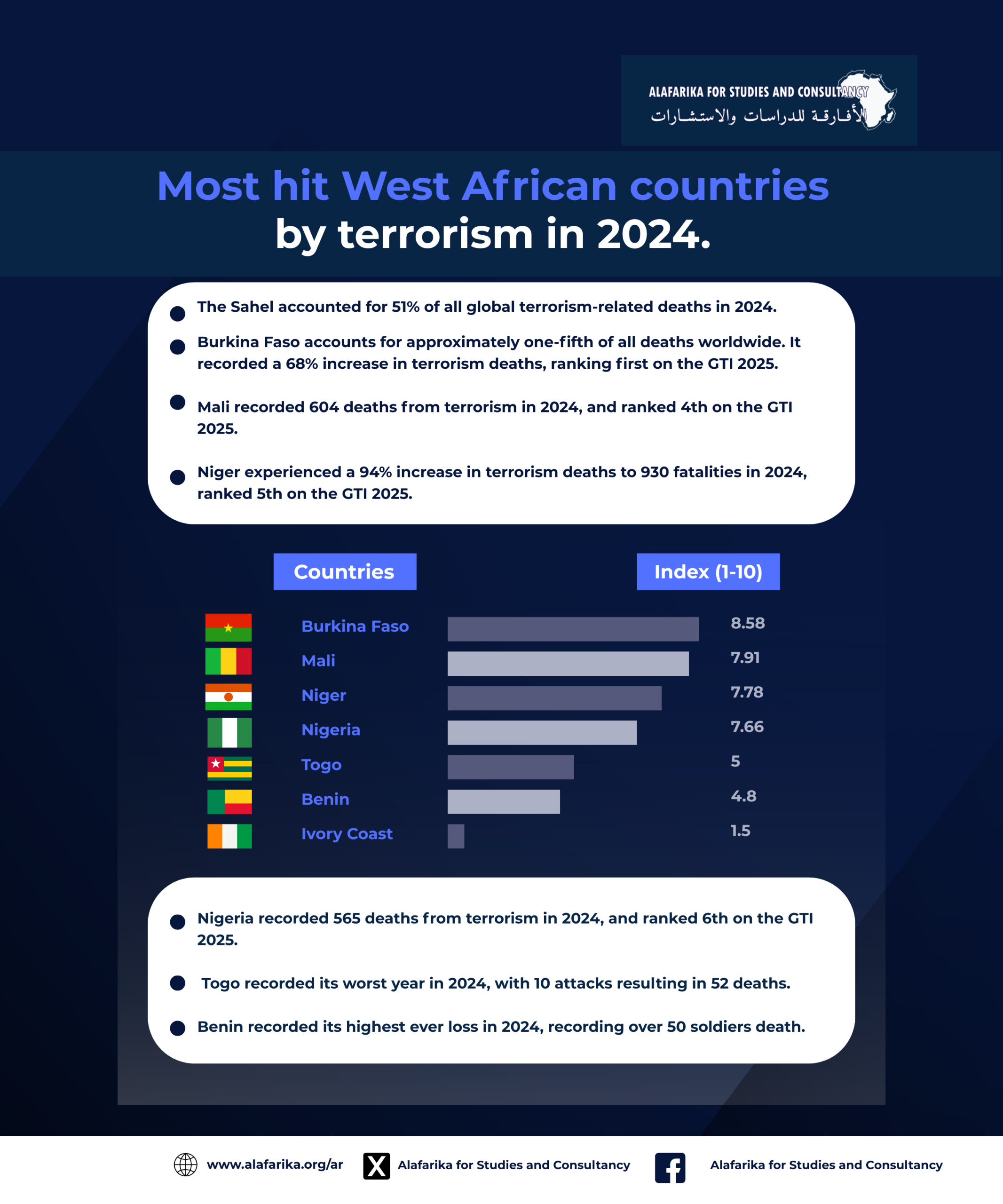
Togo has similarly faced a rise in militant Islamic violence, which seeped into the country since 2021, when terrorists attacked San Loaga near the borders with Benin and Burkina Faso. After that, several terror incidents have been reported in the northern region of the country. A Togolese Armed Forces helicopter was forced to make an emergency landing in early April 2024 while performing a counter-insurgency operation against armed groups in the northern town of Koundjoaré. The chopper, which was carrying firearms and ammunition, was destroyed, and several soldiers were wounded. On July 20, 2024, another assault was launched by JNIM against the Togolese Army outpost at Kpekpakandi in Northern Togo, killing twelve soldiers. On October 2, 2024, a further assault on Togolese troops in Fanworgou, near the Burkina Faso border, killed nine soldiers and ten civilians.
The Togolese government has also taken different strategic moves towards combating terror attacks. A state of emergency that took effect since June 2022 has resulted in greater troop deployments in northern Togo. Aside from military actions, the Togolese government established an interministerial commission to deradicalize or prevent radicalization among males and young people who are more susceptible to join violent extremist organizations.
Implications for Benin and Togo
The continuous shift of terrorist threats from the Sahel region to Benin and Togo shows that no West African nation is immune. It also demonstrates that violent extremist organizations are intentionally establishing their presence in the coastal countries as part of a larger recruitment strategy. The overspill of terror attacks on Benin and Togo certainly poses negative implications for the national security of each country.
Also, the economic implications of these threats will be felt so hard, if the insurgency escalates, as both Benin and Togo exhibit characteristics of fragile states where violent extremism can flourish. They are both characterized by poverty, unemployment, weak institutions, poor governance, and corruption, making them both vulnerable to insurgent attacks. According to Amnesty International, jihadists expand faster in areas that share similar characteristics to those in the Sahel region. These include weaknesses in security forces, alliances with pre-existing illegal activities, economic incentives, and political instability, all of which contribute to the spread of various forms of violent extremist attacks in the region.
The northern region of Benin and Togo is riddled with banditry, illegal gold and drug trafficking, illegal hunting, kidnapping, arms and fuel smuggling, which exacerbates local tensions and provides terrorists with financial resources. With the persistence in the current flow of these illegal activities, terrorism has a high probability of spreading across the territories of Benin and Togo quickly, leaving severe implications on the national security of each country. Thus, there is an urgent need for the authorities in both countries to take action to sever the connections between those responsible for these illegal activities and extremist groups.
As regards the economic implications, both Benin and Togo are on the list of the most underdeveloped countries in the world, suffering from high poverty rates. Benin’s index score, as measured by the Human Development Index, currently stands at 0.515, ranking as 173rd out of 193 countries and categorized with low human development. While Togo’s index score currently stands at 0.571, positioning it at 161 out of 193 countries, it is thus characterized as having medium human development. The World Bank, as of March 2025, proved that Togo, which is home to approximately 8.5 million people, has a poverty rate of 58.8%, with rural areas mostly affected.
On the other hand, Benin, whose population stood at 13.35 million in 2022, has a poverty rate of 36.2% and an unemployment rate of 2.4%, while underemployment affected 72% of the labor force as of April 7, 2025. All of these indicators explain that both Benin and Togo, which are gradually becoming breeding grounds for terrorist attacks, are still struggling so hard to improve their underlying socio-economic conditions. Should the insurgency attack continue to escalate, penetrating through the border areas into cities, it will result in severe political, economic, and humanitarian implications, which might cripple the affairs of both countries.
Thus, there is a need for both countries to pull the bull by its horns, separately, by upgrading security measures and strengthening border control in order to mitigate the rising spread of insurgency across their territories, putting into consideration the continuous failure of regional responses in curbing the threat of extremist violence. Conclusively, the expansion of jihadist groups in these countries will depend on the timely and appropriate set of initiatives taken by coastal countries, as these countries are more capable of countering insurgents than Sahelian countries. In the past few years, the region has been the focus of an integrated border stability mechanism for West Africa supported by the UN.