Amidst escalating tensions and deepening divisions, Tanzania finds itself engulfed in a severe political crisis that has reverberated across the nation and captured international attention. This crisis, rooted in a complex history of political dynamics and recent triggering events, has fundamentally challenged the country’s governance structures and democratic principles, raising far-reaching implications for the upcoming elections. As tensions rise and uncertainties loom, the dynamics of voter sentiment, election processes, and democratic governance are all subject to profound shifts. Against this backdrop, it is crucial to analyze how this ongoing political crisis could influence the election results in Tanzania.
Political Landscape in Tanzania
Tanzania, renowned for its abundant wildlife and breathtaking landscapes, boasts a political scene as diverse as its natural beauty. From the pre-independence era to the present day, the country has experienced numerous political shifts and advancements that have influenced its current state. Following independence in 1961, Tanzania operated as a one-party state with a socialist approach to economic development until the mid-1980s, whereby Tanzania embarked on a series of political and economic reforms during the administration of President Ali Hassan Mwinyi. In January and February 1992, the government made the decision to embrace multiparty democracy, resulting in the registration of 11 political parties. Key players in the political arena, such as the ruling Chama Cha Mapinduzi (CCM) and opposition parties like Chadema and ACT Wazalendo, have significantly influenced the political dialogue and participated in the democratic process in the country. Since transitioning from a one-party state to a multiparty system in the early 1990s, Tanzania has conducted regular multiparty elections. However, the opposition remains relatively feeble, as the ruling Chama Cha Mapinduzi (CCM) has maintained power for over 60 years.
After 33 years of single-party dominance under the CCM, Tanzania held its first presidential elections in 1995. Benjamin Mkapa of the CCM was elected as the first president under a multi-party system, marking a significant shift in the country’s political landscape. Despite international observers categorizing the elections as free, the CCM’s overwhelming membership and access to campaign resources gave them a clear advantage over opposition parties. Subsequent elections in 2000 followed a similar pattern, with the CCM maintaining its hegemonic position in Tanzanian politics. The CCM continued to blur the lines between party and state, using tactics such as police supervision of political rallies and restricting opposition access to government-controlled media. These actions underscored the challenges faced by opposition forces in challenging the CCM’s dominance, highlighting the need for further reforms to level the playing field in Tanzania’s electoral process.
Tanzania conducted its third general election in December 2005, which was delayed due to the unfortunate passing of CHADEMA vice-presidential candidate Jumbe Mohamed Jumbe. The incumbent president, Benjamin Mkapa, gracefully stepped down after serving two terms and handed over to Jakaya Kikwete of the ruling CCM party, who emerged victorious in the presidential election, securing an impressive 80% of the vote. Additionally, the CCM won 264 out of 323 National Assembly seats. Fast forward to October 2010, Tanzania held its fourth general election, a historic moment as it marked the first time an opposition party gained significant votes and seats in the National Assembly since independence, mainly because the opposition party CHADEMA, under the leadership of Edward Lowassa, formed a coalition with three other parties, known as UKAWA, promising a formidable challenge in the polls. The ruling CCM party’s presidential candidate, Jakaya Kikwete, experienced a decrease in votes from 80% in 2005 to 61%, with CHADEMA’s candidate, Dr. Wilbroad Slaa, garnering 26% of the vote, while CUF candidate Professor Ibrahim Lipumba secured 8%. Despite the competition, the incumbent president, Jakaya Kikwete, of the ruling party, was declared the winner.
In 2010, Tanzania’s fifth elections witnessed the victory of the ruling party’s candidate, John Magufuli, and despite Lowassa’s refusal to acknowledge Magufuli’s win, labeling it as a lost battle rather than a lost war, the majority of Tanzanians accepted Magufuli’s triumph due to its significant margin. Fast forward to Tanzania’s sixth general election, held on October 28, 2020, where the ruling party, CCM, emerged victorious once again. Incumbent President Magufuli secured 84% of the vote, defeating opposition candidate Tundu Lissu of Chadema. The voter turnout increased to 50.7%, with Magufuli garnering 14.8 million votes out of 29.8 million registered voters. Also, in the parliamentary elections, CCM candidates claimed 256 out of 264 constituency seats. Opposition parties in Tanzania then raised concerns about government interference in the election process, alleging tampering with ballot boxes after agents were denied access to polling stations. Chadema’s candidate, Tundu Lissu, accused the ruling party of using state machinery to maintain power unlawfully. ACT-Wazalendo leader Zitto Kabwe reported instances of fraud in various constituencies nationwide, citing the discovery of thousands of manipulated ballot papers and discrepancies in returning officers’ statements.
Escalation of Tanzania’s Political Crisis Aftermath 2020 Elections
The 2020 election in Tanzania was riddled with flaws, including the absence of an efficient independent electoral commission, marred also with a politicized police force, allegations of irregularities, and a lack of transparency. These issues sparked widespread discontent and protests among opposition parties and civil society groups. Unsurprisingly, President Magufuli was re-elected with 84% of the vote, solidifying the ruling party’s near-total dominance in parliament with 93% of seats. The government’s introduction of constitutional amendments also raised concerns about authoritarian tendencies and power consolidation, further dividing the political landscape and escalating tensions. Reports of human rights violations, such as crackdowns on media freedom and political dissent, also fueled the political turmoil. Tragically, President Magufuli passed away in March 2021 after battling heart complications, leading to the swearing-in of his deputy, Mrs. Samia Suluhu Hassan, as the first female president of Tanzania. This historic moment marked a significant shift in the country’s leadership and raised hopes for a more inclusive and transparent political future.
After assuming office as President of Tanzania in March 2021, Samia Suluhu Hassan wasted no time in dismantling the authoritarian regime of her predecessor. She swiftly restored basic civil rights, lifting bans on public rallies and easing media restrictions. Additionally, she initiated dialogues with opposition parties to discuss necessary reforms and proposed the formation of an inclusive committee of experts to oversee the long-overdue constitutional review process. In the three years since Samia Suluhu Hassan assumed the presidency, she has successfully reversed many of the regressive policies implemented by Magufuli. Not only has she restructured both the ruling party and the government, but she has also introduced reforms that have significantly expanded political and civic freedoms. Notably, she established a task force dedicated to political reforms, resulting in recommendations for an overhaul of the electoral system. Furthermore, Samia brought back individuals who were marginalized during Magufuli’s tenure, such as January Makamba, Nape Nnauye, and Abdulrahman Kinana. In her efforts to break away from the previous administration’s oppressive tactics, Samia Suluhu Hassan has also made bold decisions to dismiss key Magufuli loyalists. This included the removal of chief secretary Bashiru Ally, foreign affairs minister Palamagamba Kabudi, and spy chief Diwani Athumani Msuya, all of whom played significant roles in the suppression of civil liberties under the previous regime.
However, late last year, President Samia Suluhu Hassan’s reforms seemed to hit a roadblock, with hardline supporters of her predecessor, Magufuli, making a resurgence. She appointed some of them to key positions, which many in Tanzania viewed as an attempt to regain support from Magufuli’s camp. In August 2023, she named Doto Biteko, a close ally of Magufuli, as deputy prime minister—a new role not outlined in the constitution. Biteko also took on the role of energy minister. Additionally, Samia brought back Paul Makonda, former Dar es Salaam regional commissioner, as the ideology and publicity secretary of the ruling party, in a move seen as an effort to suppress dissent within and outside the party. The appointments of Biteko and Makonda were likely aimed at solidifying party support from the Lake zone, a region populated by the Sukuma ethnic group, to which Magufuli belonged. Furthermore, Samia reversed some reform initiatives, such as the anticipated review of the country’s constitution, postponing it until after the 2025 national elections.
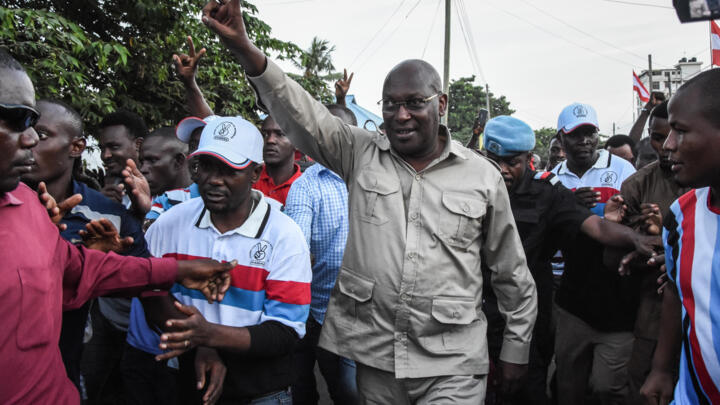
This shift in direction has left many observers uncertain about the president’s intentions, with some suggesting a resurgence of hardline policies while democratic reforms appear to be progressing slower than expected. Numerous events have raised fears that Tanzania may be regressing to what some termed as the autocratic era of former President John Magufuli, such as the arrest of two senior opposition leaders multiple times and another official, Ali Kibao, who was abducted, killed, and his body mutilated by unknown perpetrators. Tundu Lissu, the deputy leader of the main opposition Chadema party, who was released on bail in August 2024, voiced concerns about the situation and the reported disappearance of several other government critics.
Possible Implications on Upcoming Elections
The ongoing political crisis poses significant challenges to the integrity of electoral processes in Tanzania, raising concerns about the credibility of the electoral system and in conducting a free and fair election by 2025. It also threatens the stability of democratic institutions in Tanzania, highlighting the need for continuous safeguarding of the country’s democratic values. Apparently, trust in the government has eroded, leaving citizens questioning the very foundations of their democracy and demanding transparency and accountability like never before.
As Tanzania grapples with the aftermath of this political crisis, the road to recovery and stability remains uncertain, as it is not defined yet if the president’s will to uphold true democracy is still sacrosanct or not. The resilience of Tanzania’s democratic institutions, the resolve of its people, and the engagement of the international community will all play pivotal roles in shaping the country’s future. While challenges loom large, there is also hope for dialogue, reconciliation, and a renewed commitment among political parties to upholding democratic values. The coming days will be critical in determining the trajectory of Tanzania’s political landscape and the prospects for a more inclusive and stable future.