Communal conflict is associated with incompatibility of interest between or among various communal groups in many countries, forcing families from their homes and interrupting food production and economic activity. In many cases, conflict is making it difficult for organizations to provide humanitarian assistance. Food security occurs when all people, all of the time, have access to sufficient, safe, affordable, and nutritious food for a healthy diet. Based on the 1996 World Food Summit, food security is defined as when all people, at all times, have physical and economic access to sufficient, safe, and nutritious food that meets their dietary needs and food preferences for an active and healthy life, the World Bank stated. Experts say the four pillars of food security are availability, access, utilization, and stability. They predicted that over the coming decades, a changing climate, a growing global population, rising food prices, and environmental stressors will have significant yet uncertain impacts on food security.
In contrast, communal conflict has a negative impact on food security. Over the years, communal conflicts have affected food security in Nigeria and Africa at large. The food security situation in Nigeria has been critical in recent times, with 17 million people estimated to be critically food insecure in 2022. An estimated 2.9 million people are currently critically food insecure, according to the October 2022 Cadre Harmonisé, a government-led and UN-supported food and nutrition analysis carried out twice a year. Even though the North-Central is mostly affected by herder-farmer conflicts, the South-South has a high incidence of communal conflicts. In the interim, the north-east is home to the Boko Haram insurgency. That is in addition to poor access roads, inefficient transportation systems, and a lack of effective storage facilities, among others, across farm settlements in Nigeria.
Moreover, in conflict-affected areas, disruption of agricultural activities, displacement of communities, and destruction of infrastructure can trigger and perpetuate food insecurity. Food insecurity, on the other hand, often arises from poverty, resource scarcity, and environmental degradation. The country has consistently been counted among the 10 worst food crisis countries as well—particularly the states of Borno, Adamawa, and Yobe, known as the BAY states. The Boko Haram insurgency in the northeastern states and more recent banditry and conflict between farmers and pastoralists in the country’s northern and central states have been key factors in the crisis. Other factors contributing to the food insecurity situation include rising inflation, rising poverty, and rising unemployment, engendering and compounding a cost-of-living crisis with deleterious effects on the conditions of living of citizens and their ability to access food. Nevertheless, on July 14, 2023, the federal government declared a state of emergency over the food security situation in the country. It unveiled a comprehensive intervention plan on food security, affordability, and sustainability, taking decisive action to tackle food inflation.
The negative consequences
Nigeria is an extremely fertile country with adequate rainfall and the ability to produce a variety of agricultural products. Most small-scale farming is done by the bush fallow system, whereby land is left idle for a period of time to allow natural regeneration of soil facilities. Nigeria is home to millions of smallholder farmers who play an important role in the nation’s economy. These farmers are responsible for producing a large share of the country’s food and other agricultural products. Smallholder farmers in Nigeria play a critical role in the nation’s socio-economic development. They are responsible for producing the majority of the country’s staples, providing employment for millions of people, and helping to drive the country’s agricultural sector. It is estimated that about 75% of Nigeria’s total land area, amounting to about 68 million hectares, has agricultural use potential, while about 33 million hectares are actually cultivated. In addition, of the estimated 3.14 million hectares of irrigable land, only about 220,000 ha, or 7%, are utilized. The average farm size for subsistence farmers in Nigeria ranges from 1 to 3 ha, with the North having more farm sizes than the South.
Nevertheless, Northern Nigeria has traditionally been the food production basket of the country, accounting for over 70% of agricultural activity, but more recently, it has suffered huge displacement of its farming population on account of internal conflicts, with the abrupt cessation of farming in affected areas. An estimated 2.13 million people have been internally displaced from the North Eastern region, and 8.7 million are now food insecure. The entire food system in the region is struggling, and this has ramifications for Nigeria’s food system more broadly. Conflicts in the core maize-producing states have stifled the distribution of maize to markets and resulted in huge post-harvest losses and waste. This has prompted a maize supply shortage.
Experts say a combination of declining food production in the conflict regions and conflict-induced migration to largely consumer-based urban settlements in southern Nigeria has significantly altered the food systems. Imports of food staples have increased significantly. Nigeria, which was the top producer of maize in Africa in 2021, saw a 637% increase in maize import values in 2020. This is coupled with an unmet demand from livestock feed producers for maize and the drastic price increase in livestock farming input prices, especially poultry, putting downward pressure on livestock supply. Also, compounding the impact of increased volumes of imports, the ongoing Russian-Ukrainian conflict has also impacted imported commodity prices. As of May 2022, the global wheat supply disruptions resulting from the Russian invasion had sent the average price per bushel of the three key wheat variants up by 165% per bushel, and the price of flour had increased by nearly 150%. This price hike has also been transmitted to buckwheat, which is a key input into the local production of pasta and noodles, with Nigeria’s import bill for buckwheat rising 406%.
Meanwhile, in trying to unravel the nature of conflicts, experts observed that conflict is broadly associated with tensions surrounding decisions on various choices, sometimes manifested in confrontations between social forces. Thus, the nature of such contests that lead to conflict can be illustrated in terms of how issues arising from a variety of competitive social relationships are defined and framed. More so, conflict can be associated with either short-term or long-term grievances. They also opined that long-term grievances over economic and social inequalities could lead to conflict.
The Case of Plateau State
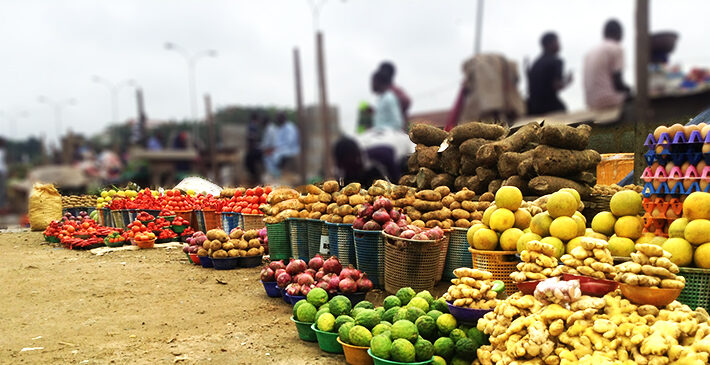
Plateau State, located in Nigeria’s middle belt, is known for a variety of food crops, vegetables, and fruits, which set it apart from other states of the country. Over the years, the state has also been known to be the highest producer of Irish potatoes in the country, as the land is fertile for growing the crop. According to a media report, an Irish potato farmer in Jos, the state capital, attributes the prevailing scarcity to insecurity and violence in parts of the state, which led to the loss of lives and the destruction of property and farmlands. As a result, he said, potato production was obstructed. Therefore, there is now a serious drop in the number of growers engaged in farming the crop.
In the meantime, the International Organization for Migration’s Displacement Tracking Matrix (IOM-DTM) indicated that on December 24th, 2023, a series of devastating attacks unfolded across numerous communities in Bokkos Local Government Area (LGA) of Plateau State, prompting an urgent humanitarian response. The attackers targeted residents, resulting in the displacement of 1,868 households and 13,310 individuals. Tragically, the attacks claimed 331 lives, left 153 individuals injured, and inflicted damage upon 1,190 shelters. This is also related to our earlier discussion.
Observers say the situation is currently disrupting the dry season farming, particularly that of the Irish potatoes, which currently needed to be nurtured through the irrigation system. Most farmers have either abandoned their farms or fled from their communities to safer places; therefore, going to the farms is not their immediate consideration yet, but their safety. A security analyst noted that ethnic divisions between the two groups are being exacerbated as competition for land resources, political manipulation, and the spread of misinformation on social media weigh in on the conflict.
Looking Ahead
Without doubt, the causal relationship between food security and conflict is vital to mitigating food insecurity and bolstering peace prospects. Experts suggest that there is a need for tailored interventions to resolve state- or region-specific conflicts, policy interventions on property and land rights and livestock management systems to address herder-farmer conflicts, and targeted investments in building the resilience capacity of households. The mass cultivation of subsistent farmlands in the North would significantly reduce the pressures on the available food that the global trade environment had allowed to be imported into the country. This will allow stability in food prices, reduce hunger, and stabilize the security situation in the north and the country at large.
Also, the Federal Government of Nigeria, under President Bola Tinubu, needs to summon the needed courage to tackle this crisis and solve the problem permanently by setting up a technical committee of stakeholders to review the National Livestock Transformation Plan (NLTP) to address areas of concern and make it more investor-friendly. Thereafter, the government should provide the necessary incentives and rally stakeholders in its immediate implementation as one of the critical measures for solving the farmer-herder clashes. If achieved, this would be one of the legacy achievements of his administration. Further to this, the presidency, the council of states, the Nigerian Police Council, and the national assembly need to see to the urgent need for decentralized and multilevel policing as may be required in each state of the federation.
Ultimately, the National Boundary Commission (NBC), in collaboration with different community leaders, should take time to trace, mark, and establish traditional communal boundaries to prevent future clashes. In order to manage existing communal conflicts so that food security is not affected, the government should timely deploy adequate security personnel to affected areas so as to stop violence. The government should also constitute peace committees to mediate between warring communities. Such peace committees should be comprised of government representatives, community leaders, and some members of the affected villages or communities. Inter-communal games and sports should be organized between communities in order to promote a culture of cooperation. Also, the National Orientation Agency should educate communities against communal stereotypes.