In response to violent protests, Senegal’s interior minister on Monday dissolved Pastef-Les Patriotes, the opposition party of Ousmane Sonko, prompting more calls for resistance as demonstrators clashed with police. This was done in response to rallying supporters’ violent protests last month. It is the first time a party has been banned since Senegal gained independence from France in 1960. Demonstrators took to the streets of Dakar on Monday as Sonko was remanded in custody by a judge on charges that included plotting an insurrection. However, the government has restricted internet access due to the spread of “hateful and subversive messages” on social media. In a statement, Pastef said it would “attack this decision” and that the Senegalese people would “resist.”
Following the dismissal of Prime Minister Najla Bouden, Tunisian President Kais Saied appointed the little-known Ahmed Hachani as her replacement. Bouden was Tunisia’s first female prime minister and the first of any Arab League country when she was appointed last October. No reason was given for Bouden’s dismissal amid growing economic woes and Saied’s increased blaming of officials. The newly appointed Hachani previously worked at Tunisia’s central bank and studied law alongside Saied. The shakeup follows Saied’s moves against other officials and the crackdown on opposition figures, businessmen, and journalists. Over 20 people, including Islamist party leader Rached Ghannouchi, have been arrested this year. Saied told Hachani there are “great challenges” in preserving the state and civil peace.
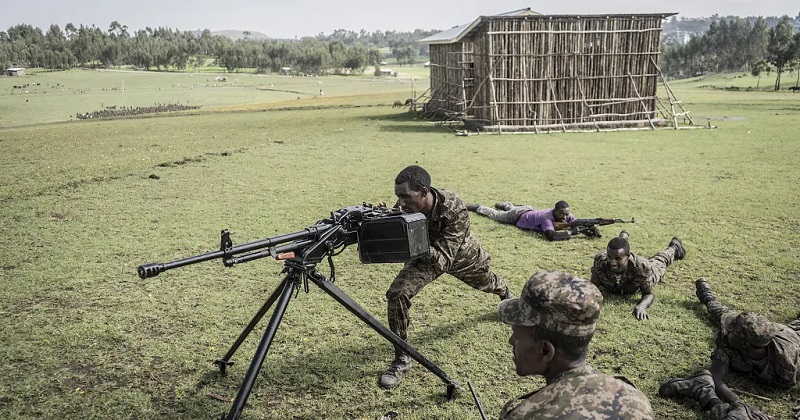
After clashes between regional forces and the military intensified, the Ethiopian government declared a state of emergency in the Amhara region. The declaration came after the region’s leader said regular law enforcement could no longer contain the violence. This week, residents have reported fighting across the Amhara region as militia members attacked army units and protesters blocked roads. Flights to two popular tourist towns, Lalibela and Gondar, have been suspended. Internet access has also been affected. The state of emergency is the latest attempt by the government to quell the violence in Amhara.
After Niger’s president was toppled in a coup last week, top West African military leaders agreed on a plan for potential intervention in the country. The regional bloc ECOWAS gave the Niger junta one week to restore the elected president or face possible military action. At an extraordinary ECOWAS summit in Abuja, Nigeria’s ambassador said military chiefs worked round-the-clock on an intervention concept, including timing, resources, and deployment. Nigeria chairs ECOWAS and is fighting hard against coups after Niger’s latest instability. Niger’s junta has vowed to respond “immediately” to foreign intervention and has held the ousted president. Neighboring Mali and Burkina Faso, also led by juntas, said intervention in Niger would be an act of war. Niger currently faces a deadline for restoring civilian rule or potential regional intervention.
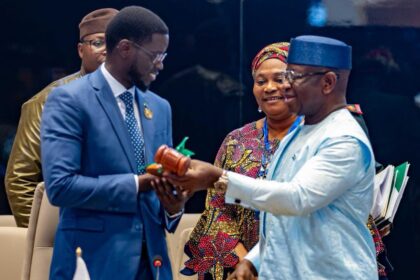
Amid deep divisions over the disputed June 24 elections, Sierra Leone’s President, Julius Maada Bio, called for unity and dialogue. The opposition All People’s Congress Party (APC) boycotted the new National Assembly, saying the elections were rigged. With only 81 seats, the ruling Sierra Leone People’s Party (SLPP) does not have a two-thirds majority in parliament. President Bio acknowledged “logistical limits” during the elections but denied any form of rigging. He, however, called on all parties to put the nation’s interests first and work together to build a better future for Sierra Leone. The international community has also called for calm and restraint and has urged all parties to work together to resolve the political crisis.
On Thursday, Zimbabwe’s President Emmerson Mnangagwa inaugurated a Chinese-funded power plant, saying it would help ease electricity shortages ahead of this month’s national elections. Mnangagwa, seeking a second term on August 23, has touted infrastructure projects while campaigning amid a struggling economy. In the northwestern town of Hwange, he launched the $1.2 billion 600-megawatt coal plant, one of four China-backed energy projects totaling $1.2 billion. Mnangagwa called the plant “critical” for Zimbabwe’s development and said the country is now self-sufficient in electricity after years of severe shortages. He, however, blamed Western sanctions for Zimbabwe’s economic woes.
In the country’s lawsuit against Credit Suisse over the $2 billion “tuna bond” scandal, Mozambican President Filipe Nyusi has asked London’s High Court to block allegations he accepted unlawful payments. The case involves secret government loan guarantees for purported maritime projects that triggered investigations worldwide when hundreds of millions went missing. Shipbuilder Privinvest and owner Iskandar Safa claim Nyusi should share damages if found liable, alleging $11 million in illegal 2014 campaign funding. Nyusi, however, asserts immunity as head of state. In his defense, his lawyer said no legal difference exists between suing Nyusi abroad and Britain’s King Charles III in Australia. The lawsuit centers on Mozambique, which seeks to revoke a guarantee and win compensation for wrongdoing in the debt scandal that halted donor aid and cratered its economy.
After an unprepared female sprinter embarrassingly finished a 100-meter race in over 20 seconds at the World University Games in China, Somalia’s sports minister suspended the country’s track and field chairwoman. Minister Mohamed Barre said the ministry didn’t select 20-year-old Nasra Abukar Ali and ordered the Olympic committee to suspend chairwoman Khadija Aden Dahir over claims Nasra was improperly chosen due to being her relative. Video of Nasra’s agonizingly slow run went viral, with the minister calling it embarrassing. Nasra was immediately left behind in her qualifying race and finished about 10 seconds after the winner. Somalia’s university union said it didn’t send runners officially. The controversy highlights issues with Somalia’s athletic federation amid allegations of nepotism in Nasra’s selection. Despite her lack of training, she was allowed to represent Somalia internationally in a high-profile event.
Amid concerns over what are termed “rights violations” in Uganda, including extrajudicial killings and a new law imposing the death penalty for some homosexual acts, the United Nations announced closing its human rights office in the country on Friday. The Kampala office will formally shut down Saturday after 18 years of working with civil society and authorities to promote human rights. The UN high commissioner for human rights expressed “regret” at the closure prompted by Uganda’s decision not to renew the host agreement. He warned of an increasingly hostile climate for rights defenders ahead of the 2026 elections in Uganda. The commissioner also noted that most of the 54 non-governmental organizations arbitrarily suspended two years ago remain closed. He called on Uganda not to backslide on human rights commitments, especially under the controversial new anti-LGBTQ law.
In the latest development, Angola’s opposition party UNITA called for President Joao Lourenco to step down on Saturday during a rally in Luanda to commemorate the birthday of former UNITA leader Jonas Savimbi. Current UNITA leader Adalberto Costa Junior accused Lourenco of being authoritarian and responsible for famine, unemployment, and the jailing of demonstrators. Under Angola’s constitution, the president can be removed from office if he is considered to have committed acts that threaten democracy. However, UNITA has yet to say when it intends to initiate proceedings and has been sparse on details about the specific charges against Lourenco. However, removing the president requires a two-thirds majority vote in parliament and court support. The MPLA, in power since 1975, controls both. However, The MPLA dismissed UNITA’s efforts to remove the president as “unserious” and “undemocratic.”