بالعربي
Facebook Twitter Linkedin Youtube
Alafarika for Studies and Consultancy
Library
0

No products in the cart.

مكتبتنا (عربي)
  • Home
  • Reports
    • Geopolitics & Governance
    • Economy & Trade
    • Security & Conflict Resolution
    • Regional Integration & Global Cooperation
    • Education, Science & Technology
    • Culture & Media
  • Analyses
    • Geopolitics & Governance
    • Economy & Trade
    • Security & Conflict Resolution
    • Regional Integration & Global Cooperation
    • Education, Science & Technology
    • Culture & Media
  • Weekly Brief
  • Data
    • Charts
    • Infographics
  • Journals
  • Events
  • Country Profile
    • Nigeria
Font ResizerAa
Alafarika for Studies and ConsultancyAlafarika for Studies and Consultancy
Search
  • Home
  • بالعربي
  • Reports
    • Geopolitics & Governance
    • Economy & Trade
    • Security & Conflict Resolution
    • Regional Integration & Global Cooperation
    • Education, Science & Technology
    • Culture & Media
  • Analyses
    • Geopolitics & Governance
    • Economy & Trade
    • Security & Conflict Resolution
    • Regional Integration & Global Cooperation
    • Education, Science & Technology
    • Culture & Media
  • Weekly News Brief
  • Journals
  • Data
    • Infographics
    • Charts
  • Events
  • Country Profile
    • Nigeria
Follow US
  • About
  • Request A Report/Study
  • Consult With Us
  • Call to Host/Train
  • To Publish With Us
All Rights Reserved | Alafarika for Studies and Consultancy © 2026.
Weekly News Brief

Ramaphosa Requests More IMF Reserves for Africa’s Post-Pandemic Recovery

Hammed J. Sulaiman
By
Hammed J. Sulaiman
Last updated: June 21, 2021
4 Min Read
Share

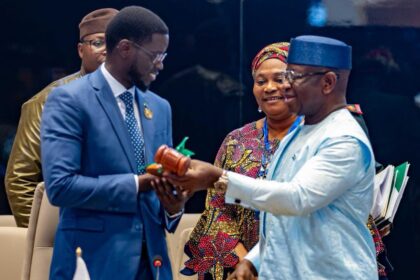
President Cyril Ramaphosa of South Africa has encouraged wealthy economies to assist Africa’s post-pandemic recovery by distributing more International Monetary Fund reserves to the continent. 

In an interview at the Qatar Economic Forum on Monday, Ramaphosa said that Africa requires more than the $33 billion set aside to help nations devastated by the coronavirus.

“We need more because our economies are going to need a lot of support and it is only fair,” he said. “The continent has been growing by leaps and bounds and should receive that type of support because all of us must get out of this economic slump that has been brought on to us by Covid-19.”

The IMF is poised to provide its members the largest resource infusion in its history, $650 billion, to help emerging and low-income countries deal with increasing debt and Covid-19. President Emmanuel Macron of France has urged other wealthy countries to follow France’s lead and pledge to reallocate some of their so-called IMF special drawing rights to assist raise Africa’s share of the global economy. 

The proposed new SDRs are expected to be voted on by the IMF’s board of governors by mid-August, according to IMF Managing Director Kristalina Georgieva.

According to the World Bank, Sub-Saharan Africa’s GDP contracted by 2.4 percent in 2020 and is expected to increase by only 2.8 percent this year, compared to 7.7 percent in Asia and 3.9 percent in Europe. Africa’s recovery from the pandemic is expected to cost $400 billion, according to the United Nations Economic Commission. 

The economy is expected to recover from the worst effects of Covid-19. 

In addition to receiving a larger share of SDRs, African countries require debt cancellation and greater assistance for countries experiencing payment delays, according to Ramaphosa.

“Without that support, Africa will forever be left behind,” he said. “We can get up and get going with our own boot straps, but we do need that lift and developed economies have a duty.”

Additional cash would speed up Covid-19 vaccination campaigns in Africa, where countries lack the financial and organizational resources to negotiate their own supply agreements with pharmaceutical corporations. Institutions and countries opposed to patent exemptions that would allow for more decentralized vaccine manufacture have slowed the roll-out, according to Ramaphosa.

“We see their refusal to waive this intellectual property provision that they have as part of vaccine nationalism and we just don’t understand the sense of it all,” he said. “There should be a waiver for a three-year period to enable countries that have the capability to be able to produce the vaccines.”

According to the World Health Organization, only 2.8 percent of Africa’s 1.1 billion people have been vaccinated, whereas countries like the United States and the United Kingdom have properly immunized roughly 45 percent of their populations and the European Union about a quarter.

“The continued refusal leads to inequity on vaccines,” Ramaphosa said. “We are facing an emergency that has affected the entire world and it is totally unfair and wholly unjust that pharmaceutical companies as well as certain countries are refusing to allow this provision to be waived so that there can be mass production of these vaccines so that we can save lives.”

Keywords:AfricaInternational Monetary FundPost-PandemicPresident Cyril Ramaphosa

Sign Up For Weekly Newsletter

Subscribe to our newsletter to get our weekly briefs, reports, and analysis instantly!

By signing up, you agree to our Terms of Use and acknowledge the data practices in our Privacy Policy. You may unsubscribe at any time.
Share This Article
Facebook Whatsapp Whatsapp LinkedIn Reddit Threads Email Copy Link Print
ByHammed J. Sulaiman
Educator, writer and legal researcher at Alafarika for Studies and Consultancy.

SUBSCRIBE NOW

Subscribe to our newsletter to get our weekly briefs, reports, and analysis instantly!

WHAT OTHERS ARE READING

Chad and the Crisis of Statehood in the Sahel: Collapse, Resilience, or Transformation?

AnalysesSecurity & Conflict Resolution
June 2, 2026

Can the 2026 Ethiopia General Election Secure a Fractured Nation?

On June 1, 2026, Ethiopia is scheduled to hold its 7th General Election to fill…

May 31, 2026

Faye-Sonko Fallout: Senegal’s Political Tension Amid Economic Crisis

In political philosophy, one of its powerful core concepts is a classic realist principle, attributed…

May 25, 2026

Africa This Week (23/05/2026)

This week, the death toll from the ongoing Ebola outbreak in the eastern Democratic Republic…

May 23, 2026

From The Same Section

AnalysesSecurity & Conflict Resolution

Nigeria-US Elimination of ISWAP’s Abu-Bilal Al-Minuki: What Does It Mean, and What are the Future Expectations?

For over 50 years, the United States of America and the Federal…

By
Ahmadulbadawy AbdulRaheem
May 18, 2026
AnalysesRegional Integration & Global Cooperation

Africa Forward Summit: A New Policy for The Continent or A Familiar Script?

For decades, France’s relationship with the African continent was shaped by a…

By
Ahmadulbadawy AbdulRaheem
May 14, 2026
Security & Conflict Resolution

The April 2026 Mali Offensive: A Turning Point in the Sahel’s Security Architecture

Introduction Landlocked Mali is part of the Sahel, a vast strip of…

By
Oyebamiji Adesoji
May 8, 2026

Discover More

Africa This Week (16/05/2026)

Weekly News Brief
May 16, 2026

Africa This Week (09/05/2026)

Weekly News Brief
May 10, 2026

Africa This Week (02/05/2026)

Weekly News Brief
May 1, 2026

Africa This Week (25/04/2026)

Weekly News Brief
April 25, 2026
Registered and Certified by:

Follow us: 

Other Pages

  • About
  • Request A Report/Study
  • Consult With Us
  • Call to Host/Train
  • To Publish With Us

Quick Links

  • Events
  • Library
  • Journals
  • Privacy Policy
  • Contact
All Rights Reserved | Alafarika for Studies and Consultancy © 2026.
Get Updated!
Subscribe to our newsletter and never miss our latest reports, analyses, publications, and other events.

Zero spam, Unsubscribe at any time.
Welcome Back!

Sign in to your account

Username or Email Address
Password

Lost your password?