بالعربي
Facebook Twitter Linkedin Youtube
Alafarika for Studies and Consultancy
Library
0

No products in the cart.

مكتبتنا (عربي)
  • Home
  • Reports
    • Geopolitics & Governance
    • Economy & Trade
    • Security & Conflict Resolution
    • Regional Integration & Global Cooperation
    • Education, Science & Technology
    • Culture & Media
  • Analyses
    • Geopolitics & Governance
    • Economy & Trade
    • Security & Conflict Resolution
    • Regional Integration & Global Cooperation
    • Education, Science & Technology
    • Culture & Media
  • Weekly Brief
  • Data
    • Charts
    • Infographics
  • Journals
  • Events
  • Country Profile
    • Nigeria
Font ResizerAa
Alafarika for Studies and ConsultancyAlafarika for Studies and Consultancy
Search
  • Home
  • بالعربي
  • Reports
    • Geopolitics & Governance
    • Economy & Trade
    • Security & Conflict Resolution
    • Regional Integration & Global Cooperation
    • Education, Science & Technology
    • Culture & Media
  • Analyses
    • Geopolitics & Governance
    • Economy & Trade
    • Security & Conflict Resolution
    • Regional Integration & Global Cooperation
    • Education, Science & Technology
    • Culture & Media
  • Weekly News Brief
  • Journals
  • Data
    • Infographics
    • Charts
  • Events
  • Country Profile
    • Nigeria
Follow US
  • About
  • Request A Report/Study
  • Consult With Us
  • Call to Host/Train
  • To Publish With Us
All Rights Reserved | Alafarika for Studies and Consultancy © 2026.
Weekly News Brief

Malawi Takes Steps to Allow Hijabs in All Schools

Hammed J. Sulaiman
By
Hammed J. Sulaiman
Last updated: June 7, 2021
4 Min Read
Share

Malawi is taking efforts to allow Muslim students in all educational institutions to wear the hijab, or headscarf. In the primarily Christian country, some schools have been compelled to close due to the contentious subject. 

The hijab has long been a source of controversy in Malawi, particularly in Christian-run institutions where female Muslim students are not permitted to cover their heads in class. 

In October, suspected enraged Muslims in eastern Malawi “set fire” to the office of a Catholic elementary school head teacher who had turned away students wearing the garment.

Several Christian primary schools in the Muslim-dominated region were forced to close as a result of the standoff. 

As a result, the Ministry of Education asked the quasi-religious Public Affairs Committee, or PAC, to assist in the resolution of the issue. 

According to Gilford Matonga, a PAC spokesperson, a compromise has to be found.

“One of the recommendations is that the Islamic girl child is allowed to wear the hijab that matches the school uniform wherever they are going to school. On the other side is that no girl child shall be forced to put on the hijab if they wish not to put on [the hijab],” Matonga said.

Abdul-Salaam Faduweck is the spokesperson for the Hijab Task Force, a section of the Muslim Association of Malawi that has advocated for the scarves to be worn in all Malawian schools. 

He stated that the task committee has accepted the PAC’s recommendation and that the school uniforms will be in line with a full hijab.

“We need the uniform to be according to the understanding of the meaning of hijab itself. If it is a skirt it has to be a long skirt, it has to be loose not tight. If it is a blouse it has to be with a long sleeve and not very tight. And the learner has to cover the head with a scarf. That is a complete hijab,” Faduweck said.

The idea, according to Imran Sheriff, a religious studies lecturer at the University of Malawi, is somewhat unworkable, especially since the headscarf is also considered part of the school uniform in Muslim schools.

“The putting on a hijab is based on religion and putting on school uniform is based on school regulations in order that the students should look equal. So, if it is an Islamic institution, if the hijab is part of the uniform, then everybody will be obliged [to put on a headscarf],” Sheriff said.

According to Michael Kaiyatsa, executive director of Malawi’s Center for Human Rights and Rehabilitation, the moment has come for Malawi to allow all religious symbols into schools in order to encourage religious harmony.

“It shouldn’t be Muslims or a particular religion. If we allow, then it should be across the board. If people are allowed to come to schools with rosaries around their necks, then why shouldn’t we allow other religions to do the same?” Kaiyatsa asked.

According to Matonga of the PAC, the ideas will be presented to education officials next week for their opinion.

However, because they haven’t received the suggestions yet, education officials said they couldn’t comment on the topic right now.

Keywords:EducationHijab crisisMalawireligious tolerance

Sign Up For Weekly Newsletter

Subscribe to our newsletter to get our weekly briefs, reports, and analysis instantly!

By signing up, you agree to our Terms of Use and acknowledge the data practices in our Privacy Policy. You may unsubscribe at any time.
Share This Article
Facebook Whatsapp Whatsapp LinkedIn Reddit Threads Email Copy Link Print
ByHammed J. Sulaiman
Educator, writer and legal researcher at Alafarika for Studies and Consultancy.

SUBSCRIBE NOW

Subscribe to our newsletter to get our weekly briefs, reports, and analysis instantly!

WHAT OTHERS ARE READING

Africa This Week (25/07/2026)

Weekly News Brief
July 25, 2026

How Legislative Term Extensions in 2026 Impact The Democratic Legacy of African States (A Case Study of Zimbabwe, the DRC, and Somalia)

The African continent has witnessed a quiet but significant shift in democratic norms within the…

July 21, 2026

Africa This Week (18/07/2026)

Sierra Leone hosted the 2026 ECOWAS Mid-Year Summit's statutory meetings, beginning with the 39th Administration…

July 18, 2026

Africa This Week (11/07/2026)

This Week, China pledged to deepen cooperation with Namibia across energy, agriculture, infrastructure and minerals…

July 11, 2026

From The Same Section

Situation ReportsRegional Integration & Global Cooperation

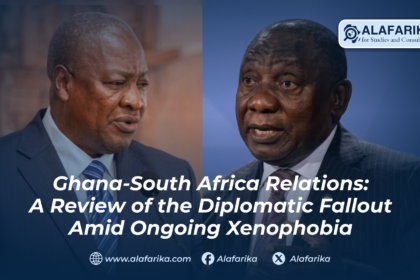
Ghana-South Africa Relations: A Review of the Diplomatic Fallout Amid Ongoing Xenophobia

A diplomatic rift has emerged between Ghana and South Africa, two of…

By
Ahmadulbadawy AbdulRaheem
July 11, 2026
AnalysesGeopolitics & Governance

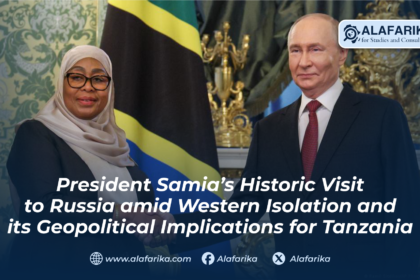
President Samia’s Visit to Russia amid Western Isolation and its Geopolitical Implications for Tanzania

Tanzanian President Samia Suluhu Hassan, during the first week of June 2026,…

By
Ahmadulbadawy AbdulRaheem
June 16, 2026
AnalysesSecurity & Conflict Resolution

The 2026 U.S. Counter-Terrorism Strategy: A Critical African Assessment

Throughout most of the post-Cold War era, Africa occupied the margins of…

By
Oyebamiji Adesoji
June 10, 2026

Discover More

Africa This Week (04/07/2026)

Weekly News Brief
July 4, 2026

Africa This Week (27/06/2026)

Weekly News Brief
June 27, 2026

Africa This Week (20/06/2026)

Weekly News Brief
June 20, 2026

Africa This Week (13/06/2026)

Weekly News Brief
June 13, 2026
Registered and Certified by:

Follow us: 

Other Pages

  • About
  • Request A Report/Study
  • Consult With Us
  • Call to Host/Train
  • To Publish With Us

Quick Links

  • Events
  • Library
  • Journals
  • Privacy Policy
  • Contact
All Rights Reserved | Alafarika for Studies and Consultancy © 2026.
Get Updated!
Subscribe to our newsletter and never miss our latest reports, analyses, publications, and other events.

Zero spam, Unsubscribe at any time.
Welcome Back!

Sign in to your account

Username or Email Address
Password

Lost your password?