The recent trade crisis between Nigeria and Ghana has continued to stain the diplomatic ties of both countries. Among the many reasons listed in a press statement released on the 28th of August 2020 by Nigeria’s Ministry of Information and Culture is the closure of Nigerian shops in Ghana, a high levy on Ghana-based Nigerian businesses, aggressive and incessant deportation of Nigerians from Ghana and seizure of Nigeria’s high commission in Ghana. This according to the Ministery, is considered a serious breach of the Vienna Convention on Diplomatic relations.
Reacting to this crisis, Shorley Ayorko, Ghana’s minister of foreign affairs in her recent series of tweets on twitter, clarified that Nigeria’s border closure in 2019 has hurt Ghanaians and has nearly bankrupted many Ghanaian export businesses because their goods were stuck on Seme border for months. She said this decision without Nigeria giving prior notice to community trade could be seen as the root of the current dispute.
However, as reported by Naira metrics, Nigeria’s minister of foreign affairs, Godfrey Onyeama summoned Ghana’s head of diplomatic mission to Nigeria, Ms Iva Denoo and as well met with the Nigerian traders in Ghana, an organization led by Mrs Jasper Emenike and Honorable Ruth Ango as the national president and national director respectively, to discuss the underlying issues affecting them in the country.
Ghana’s perspectives
According to a statement issued by the Ghanaian Ministry of information on Sunday 30th of August 2020 which provide a more reflective account of the event, the Ghanaian government denied the aforementioned allegations by Nigerian ministry of information and provided that all steps taken were an attempt to maintain a warm relationship with all sister nations including Nigeria.
Defending the closure of 1150 Nigerian owned shops in Ghana from 2018 to 2020 as accused by the Nigerian government, Ghana claimed that the closure was not directly aimed at Nigerians only, that many foreigners in Ghana has been involved in various of trade without complying with the laws and regulations of Ghana, and thus, the closure served as means to encourage compliance.
Meanwhile, Ghana stated that Nigeria’s response and attitude to situations that involve both countries relations are not guided by mutual interest. According to them, Nigeria refused to heed to resolution when an attempt was made by the Ghanaian ministers of Foreign Affairs and Trade who travelled to Abuja to resolve diplomatically the issue of closure of Nigeria borders.
Love-hate affair
The recent crisis between Nigeria and Ghana could be regarded as history that repeated itself. Over the years, the relationship between both countries has faced a striking twist. Though there are records of flourishing economic relations between both countries, especially during the era of President Olusegun Obasanjo in Nigeria and President John Kufuor in Ghana. As at 2008, both leaders have entered into many bilateral agreements that were instrumental to the rise of the total volume of export trade between both countries to $525, and also influenced the growth of ECOWAS in the aspect of the substantial amount of trade and investment.
However, according to the report of the African Research Review, despite the bilateral flourishment between both countries, relationship between the countries tend to deteriorate during the era of President John Atta in 2009, when Ghana-based Nigerian businesses men were complaining of discrimination against them under the new Ghana Investment Promotion Act (GIPA) which raised the foreigner’s business registration levy in Ghana to $200,00 because these businesses were mostly established by Nigeria.
The relationship continues to a deeper deterioration when the then Ghana government planned to enter into an agreement with Equatorial Guinea for the supply of oil, this attempt was contrary to the initial agreement with Nigeria, entered into by Ghanaian previous government.
Until this recent crisis, several efforts were made then as an attempt to solve the dispute between both countries. According to a report by Financial Times, part of the efforts was the establishment of Joint Task Force from the Trade Ministries of Ghana and Nigeria to monitor production facilities of companies registered under ECOWAS Trade Liberation Scheme (ETLS) in both countries, and as well as the organization of economic summit in Accra in 2010.
International reactions
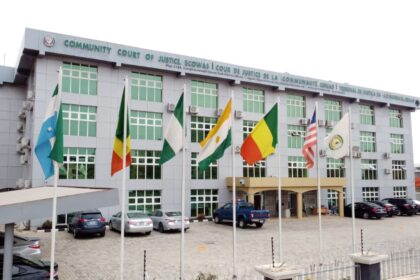
While the Ghanaian sees no wrong done to Nigerians in their country, this is contrary to the position of the Nigerian government and thus, they were considering a retaliatory move against Ghana. Business A.M reported that Nigeria was considering dragging Ghana to the community court of justice of the ECOWAS.
But for the Economic Community of West Africa States (ECOWAS), media reports surfaced that they were most interested in addressing the underlying issues between both countries quietly and responsibly, rather than engaging the ECOWAS court. Because “ECOWAS cannot afford to have another crisis on its hand as the recent military takeover of Mali has already thrown the subregion into disarray.”
While ECOWAS has stepped in to resolve the trade war between Nigeria and Ghana, some European organizations have also said that the escalation between the two countries can be problematic for the European Union (EU), considering that Nigeria and Ghana are the EU’s largest trading partner in West Africa.