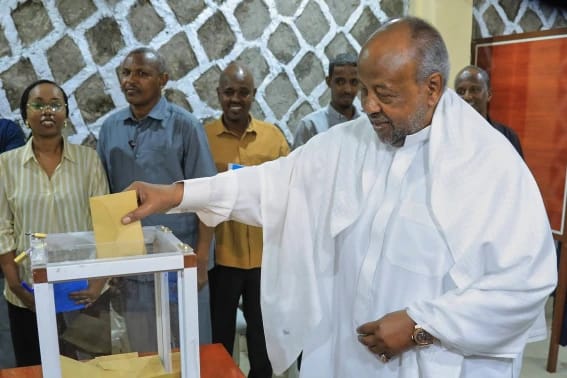
Djibouti President Ismaïl Omar Guelleh has been reelected for a sixth term, garnering 97.81% of the vote in a recent election. At 78, Guelleh has led the nation for over two decades, with lawmakers having eliminated presidential age limits last year. Despite claims of a peaceful election, Guelleh faced limited competition from his major challenger Mohamed Farah Samatar. Opposition groups often boycott the elections, citing political restrictions, and Guelleh has continued a family-led political legacy since succeeding his uncle in 1999.
Guinea-Bissau transporters have initiated strikes in response to government-imposed fuel price hikes following the Iran war, significantly affecting public transport in cities like Bissau and Gabú. The strikes, led by the drivers’ union, are sparked by price increases without corresponding fare hikes, leaving many passengers no choice but to travel on foot. The drivers’ union leader, Caram Gassama, announced that the strikes in the capital would soon extend to taxis. The situation is exacerbated by the government’s silence amidst ongoing tensions from a recent military coup.
Mali expressed support for Morocco’s autonomy plan for Western Sahara, retracting its recognition of the pro-independence Sahrawi Arab Democratic Republic. The Malian transitional government emphasized that genuine autonomy under Moroccan sovereignty is the most feasible solution to the longstanding conflict. This stance aligns with growing backing for Morocco from various African allies, the Trump administration, and the European Union. The United Nations Security Council, in October 2025, recognized Morocco’s proposed plan as a serious basis for resolving the dispute, although it did not determine the final status of the territory.
The Ghanaian government announced a reduction in fuel price levies to lower petroleum products’ pump prices, aiming to alleviate the transportation and cost-of-living pressures on citizens amid the Middle East crisis. The specific levies to be removed will be revealed after consultations with stakeholders in the petroleum and transport sectors. This reduction will take effect from the next pricing window, following a recent 15 percent price increase at the beginning of April, where petrol is now priced at 13.3 cedis and diesel at 17.1 cedis per liter.
Kenya’s central bank reassured markets this week about the country’s robust foreign exchange reserves exceeding $13 billion, which serve as a buffer against currency volatility. This statement follows a 0.7 percent depreciation of the Kenyan shilling against the U.S. dollar in March due to global geopolitical tensions. However, the shilling has since regained value. The bank’s president noted that the reserves were intentionally increased to weather shocks from declines in exports, remittances, and tourism. The central bank maintained its benchmark lending rate, reflecting a cautious stance amid rising global energy prices, emphasizing its proactive measures for macroeconomic stability and investor confidence.
Libya revealed three new oil and gas discoveries, signaling a resurgence in exploration activities with international partners. The National Oil Corporation (NOC) announced, this week, that these discoveries occurred in collaboration with Eni, Repsol, and Sonatrach in various basins. The first find includes a gas discovery at the A1-69/02 well in Block 95/96, yielding 13 million cubic feet of gas per day and 327 barrels of condensate. The second offshore discovery, 95 kilometers from the coast, produced between 14 and 24 million cubic feet of gas daily. The third in the Murzuq Basin confirmed oil presence with a production of 763 barrels per day. These initial results suggest further testing is needed to evaluate reserve extent and commercial viability. The announcements coincide with an increase in exploration activities, including Chevron’s assessment of new offshore areas, as Libya aims to boost oil production to 1.6 million barrels per day by the end of 2026.
Zimbabwe’s central bank launched a new series of banknotes called “BiG5 ZiG” to enhance currency confidence and stabilize prices and exchange rates. The phased rollout begins with ZiG10, ZiG20, and a new ZiG50 note, with higher denominations like ZiG100 and ZiG200 to follow based on demand. ZiG coins, introduced in April 2024, will continue to support low-value transactions. This initiative signals a recovery from Zimbabwe’s economic crisis, attributed to tight monetary policy, fiscal discipline, and favorable global conditions, with GDP growth rising and inflation decreasing to a record low.
Gambia appoints British barrister Martin Hackett as its first special prosecutor to address human rights abuses during ex-President Yahya Jammeh’s 22-year rule, which ended in 2017. He will lead a newly established office focused on cases involving widespread repression and extrajudicial killings, which were documented by the Truth, Reconciliation, and Reparations Commission (TRRC). Hackett’s appointment is viewed as a significant step toward accountability, backed by his experience with the UN-backed Special Tribunal for Lebanon and investigations into Kosovo war crimes. He has a four-year mandate as stated by Attorney General Dawda Jallow.
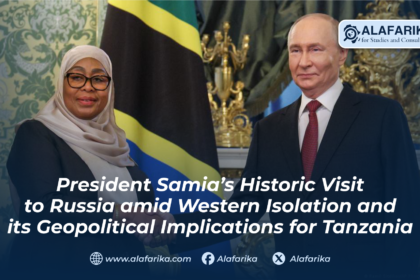
Tanzania’s President Samia Suluhu Hassan has ordered the reduction of the use of official and luxury vehicles to save fuel amid rising oil prices, which have increased by $0.40 per liter recently. Across Africa, various governments are implementing strategies to address fuel shortages, including Madagascar’s state of emergency, South Africa’s fuel levy reduction, and Ethiopia’s rationing. Starting today, Hassan’s official travel will utilize smaller buses for escorts to cut costs. She noted that Tanzania has fuel reserves for up to three months but warned against price inflation by businesses.
Somalia is set to commence its inaugural offshore oil drilling operations, with a Turkish government-owned drilling ship, Çağrı Bey, arriving off its coast. This follows successful seismic surveys conducted last year. Petroleum Minister Dahir Shire called it a “historic milestone,” indicating the start of a new energy chapter for the country. The foreign ministry noted successful drilling could enhance economic recovery and establish Somalia as a regional energy player. Turkey’s energy minister emphasized that potential oil or gas discoveries would benefit Somalia, East Africa, and Turkey economically.