- Historical Perspective of Slavery, Colonialism, and Global Inequality
- The Ghanaian Initiative and Its Significance
- Western Opposition: Legal, Political, and Economic Concerns
- Realism: Power, Interests, and Strategic Resistance
- Constructivism: Norms, Identity, and Moral Transformation
- Implications for International Law, Future Prospects and Global Reactions
- Conclusion
From the 15th to 19th Centuries, around 12-15 million African men, women and children were captured and trafficked to the Americas to work as slaves. They were sent to colonies controlled by European countries, such as Spain, Portugal, France and the UK. Two million people are believed to have died aboard the infamous slave ships. The effects of centuries of exploitation are still felt to this day (BBC, 2026). For instance, in Brazil, the largest recipient of enslaved Africans – 4.9 million, mostly while it was a Portuguese colony – black people are twice as likely to live in poverty as whites, according to the country’s official statistics body (IBGE).
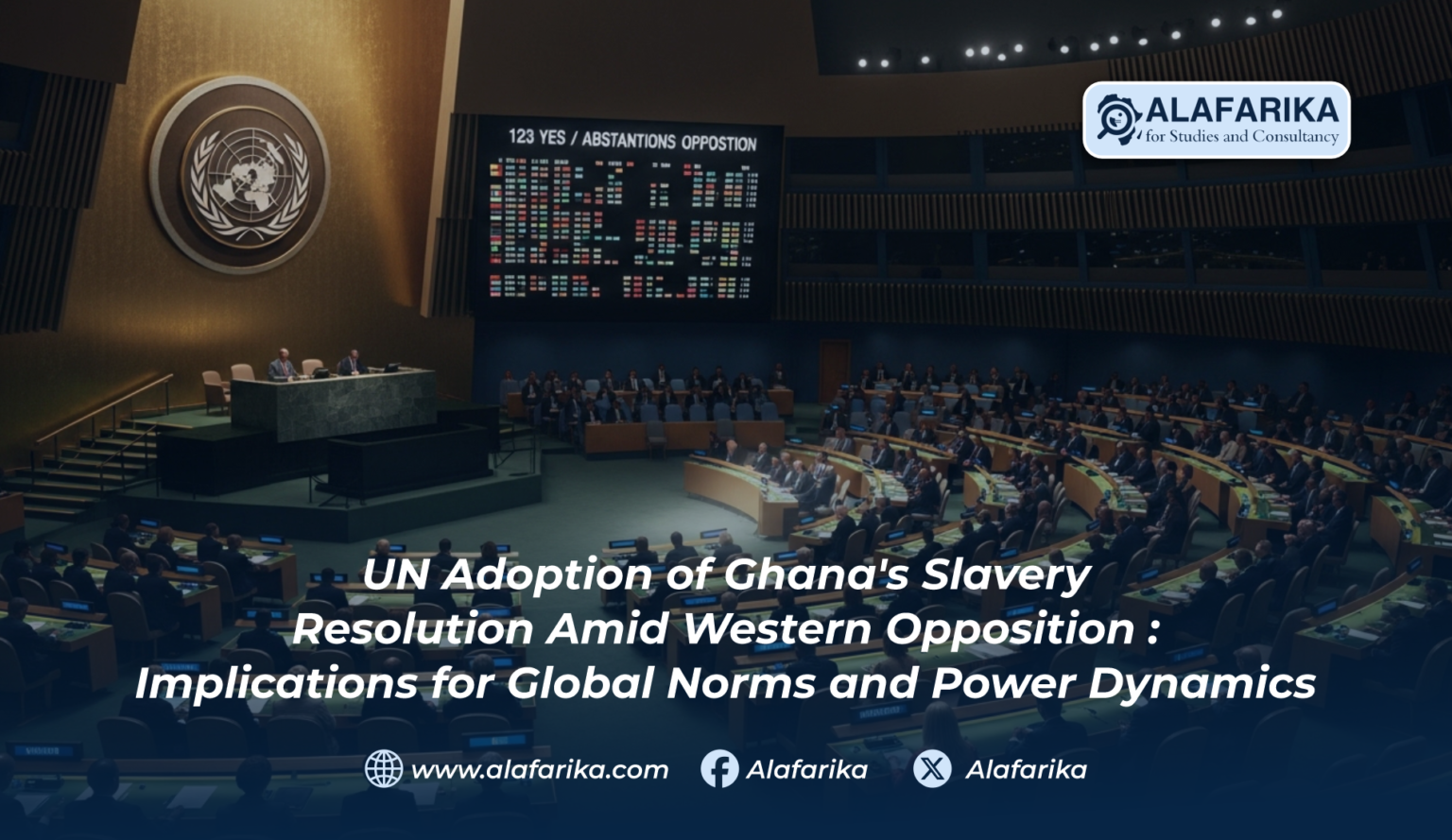
On March 25, 2026, the United Nations General Assembly (UNGA) passed a resolution about the transatlantic slave trade and how the enslavement of Africans counts as the worst crime against humanity ever. The resolution – proposed by Ghana – called for this designation, while also urging UN member states to consider apologising for the slave trade and contributing to a reparations fund. It does not mention a specific amount of money. The proposal was adopted with 123 votes in favour and three against – the United States, Israel and Argentina. Fifty-two countries abstained, including the United Kingdom and European Union member states (AP, 2026).
Although countries such as the UK have long rejected calls to pay reparations, saying today’s institutions cannot be held responsible for past wrongs. Unlike UN Security Council resolutions, those from the General Assembly are not legally binding, though they carry the weight of global opinion.
“Let it be recorded that when history beckoned, we did what was right for the memory of the millions who suffered the indignity of the slave trade and those who continue to suffer racial discrimination,” Ghana’s President John Mahama told the assembly ahead of the vote. ”The adoption of this resolution serves as a safeguard against forgetting. It also challenges the enduring scars of slavery,” he said.
Meanwhile, reparations are intended to work as a restitution – an apology and repayment to black people whose ancestors were forced into slavery. The motion, proposed by Ghana, urges UN member states to consider apologizing for the slave trade and contributing to a reparations fund. The acceptance of the resolution indicates the beginning of a new phase in global debates on historical justice. Quite a lot of possible developments can be expected.
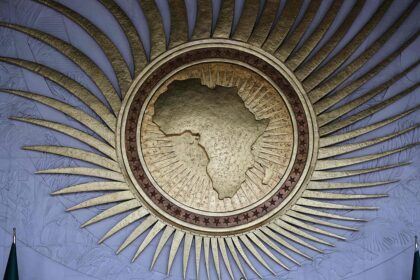
The African Union’s “Decade of Reparations” initiative proposes that efforts to institutionalize reparatory justice will continue. This may include the formation of international mechanisms, such as a reparation tribunal or a global fund. Many African and Caribbean countries believe that the resolution is tangled with collective memory and postcolonial identity. This reiterates their historical understandings of exploitation. Besides, it contests leading Western chronicles that have often diminished or justified slavery. In addition, it promotes a shared identity among Global South states as advocates for justice.
Historical Perspective of Slavery, Colonialism, and Global Inequality
In scholarship on slavery coming from Europe and the Americas, the scale and legacies of the transatlantic slave trade have been for decades. Best estimates suggest approximately 12.5 million captive Africans were transported via the Middle Passage into slavery in the Americas between 1650 and 1850. This figure, however, does not include the smaller numbers traded from 1444 to 1515, or approximately 6,000 voyages for which there are no data. When smuggling is also factored in, the actual number is probably closer to 14 million. For the Saharan, Red Sea, and Indian Ocean trades, an educated estimate is not yet possible. These trades lasted for longer but never reached the numbers the transatlantic slave trade reached in the eighteenth century (Britannica, 2026).
A veil was lifted from my eyes when I read Fage ‘s words that when the slave trade was at its height during the 18th century, the export of slaves was averaging 45,000 a year. This loss would have been about equal to the assumed natural increase in population, so that the effect might have been to have checked population growth rather than to have actually diminished the population. In earlier centuries or in the 19th century, it would not even have had this effect: population would have been growing, albeit more slowly than with no export of slaves.
They claim further that, but these are gross calculations that take no account of the uneven selection of slaves for export. Since the American planters, and hence the slave traders, looked in particular for fit slaves in the prime of life, between about 15 and 35 years old, it may be argued that robbing western Africa of people particularly from this group of its population would especially tend to reduce births and thereby reduce the capacity of the population to maintain its numbers.
On the other hand, however, the planters preferred their slaves to be male, and only about a third of those exported were women. Thus, since western African men who could afford it were polygynous, the birth rate may have been less affected than might have been expected. There is also evidence to suggest that the fitter or more intelligent slaves were often kept at home, and that less fit individuals were in many ways prepared to deceive the European buyers as to their age or condition.
Furthermore, it can also be argued that, since some parts of the coast saw the export of many more slaves than did others, the regions adjacent to these coasts suffered much more severely than the overall figures for western Africa as a whole might suggest. In the peak period of the 1780s, the distribution of exports along the coast was approximately as follows: from the Senegambia and Sierra Leone, about 7,000 slaves a year (about 15 percent of the total from western Africa as a whole); from the Gold Coast, about 9,400 (20 percent); from the Slave Coast and the Benin region, about 16,000 (35 percent); and from the Niger delta and the Cameroons, about 13,400 (29 percent). The three last zones—Lower Guinea—today have populations as dense as any to be found in tropical Africa, and the available evidence suggests that their population was also relatively great in the 18th century—certainly by and large denser than that of most parts of Upper Guinea.
It is therefore possible to conclude that the largest numbers of slaves came from just those regions that could most afford to export population. It is also unlikely to be a coincidence that it was this same area, from the Gold Coast to the Cameroons and which was the most highly developed coastal region in terms of government, economic production, and trade. It was only in areas of low population and poor indigenous organization that foreign slave traders ever needed to set out to capture slaves for themselves. This naturally made the Africans involved hostile to further dealings with the traders, while it also tended to reduce the power of the population to maintain and feed itself, so that in both cases supplies of slaves were ultimately fewer. For the most part, the European traders bought the slaves they needed from African merchants and rulers who had organized to offer slaves for sale.
Additionally, that kind of forced movement wrecked lives right away, but it went deeper, messing with politics and money systems around the world. It set up a lot of the racial unfairness we still see, and even helped build the capitalism that runs things today. Academics point out how the riches from slavery fuelled Europe’s push into industry. At the same time, places like Africa and the Caribbean got left behind, underdeveloped because of all that. The wealth just flowed one way. Some of the lasting problems include big gaps in money between countries, racism baked into institutions, and power imbalances that favour some nations over others. Formal groups on the international stage have dragged their feet on owning up to this history. But in academic talks and activist work, people have been calling it out for years.
Efforts to deal with slaveries aftermath are not anything recent. Back in 2001 at the Durban Conference on Racism, they finally labelled slavery a crime against humanity. Still, getting everyone to agree on reparations hit a wall because of pushback from Western countries. That opposition made things stall. Now, the push for the 2026 resolution draws from years of work by African governments, the Caribbean Community group known as CARICOM, and various civil society outfits. It feels like this might build on all that advocacy, though experts are not totally sure how far it will go. The underdevelopment part in Africa, for instance, that ties back to the trade in ways that are hard to untangle completely.
The Ghanaian Initiative and Its Significance
Over the years, successive Ghanaian governments have promoted heritage tourism and development through initiatives such as the Pan African Festival of Theater and Arts in 1992, Emancipation Day in 1998, the Homecoming Summit in 2001, and the Joseph Project in 2007. These were accompanied by the provision of citizenship rights and dual nationality status and of land grants to diasporans, part of an effort to encourage foreign investment in Ghana more broadly. In 2018, Ghana secured US$40 million from the World Bank to develop heritage tourism.
In 2019, the “Year of Return” initiative promoted Ghana as a tourist destination and investment opportunity to coincide with the four hundredth anniversary of the first enslaved Africans’ arrival in Jamestown, USA. This initiative included visits to heritage sites, healing ceremonies, performances, lectures, investment forums, relocation, and repatriation conferences. Reportedly US$3.312 billion was brought in by the Year of Return events. In 2020, the Ghana government’s “Beyond the Return” was built upon this momentum.
Ghana’s initiative in pushing the resolution is indicative of a calculated attempt to shift Africa’s place in international discussions about accountability and justice. The United Nations Declaration of the Trafficking of Enslaved Africans and Racialized Chattel Enslavement of Africans as the Gravest Crime against Humanity, is the formal title of the resolution, which highlights both historical acknowledgment and current accountability. Ghana said the resolution was needed because the consequences of slavery, which saw at least 12.5 million Africans taken and sold between the 15th and 19th centuries, persist today, including racial disparities. The West African nation presented the resolution as a step toward structural change and reparatory justice rather than just a symbolic gesture.
In the meantime, in order to institutionalize claims for justice and redress, the initiative is in line with larger African Union initiatives, such as the start of a “Decade of Reparations” (2026–2036). The language used in the resolution is especially important. Slavery is elevated in international legal discourse by being named the “gravest crime against humanity.” However, critics claim that it runs the risk of establishing a hierarchy of atrocities, while supporters claim that this represents the scope and duration of slavery. As this conflict highlights more general debates concerning the politics of historical memory and the nature of international law.
Western Opposition: Legal, Political, and Economic Concerns
Historian Babatunde Mesewaku, speaking in Badagry, a coastal town in Nigeria that served as a major slavery port, said that, in his view, it was the gravest crime against humanity, given its length of over 500 years, the tens of millions who were taken, along with those who died in the Middle Passage, resulting in the destruction and stagnation in Africa and beyond. In the United States, support for reparations gained momentum in the wake of the murder of George Floyd by a Minneapolis police officer in 2020. However, the issue has been a difficult one and has been caught up in a broader conservative backlash over how race, history and inequality are handled in public institutions.
U.N. Secretary General Antonio Guterres told the UNGA that “far bolder action” was required from more states to confront historical injustices. The Netherlands remains the only European country to have issued a formal apology for its role in slavery. The resolution marks a new step in Africa’s efforts to seek accountability for historical injustices by former colonial powers after the African Union last year set out to create a “unified vision” among its 55 member states on what reparations may look like. It urges member states to engage in dialogue on reparations, including issuing formal apologies, returning stolen artefacts, providing financial compensation, and ensuring guarantees of non-repetition.
Despite the longstanding calls for reparations, there is also a growing backlash. Several Western leaders have opposed even discussing the subject, with critics arguing that today’s states and institutions should not be held responsible for historical wrongs. Both the EU and the US voiced concerns that the resolution could imply a hierarchy among crimes against humanity, treating some as more serious than others.
Ahead of the vote, speaker after speaker expressed similar views. The UK, one of the major powers involved in the transatlantic slave trade, said it recognized the untold harm and misery that had been caused to millions of people over many decades. But its ambassador to the UN, James Kariuki, told the assembly in his speech that the resolution was problematic in terms of its wording and international law. “No single set of atrocities should be regarded as more or less significant than another,” he said.
The US’s ambassador to the UN made similar points during his speech, saying his country “does not recognize a legal right to reparations for historical wrongs that were not illegal under international law at the time they occurred”. In addition, Dan Negrea said the US objected to the “cynical usage of historical wrongs as a leverage point to reallocate modern resources to people and nations who are distantly related to the historical victims”.
For the meantime, US representative Dan Negrea said his country objected to the “cynical usage of historical wrongs as a leverage point…to reallocate modern resources to people and nations who are distantly related to the historical victims.” While the EU representative, Gabriella Michaelidou, said the bloc would have supported a resolution highlighting the “scale of the atrocity” but raised “legal and factual” concerns, including applying international law retroactively.
Ghana has also faced criticism for advocating justice for past wrongs on the world stage while simultaneously pushing for stricter anti-LGBT laws at home. African and Caribbean nations have been seeking to establish a special UN reparations tribunal, and Ablakwa said the resolution could pave the way for a “reparative framework”. “History does not disappear when ignored, truth does not weaken when delayed, crime does not rot…and justice does not expire with time,” Ablakwa concluded.
Nevertheless, diplomats applauded and some cheered the adoption of the resolution. The history of slavery and “its devastating consequences and long-lasting impacts” must never be forgotten, said British acting U.N. Ambassador James Kariuki, speaking on behalf of mainly Western nations, including some that enslaved Africans. Western nations are committed to tackling the root causes that persist today, he said, pointing to racial discrimination, racism, xenophobia and intolerance. He said “the scourge of modern slavery” also must be addressed — trafficking, forced labour, sexual exploitation and forced criminality.
One of the most discussed aspects of these repairs is who should pay the bill – and how much. The UN resolution does not specify an amount. Calls have been made for companies, institutions and families who owned slaves to pay compensation. But in most proposals, responsibility stops at the government level. In 2013, Caricom – a bloc of 15 Caribbean nations – issued its 10-point Plan for Reparatory Justice.
The proposals went from cancelling foreign debts to investing in tackling illiteracy and public health. In 2023, the bloc presented a study saying the 15 Caribbean nations were owed at least $33 trillion (£25tr) from former colonial powers. “The state is always guilty, because it created the environment in which individuals, institutions and businesses participated in slavery and colonialism,” said Verene Shepherd, a professor at the University of the West Indies and vice-chair of the Caricom Reparations Commission.
In the same year, Patrick Robinson, a leading judge at the International Court of Justice came up with an even bigger figure – $107tr collectively owed by 31 countries, including nations like Brazil and the US, which benefitted from slave labour after becoming independent from Portugal and the UK. These are astronomical figures that any country in the world would struggle to pay – the entire US federal budget for 2025 was $7.1tr.
Legal expert Luke Moffett, a lecturer at Queen’s University Belfast, believes such massive payments are simply not enforceable. “Legally, it is a huge mountain that cannot be climbed, but that doesn’t mean that the parties involved shouldn’t sit down and negotiate,” he said. “People, however, shouldn’t expect trillions of dollars. It is also likely that these discussions could take decades to reach any kind of settlement. And if any money is paid, it is far from clear who the beneficiaries should be.
Realism: Power, Interests, and Strategic Resistance
Realism posits that the international system is anarchic, which means that there is no central authority above states. This result to states acts primarily to preserve their survival, maximize power, and protect national interests (Mearsheimer, 2001; Waltz, 1979). The oral considerations and global norms are often secondary to strategic calculations. From a realist perspective, the responses of Western states to Ghana’s resolution are expected and normal.
While the opposition of nations such as the United States can be understood as a defence of material and strategic benefits. The resolution’s stress on reparations acquaints with potential financial obligations and legal precedents that could impose substantial costs on Western economies.
Realists would be of the opinion that supporting the resolution could expose states to economic restructuring burdens. It could decline their international influence by legitimizing claims from formerly colonized nations. It may create patterns that spread beyond slavery to other historical inequalities. Consequently, disagreement is not inevitably a rejection of the moral argument but an echo of cost-benefit calculations.
Realism as well climaxes how powerful states traditionally figure international institutions to reflect their interests. The United Nations, while formally democratic, has historically been inclined by Western powers, predominantly through financial aid and diplomatic control. Nevertheless, the passage of the resolution in spite of Western opposition advocates a relative weakening in Western supremacy, or at least restrictions to their control within multilateral organizations.
Similarly, from a realist perspective, the resolution’s non-binding nature decreases its instantaneous consequence. Realists would contend that lacking enforcement mechanisms, the resolution has limited real effect. Countries are unlikely to adjust behaviour except bound by material motivations or force. Therefore, while figuratively significant, the resolution does not essentially change the distribution of power in the international system for at least in the short term.
Constructivism: Norms, Identity, and Moral Transformation
Constructivism contests the material focus of Realism by highlighting that international politics is socially constructed over shared ideas, norms, and identities (Wendt, 1999). State interests are not static but are formed by historical experiences, cultural values, and evolving norms. From this lookout, Ghana’s resolution indicates a normative shift relatively than just a political event.
While Constructivist scholars define a three-stage process of norm development e.g. emergence, cascade, and internalisation (Finnemore & Sikkink, 1998). The resolution therefore backs a growing global consensus that past wrongs necessitate acknowledgement and reparation.
Constructivism similarly highlights the part of identity in influencing state behaviour. Many African and Caribbean countries believe that the resolution is tangled with collective memory and postcolonial identity. This reiterates their historical understandings of exploitation. Besides, it contests leading Western chronicles that have often diminished or justified slavery. In addition, it promotes a shared identity among Global South states as advocates for justice.
Subsequently, Western resistance can be understood as a defence of national identity and historic accounts. The label of slavery as the “gravest crime against humanity” is a powerful normative declaration. Constructivists maintain that such language forms perceptions of legitimacy and justice. Even lacking legal enforcement, the resolution may impact global discourse, shape public opinion, and generate pressure for policy changes. Hence, in this sense, norms can be a system of power which is what intellectuals call “soft power” or “ideational power.”
Implications for International Law, Future Prospects and Global Reactions
The resolution has significant consequences for the development of international law. By framing slavery as abuse of jus cogens norms, it increases important interrogations about the retroactive application of legal principles and the scope of state responsibility. Jus codes norms are essential principles of international law that are obligatory to all countries. *The acknowledgement of slavery as exploitation of such norms suggests that it establishes a universal crime that exceeds historical and jurisdictional limitations.
However, the perception of jus cogens is intrinsically challenged, and the resolution’s language has glimmered argument about the presence of a hierarchy among crimes in contrast to humanity. As a non-binding resolution, the Ghanaian initiative cataracts within the grouping of “soft law.” While not legitimately enforceable, soft law instruments can play a central role in determining state behaviour and prompting the advancement of customary international law.
Over time, the principles articulated in the resolution may result to be more extensively accepted and integrated into legal frameworks, in so doing adding to the advancement of international law.
The acceptance of the resolution indicates the beginning of a new phase in global debates on historical justice. Quite a lot of possible developments can be expected. The African Union’s “Decade of Reparations” initiative proposes that efforts to institutionalize reparatory justice will continue. This may include the formation of international mechanisms, such as a reparation tribunal or a global fund.
Western opposition is anticipated to keep on, mainly in relative to legal liability and financial compensation. Granting the increasing global pressure may result in incremental changes in policy and practise. The resolution has now flickered new debates on subjects such as systemic racism, colonial legacies, and global inequality. These deliberations are likely to continue and advance, contributing to a broader evolution of global echo and change.
Conclusion
The UN acceptance of Ghana’s slavery resolution indicates a groundbreaking moment in the advancement of global norms and power dynamics. By identifying slavery as the gravest crime against humanity and professing for reparatory justice, the resolution contests entrenched narratives and introduces new frameworks for understanding historical injustice.
The Western disagreement shows that there are continuing tensions between legal principles, political interests, and moral imperatives. At the same time, the resolution validates the rising influence of the Global South in shaping international agendas and redefining global power.
In due course, the resolution’s import lies not only in its direct impact but also in its potential to catalyse long-term variations in international law, global norms, and power relations. As the world contends with the legacies of slavery and colonialism, the resolution helps as a powerful reminder that the quest for justice is an unending and communal endeavour.