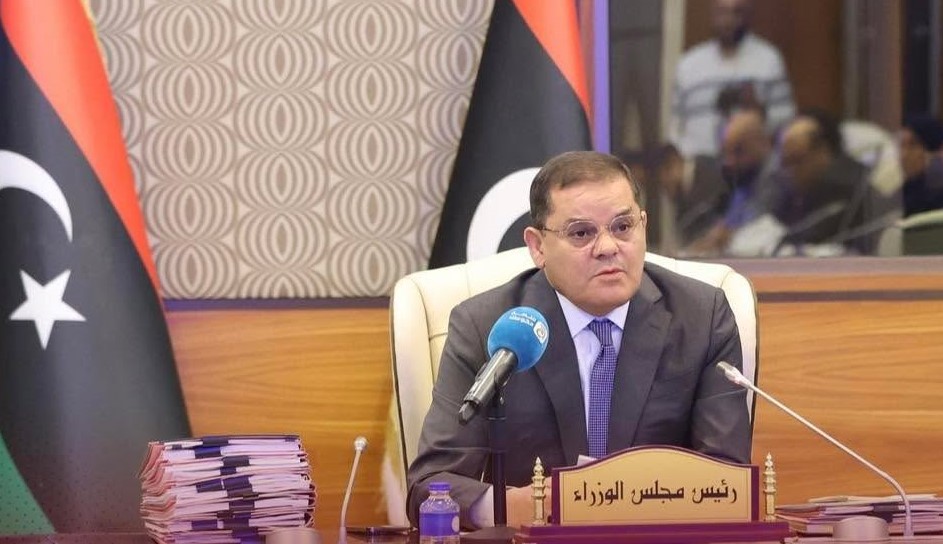
This Week, Libya’s Prime Minister Abdulhamid Dbeibah reshuffled his UN-backed Government of National Unity this week, replacing around 10 of 27 ministers to improve state performance and accelerate services to citizens. Only one woman, Randa Ghareb, retained a cabinet role at the women’s ministry. The reshuffle initially faced opposition from Presidential Council head Mohamed Al-Menfi, who labelled Dbeibah’s administration a “caretaker government,” but he later reversed course and issued a joint statement of support. Libya continues to struggle with political division, with a rival government operating in Benghazi under Khalifa Haftar.
French Foreign Minister Jean-Noël Barrot arrived in Bangui for a two-day visit to the Central African Republic, marking the first official visit by a senior French official in seven years. The visitation aims to rebuild ties with the former French colony after years of deteriorating relations, largely driven by CAR’s growing reliance on Russian military support. Barrot met with President Faustin-Archange Touadéra, and they both held discussions about security, development cooperation, and diplomatic normalization. The visit reflects France’s broader effort to resuscitate its engagement across Africa after losing significant political influence, particularly in the Sahel region.
The Republic of Congo is heading into a presidential election on March 15, 2026, with 2.6 million registered voters. President Denis Sassou Nguesso, 82, who has been in power since 1997, is the clear frontrunner against six other candidates, with many expecting a first-round victory. The oil-producing nation of 6 million faces serious challenges, including 40% youth unemployment and widespread poverty. There is little enthusiasm among voters in Brazzaville, and observers say the key concern is not the outcome but voter turnout, which will determine the election’s perceived credibility after nearly three decades of Sassou Nguesso’s rule.
Uganda has announced visa-free entry for nationals of 40 countries, allowing stays of up to three months for tourism or business. Eligible African nations include Kenya, Tanzania, Rwanda, Ghana, and others, while non-African countries such as the UAE, Singapore, Malaysia, and Ireland are also included. Notably, the United States, the European Union, and the United Kingdom are excluded. The move comes in response to the US imposing strict visa rules on Ugandans effective January 2026, including a $15,000 refundable bond requirement. Uganda says the policy promotes regional cooperation, tourism, and trade.
Tunisia’s Ministry of Transportation announced plans to expand the main Tunis-Carthage airport, aiming to quadruple passenger capacity. This project comes as a strategic move towards the country’s efforts to modernize air transport infrastructure. According to the ministry, the project is set to cost about 3 billion dinars ($1 billion) and will increase the airport’s capacity from about 5 million passengers to 18.5 million passengers annually by 2031. The Tunisian government had preferred the expansion of its main airport over building a new one. The expansion has reportedly been included in the 2026 aviation budget.
Madagascar’s military ruler, Col. Michael Randrianirina, unexpectedly dissolved his government this week, dismissing the prime minister and the entire cabinet. According to a statement from his spokesperson, he announced that “the government has ceased its functions” and assigned permanent secretaries to run ministries until a new cabinet is formed. He added that a new prime minister will be appointed “in line with the provisions stipulated by the constitution.” However, no reason was given for the sudden dissolution. Col. Randrianirina seized power last October from Andry Rajoelina, following weeks of youth-led protests over persistent power and water shortages.
This week, traditional chiefs in Ivory Coast welcomed the return of the “Djidji Ayokwè” talking drum—over three meters long and weighing nearly 400 kg. This drum, returned by France, is significant for its historical use by the Atchan people to alert locals during colonial forced labor operations. It is the first of 148 artifacts sought for restitution by the Ivorian culture ministry, after being confiscated in 1916 and displayed in Paris. Culture Minister Françoise Remarck, expressing her deep emotion, said, “This is a historic day, and I am deeply moved,” during the ceremony, which featured traditional songs and dances.
Burundi’s former Prime Minister General Alain-Guillaume Bunyoni, who was serving a life sentence for an attempted coup, has been released on medical grounds. Bunyoni served as prime minister from mid-2020 until September 2022, when he was dismissed following President Evariste Ndayishimiye’s warnings of a coup plot. Arrested in April 2023, he had been hospitalized since October due to worsening diabetes and loss of motor and speech skills caused by inadequate medical care in prison. He was returned to his home in Bujumbura, though a relative described his condition as “extremely worrying.” Bunyoni was once considered a key figure among a powerful clique of military leaders in Burundi.
South Sudan’s military announced, this week, the capture of Akobo town, a rebel stronghold held by the Sudan People’s Liberation Army opposition forces (SPLA-IO). The operation, part of the second phase of “Operation Enduring Peace,” involved several clashes during which government troops defeated rebel ambushes at Dwechen and Athiel before seizing Akobo without resistance. The South Sudan military reported killing 50 rebels and capturing seven military vehicles while losing 13 soldiers with 20 wounded. Civilians who fled to Ethiopia were urged to return, and humanitarian agencies were called on to resume operations in the now-secured town.
Guinean President Col. Mamady Doumbouya approved the dissolution of 40 political parties, including three main opposition parties. The announcement was made by Guinea’s minister of territorial administration and decentralization via a late-night decree, ordering the dissolution of the parties for their failure to fulfill their obligations. The decree also stripped them of control of their assets. Opposition groups and civil society movements have all condemned the dissolution, slamming it as dictatorial. Col. Doumbouya, who came to power in 2021, was sworn in as a democratic president on January 17, 2026, after a September 2025 referendum allowed him and fellow junta members to stand for election and lengthened presidential terms from five to seven years.