Between February 11 and February 14, 2026, Argungu in Kebbi State came alive once again came alive once again with the sights and sounds of one of Nigeria’s most cherished cultural celebrations. After six years of silence caused by insecurity in parts of the region, the Argungu International Fishing and Cultural Festival finally returned, and the atmosphere was filled with excitement, relief, and a strong sense of history coming back to life.
Thousands of visitors, fishermen, competitors, cultural performers and dignitaries travelled into the town to witness the long-awaited comeback of the festival. The decision to hold the event was formally announced by the Kebbi State Government. It also confirmed the dates as part of the government’s cultural calendar for 2026.
For many in Argungu, this year’s festival was more than a cultural celebration. It stood as a public testament to the region’s gradual recovery from insecurity that had constrained large gatherings and tourism for years. Traders reopened their shops with a sense of expectation, families prepared meals for arriving guests, and the riverbanks of the Matan Fada River again became the focal point of communal life. Security was visible but unobtrusive, a sign that organising authorities were determined the event would proceed safely and successfully.
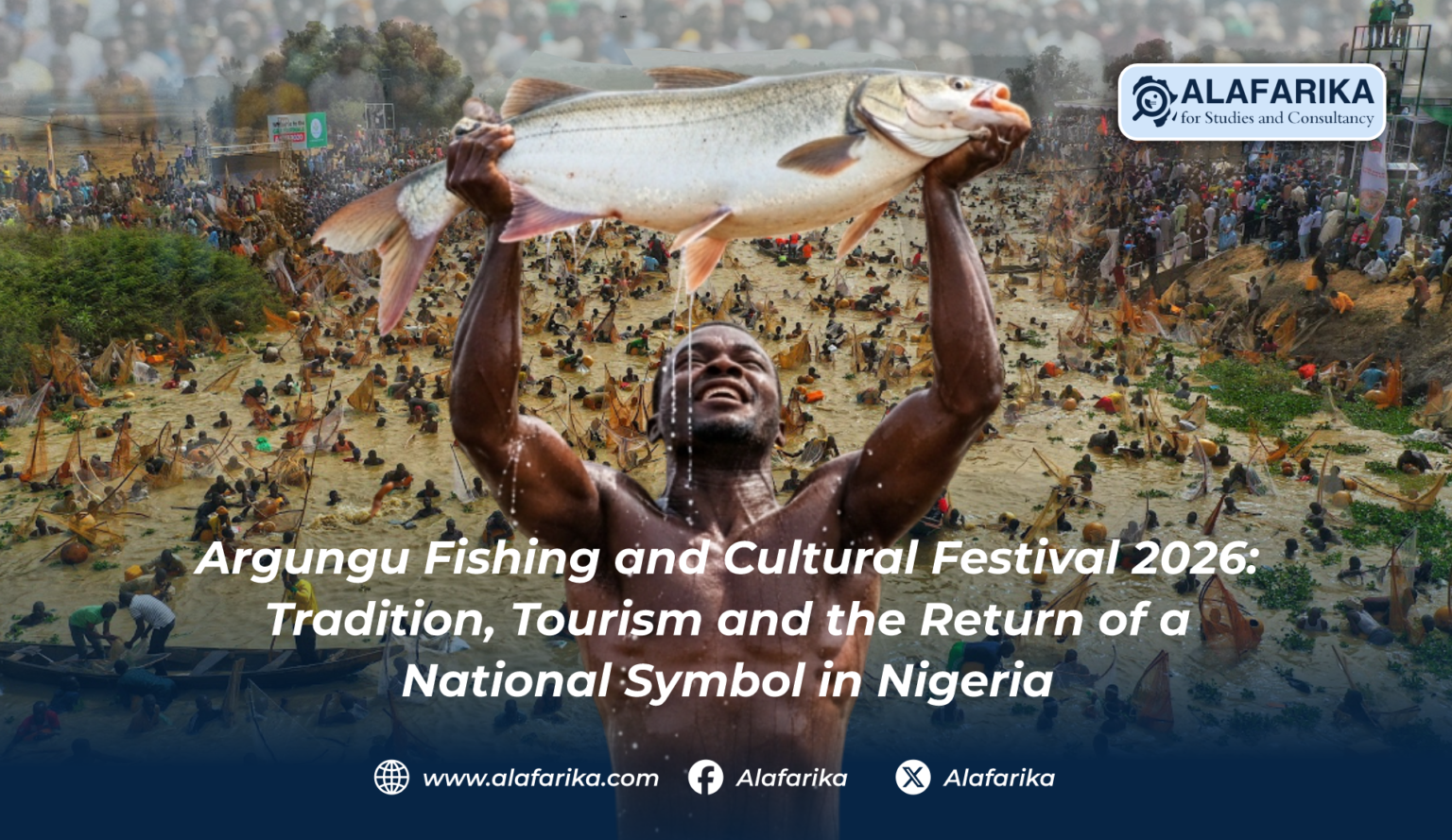
The moment that captured national attention came during the grand fishing competition when Abubakar Usman hauled in a 59-kilogramme fish, a catch that instantly became the defining symbol of this year’s revival and celebration.
A Festival Rooted in Peace, Heritage and History
The Argungu Fishing Festival is much older than its modern reputation as a tourism attraction. Its story began in 1934, when community leaders introduced it as a peace-building initiative to ease tensions between the Kebbi Kingdom and the Sokoto Caliphate. Rather than allowing rivalry to deepen divisions, they chose celebration and friendly competition as a way to encourage unity and understanding.
Over time, what began as a modest local fishing competition slowly expanded into something much bigger. It didn’t happen overnight. New layers were added to the festival year after year as more activities, more visitors, more meaning kept giving the festival limelight. And for this year 2026, it stretches across days and feels less like a single event and more like a living expression of culture. There was music, wrestling, canoe races on the water, and traditional performances that drew entire communities together.
However, at its heart, the purpose remains the same: celebrating heritage and reinforcing a shared sense of identity. The traditional wrestling matches, water displays, musical performances and ceremonial parades gradually became woven into the festival’s programme, giving it broader cultural resonance across northern Nigeria and beyond.
The festival entered a new limestone in 2016 when UNESCO added it to its Representative List of the Intangible Cultural Heritage of Humanity. That recognition itself did more than bring international attention as it affirmed that Argungu is not just a local celebration, but a cultural treasure with global significance. And since then, the festival was seen as a symbol of community identity in Nigeria’s northwestern state known as Kebbi state, and by extension, as part of a wider human story worth preserving for generations to come.
What distinguishes the Argungu festival from modern fishing tournaments is its insistence on traditional methods. Competitors are allowed only hand-woven nets, gourds and simple tools — no mechanised gear is permitted. Holding firmly to these indigenous practices keeps the festival grounded in the knowledge, patience and steady rhythms passed down through generations. You can feel that continuity in the way the fishermen move, in the techniques they use — methods learned from fathers and grandfathers long before tourism ever became part of the picture.
Before the suspension, Argungu had already secured its place as one of Nigeria’s standout cultural attractions. It wasn’t just a local gathering anymore. Visitors travelled in from different parts of the country, across Africa and even farther afield, drawn by the uniqueness of the spectacle and the history behind it. However, regional insecurity across parts of the northwest, combined with its funding and organisational gaps, paused the celebration for six years, which makes the 2026 edition both a symbolic and practical comeback.
The 2026 edition followed the festival’s traditional four-day structure, a format described in UNESCO documentation and cultural descriptions of past editions. While detailed media agendas for each competition day were not individually published, reports confirm that a sequence of cultural, sporting and ceremonial activities led to the grand fishing finale.
*Table 1: The Traditional Four-Day Structure
| Festival Day | Core Activities |
| Day One – Opening and Traditional Sports | Opening Ceremony, Cultural Displays, Traditional Sports, Animal Races. |
| Day Two – Water Competitions and Agriculture
| Agricultural Exhibition, Kabanci (Water Displays), Musical Performances. |
| Day Three – Cultural and Social Events
| Durbar / Horse Parade, Arts and Craft Exhibitions, Social Festivities. |
| Day Four – Grand Fishing Competition
| Main Fishing Contest, Traditional Start Signal, One-Hour Competition, Prize and Closing Ceremony. |
*Source: UNESCO Intangible Cultural Heritage Listing; Historical overview of Argungu Festival and Argungu Fishing Festival Archives
The 59-Kilogramme Catch and What Its Means
The final day is always the heart of the festival as the moment everything builds toward. By morning, fishermen were already lined along the muddy banks of the Matan Fada River, clutching nothing more than their nets and gourds.
While the competition often kickstarts when a gun signal sounds, and the atmosphere will shift immediately. The competitors will move in unison, each relying on training, timing and physical control rather than chance. What followed was not chaos, but a disciplined contest of endurance and technique, a concentrated struggle for one defining catch that would determine the day’s outcome.
At the centre of that spectacle for the year 2026 festival was Abubakar Usman, whose 59-kilogramme catch drew applause, media attention and local pride. According to reports, his prize included two brand new Toyota cars and a N1 million cash reward, with other top competitors in second and third places also awarded vehicles, motorcycles and cash prizes.
The above connotes that the level of reward offered at the festival tells how the event has evolved to reflect modern expectations while still protecting its traditional roots. This means more that it is a mixture of heritage and practical incentives that encourages participation and keeps public interest strong.
Meanwhile, the festival is about far more than fishing alone. Analysts opined that it is a full celebration of culture, sport and community life. Wrestling bouts, canoe races, kabanci water displays, music, dance and the colourful durbar parades all come together to give the festival its unmistakable energy. At every turn, there’s movement, sound and colour — and beneath it all, a strong sense of shared pride.
Although media reports did not provide detailed daily coverage of every activity during this year’s festival, the strong turnout, consistent media presence and official statements all confirmed that a wide range of cultural events ran alongside the main fishing competition.
Culture as a Local Economy Development Tool
Beyond its cultural importance, the Argungu Festival (always) had a noticeable economic impact across the surrounding communities. The influx of visitors created more business opportunities for traders, transport operators, food vendors and hotel owners, showing how culture can also function as a driver of local economic activity. Visitors’ spending circulated through hospitality, transportation, food services and local crafts.
Table 2: Observed Economic Impacts of the 2026 Festival
| Sector | Immediate Impact | Potential Long-Term Effect |
| Hospitality | High hotel occupancy in Argungu and Birnin Kebbi | Encourages private tourism investment |
| Transportation | Increased inter-state passenger movement | Strengthens regional connectivity |
| Retail and Crafts | Boost in local sales of fabrics and cultural goods | Expands small business revenue |
| Agriculture and Food Supply | High demand for food and produce | Supports rural supply networks |
| Media Coverage | National and global readership | Enhances Nigeria’s cultural tourism brand |
*Source: ThisDayLive; Africa News; Channels Television; Premium Times; Vanguard.
The “multiplier effect” — where visitor spending circulates across multiple sectors — was visible in Argungu’s economic activity during the festival period. Hotels were filled up. Food vendors also stayed busy from morning until late evening.
A research publication by Africa Sustainability Matters further shows transport operators made steady trips in and out of town, while informal traders enjoyed their trades too. The surge of visitors painted a ripple effect across Northern Nigeria and beyond. It wasn’t just about a few days of brisk business; it particularly put Kebbi State back in the spotlight as a serious cultural tourism destination, extending its visibility well beyond the festival itself.
Security, Stability and the Return of the Festival
Security concerns in the region made large public gatherings difficult and, at times, unsafe. This made visitors both local and international understandably stayed away. So, when the Argungu fishing festival returned this year 2026, the significance went deeper than culture or celebration. It felt like a marker of regained confidence.
The presence of Nigeria’s President, Bola Ahmed Tinubu, who attended parts of the event gave flavor to the festival. The president described it as a sign of unity, restored stability and normalcy in Kebbi State. The festival’s revival quietly signaled that the region was ready, once again, to welcome the world.
In parts of his address, the President emphasised the need for sustained security efforts to encourage cultural tourism, rural development and agricultural productivity. He also reaffirmed the federal government’s support for programmes aimed at improving food security and strengthening socio-economic development, especially those linked to promoting cultural heritage.
Security agencies were present across the festival grounds throughout the event. Their presence was noticeable, but never overbearing. Security personnel created a sense of order without disrupting the flow of the festivities. It also speaks volume as families wandered for the activities, tourists took photos, and participants moved between events with ease. That balance alone, visible vigilance without tension, made a difference. It was an assurance to Nigerians and visitors that the festival unfolded smoothly, even against the backdrop of earlier concerns about insecurity and turnout.
Environmental Sustainability and Youth Engagement
It is crystal clear that sustaining the Argungu Festival in the future will depend on two important things: protecting the environment and finding better ways to involve young people. The fishing competition is closely tied to the health of the Matan Fada River.
Research shows that if fish stocks begin to shrink or the river’s water quality deteriorates, the festival would slowly lose its soul. The competition depends entirely on the health of that ecosystem. According to a publication by Shyllon Folarin (August 2007), titled: “Argungu Fishing Festival in Tilted Towers: Promoting the Idea of a Sustainable Cultural Fest,” published in the International Journal of Cultural Property, it is proven that the long-term survival of the festival is closely tied to environmental sustainability and careful resource management. Protecting the river, then, goes beyond environmental policy. It is about safeguarding a living tradition; making sure future generations inherit not just stories of Argungu, but the real experience of it.
At the same time, young Nigerians left a strong imprint on this year’s edition. Now, many of the activities have been documented in real time, clips were shared, there were photos and commentary across social media platforms, which apparently widened its reach far beyond Nigeria’s borders. This means that the growing online presence would continue to help attract international visitors and boost global interest in the festival, while still keeping its traditional character intact.
Conclusion
The return of the Argungu Festival in 2026 meant far more than simply putting another date back on the calendar. Its revival showed confidence, community spirit, and revealed a tradition that refuses to fade. After years of uncertainty due to insecurity, the festival’s comeback appeared to carry emotional weight for the local people who had grown up with it and for a new generation (who are just) experiencing it in full scale for the first time.
Argungu did not just host an event. It reclaimed a piece of its identity and reminded the country and the world why heritage still matters. It was a moment that restored confidence in community life, heritage and the future of the region.
Per archive, the 59-kilogramme fish is now one of the most memorable symbols of this year’s festival. But even beyond that single moment, the real story was how the festival showed that tradition can still grow and stay relevant, and how combining history with tourism plus economic opportunity, Nigeria’s culture can support development.
By and large, the festival did more than host a competition. It showed that when heritage is carefully protected and properly managed, it can help strengthen local communities, promote pride in culture and create real economic opportunities.