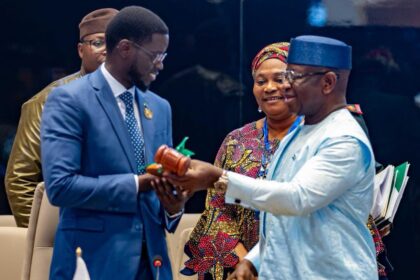
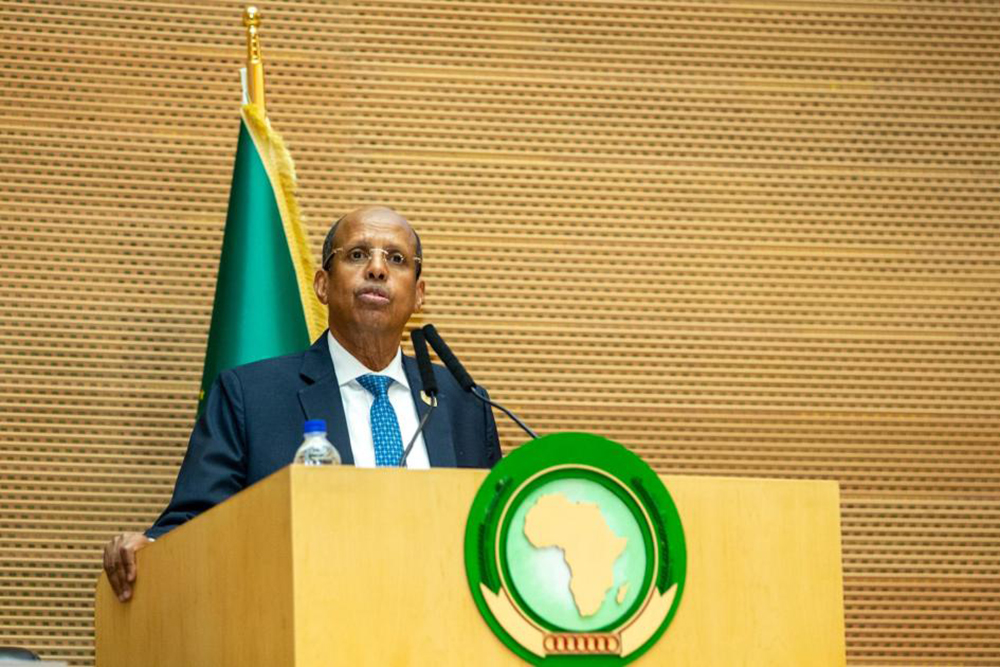
The 39th Ordinary Session of the African Union (AU) Assembly of Heads of State and Government commenced in Addis Ababa, Ethiopia, today, focusing on the theme of “Assuring Sustainable Water Availability and Safe Sanitation Systems to Achieve the Goals of Agenda 2063.” The two-day summit is set to also address various topics, including peace, political stability, economic development, regional integration, and enhancing Africa’s global presence and unity. Key figures in attendance included AU Commission Chairperson Mahmoud Ali Youssouf and UN Secretary-General Antonio Guterres.
South Africa officially announced its decision to withdraw its military contingent from the United Nations peacekeeping mission in the Democratic Republic of Congo (MONUSCO) by the end of 2026. This move aligns with the UN’s broader plan to draw down the mission gradually, which has been active for over two decades. The South African National Defence Force (SANDF) has been a cornerstone of the Force Intervention Brigade, the only UN unit with a mandate to conduct offensive operations against rebel groups like the M23. However, the withdrawal comes amid rising domestic pressure regarding the cost of foreign deployments and the safety of soldiers following several recent casualties. While South Africa remains committed to regional stability through the Southern African Development Community (SADC) mission, the departure from the UN framework marks an important change in its continental security strategy.
Malian government reached an agreement to renew Barrick Gold’s mining licenses for the Loulo-Gounkoto complex for an additional ten years. This renewal comes after months of intensive negotiations between the military-led government and the Canadian mining giant. The Loulo-Gounkoto complex is one of the largest gold-producing mines in the world and serves as a vital pillar of Mali’s economy, contributing significantly to the national GDP and tax revenue. The new agreement is expected to incorporate Mali’s updated 2023 mining code, which provides the state with a higher equity stake and increases local content requirements. This stability is viewed as a positive signal for foreign investors, ensuring that one of the country’s most productive assets remains operational amidst a shifting political landscape in the Sahel.
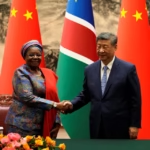
China officially handed over a newly constructed satellite ground station to the Namibian government this week, marking a new chapter in Sino-African technological cooperation. The facility is designed to enhance Namibia’s capacity in space research, environmental monitoring, and telecommunications. The station was built with Chinese financing and technical expertise as part of a bilateral agreement aimed at boosting Namibia’s digital infrastructure. For Namibia, the station represents a leap forward in scientific sovereignty and disaster management capabilities. During the handover ceremony, officials emphasized that the station would allow Namibia to process satellite data locally rather than relying on foreign providers. This development is seen as a strategic win for China, as it strengthens its geopolitical ties with Southern African nations.
The French aerospace giant Safran has announced plans to establish a new landing gear manufacturing and maintenance facility in Morocco, further cementing the Kingdom’s status as a global aerospace hub. The new plant, located in the Nouaceur aeronautical zone near Casablanca, will focus on the production and assembly of critical components for major commercial aircraft. Morocco’s Minister of Industry welcomed the move, citing it as a testament to the country’s skilled workforce and competitive investment climate. The aerospace sector in Morocco has seen exponential growth over the last decade, with over 140 companies currently operating in the region. Safran’s latest investment is expected to create hundreds of high-skilled engineering jobs and enhance the local supply chain.
Ghana, the world’s second-largest cocoa producer, has announced a reduction in the farmgate price of cocoa alongside the introduction of a revolutionary new financing model. The Ghana Cocoa Board (Cocobod) explained that the price adjustment was necessary to align with current global market trends and ensure the long-term sustainability of the industry. To mitigate the impact on farmers, the government is moving away from traditional international syndicated loans toward a domestic financing model. This shift aims to reduce the interest burden on the state and provide more flexible payment structures for local producers.
The Zimbabwean cabinet has officially approved a proposal that would allow President Emmerson Mnangagwa to remain in power until 2030, bypassing the current constitutional two-term limit. The plan involves amending the constitution to extend the presidential term, a move that supporters argue is necessary to ensure the completion of long-term economic development projects under the “Vision 2030” banner. However, the proposal has met with fierce criticism from opposition parties and civil society groups, who view it as a direct assault on democracy and a maneuver to establish a lifelong presidency. The debate is set to move to Parliament, where the ruling ZANU-PF party holds a significant majority, making the passage of the amendment highly likely despite growing public outcry.
Somalia and Saudi Arabia have signed an agreement to enhance military and security cooperation. The deal, signed in Riyadh, covers a wide range of areas, including joint military training, intelligence sharing, and the modernization of the Somali National Army (SNA). This partnership comes as Somalia continues its struggle against the Al-Shabaab insurgency and seeks to stabilize its borders. For Saudi Arabia, the agreement is part of a broader strategy to increase its influence in the Horn of Africa and ensure the security of the Red Sea shipping lanes. The collaboration is expected to provide Somalia with much-needed financial and technical support to bolster its defense capabilities.
The community of Woro in Kwara State, Nigeria, remains in a state of profound shock and mourning following a brutal massacre that has left the village in ruins. Armed insurgents descended on the settlement in a coordinated night attack, killing dozens of residents and setting fire to homes and local infrastructure. Survivors have recounted harrowing stories of narrow escapes, while many others remain missing. The Nigerian government has since deployed additional troops to the region, but residents express a deep sense of abandonment and fear that the perpetrators will return. Humanitarian organizations are struggling to provide aid to the displaced survivors who are now living in makeshift camps with little access to food or medical care. The Woro massacre serves as a grim reminder of the persistent insecurity plaguing rural Nigeria and the urgent need for a more effective protective strategy for vulnerable communities.
The Senegalese government suspended all student representative bodies at major universities this week following a series of violent clashes that resulted in multiple deaths and widespread property damage. The unrest began as protests over scholarship delays and deteriorating living conditions but quickly escalated into direct confrontations with security forces. In a statement, the Ministry of Higher Education declared that the suspension was necessary to restore order and ensure the safety of students and faculty. The move has been met with mixed reactions; while some faculty members agree that the violence had become unmanageable, student leaders have condemned the suspension as an infringement on their right to organize and express grievances. The academic year remains in jeopardy as the government and university administrations work to negotiate a path toward de-escalating the tension.