Africa is the world’s most mineral-rich continent, endowed with abundant metallic and non-metallic minerals and gemstones. Africa’s mineral wealth is attributable to its “favorable” geology and multiple tectoni6c events that affected the Precambrian rocks known worldwide to contain the bulk of many of the world’s valuable mineral deposits. Africa hosts about 30% of the Earth’s mineral resources and ranks first or second in the quantity of world reserves of platinum, chromite, diamond, bauxite, cobalt, manganese, zirconium, and phosphate. Currently, Africa is a world leader in the production of several high-value metals, including gold, platinum, chromite, uranium, manganese, vanadium, tantalum, and cobalt, and industrial minerals phosphate, zirconium, vermiculite, and gemstones. It is estimated that Africa is the repository of about 75% of the planet’s total resources that remain to be discovered in the near future. Nigeria is endowed with enormous mineral occurrences and deposits; these include base and precious metals minerals, which have remained largely underdeveloped due to Nigeria’s preoccupation with its oil industry.
Due to a long period of fixation on the hydrocarbons, the solid minerals sector has remained underdeveloped in Nigeria. In this regard, the government has implemented a number of reforms aimed at addressing the sector’s underdevelopment to ensure that the various natural resources of the country are harnessed for self-sustained growth and development. In particular, the development of solid minerals was identified as a major sector to aid the diversification of the economy away from oil. Government would create an enabling environment for the full involvement of the private sector in multi-sectoral economic development. Meanwhile, artisanal and small-scale mining (ASM) dominates the Nigerian solid minerals sector, where no large-scale mining activities are taking place at present.
The poor performance of the large-scale mining sector in the country, together with high unemployment rates, poverty, farm seasonality, a lack of alternative livelihoods, little incentive to raise money for alternative livelihoods, and little provision of basic life amenities, has encouraged the growth of ASM in Nigeria. According to the Nigeria Extractive Industry Transparency Initiative report, 1273 Artisanal and Small-scale Mining (ASM) conducted mining activities across the country in 2020. However, cement manufacturers and construction companies, who are operating large-scale projects but whose primary activity is not mining, are operating quarries for the extraction of mainly limestone for their own production. Also, the solid minerals sector had been targeted by the previous administration to contribute 5% to GDP by 2015 and 10% to GDP by 2020. The current contribution of the solid minerals sector to GDP averages about 0.33%.
Exploring the Historical Bonds Between Nigeria and South Africa
Amid its potentials and prospects to deliver a ‘win-win’ diplomatic benefit and prospect for Nigeria and its South African counterpart and the continent as a whole, given the strategic importance and the leadership positions both states occupy, Nigeria-South Africa’s strategic partnership is currently threatened by a number of spontaneous diplomatic challenges. A consistent orientation of Nigeria’s foreign policy since it attained political independence is the emphasis on Africa as the centerpiece of its foreign policy, which implies that Nigeria will pursue policies that strengthen the overall interest of Africa. Also, government officials are decision makers who influence foreign policy, but foreign policy administration in Nigeria revolves around the head of state. The nature of social groups, diversity, and the degree of conflict or harmony existing in Nigeria’s internal environment are determinant factors in the formulation of foreign policy.
Nigeria, under the Murtala/Obasanjo regime, was widely acknowledged to have adopted an overtly active foreign policy toward the rest of Africa and, particularly, South Africa’s apartheid regime, which was in tandem with her Afro-centric posturing at the time. These multilateral cum bilateral diplomatic relations earned Nigeria the status of a ‘‘frontline state’’ and wider recognition at other multilateral levels, but much animosity from the West. South Africa, under the Mbeki regime, was acknowledged to have adopted an overtly active foreign policy relation toward the rest of Africa, but covert diplomatic relations with Zimbabwe were in tandem with her African-renaissance posturing at the time. Nigeria’s relations with South Africa were of double standard during the apartheid era. The post-independence Nigeria and the apartheid regime in Pretoria relations were sour and confrontational relations, while it was friendly between Nigeria and the liberation movements in South Africa, especially with the African National Congress (ANC). It was more so because Nigeria adopted Africa as the centerpiece of its foreign policy and committed itself to the total liberation of the African continent from colonialism and racism. Nigeria staged untiring opposition to colonialism on the African continent and the racism that existed in South Africa before 1994.
More than thirty years before Nelson Mandela was elected president, news of an apartheid government plot to kill him in prison reached Nigeria’s prime minister at the time, Abubakar Tafawa Balewa (1960-1966), who pleaded with the then British prime minister, Harold Macmillan (1957-1963), to confront the apartheid government to prevent the murder. During this period Mandela became president in South Africa and took a tough stance on human rights. The relationship hit a new low in November 1995 when Mandela criticised the planned hanging of playwright Ken Saro-Wiwa by the military regime led by General Sani Abacha. In 1999, a bi-national commission was established between Nigeria and South Africa, headed by their respective deputy presidents. The commission met seven times between 1999 and 2008. Thus, South Africa regards Nigeria as a strategic partner in the context of bilateral relations, the West Africa region, and the continent in the pursuit of the African Agenda, South-South cooperation, and the promotion of a rules-based international system. The two countries share a common vision on issues of political and economic integration in Africa. They also share a common vision on the need for a sustainable conflict resolution mechanism in Africa that is primarily driven by Africans. South Africa and Nigeria also share a common vision on the need for the reform of the multilateral institutions such as the UN, IMF, and the World Bank to reflect the realities of the changed and changing international environment.
Revitalizing Nigeria’s Mining Sector: Lessons from South Africa’s Mining Success
South Africa is incredibly rich in natural resources, with large reserves of some of the most valuable minerals on the planet found below its surface. Industrial-scale mining in South Africa began in the 1850s with the establishment of the first copper mine. Then, in 1867, diamonds were discovered in Hopetown, and in 1870, gold was discovered. Since then, the mining industry has become hugely important to the country, contributing roughly 202 billion South African Rand (roughly 10.9 billion U.S. dollars) in 2023 to South Africa’s Gross Domestic Product (GDP). Furthermore, the total value of mining industry merger and acquisition transactions in South Africa reached nearly 1.5 billion U.S. dollars in 2023 (Statista, 2025). In many ways, South Africa’s political, social, and economic landscape has been dominated by mining, given that, for so many years, the sector has been the mainstay of the South African economy. Although gold, diamonds, platinum, and coal are the most well-known among the minerals and metals mined, South Africa also hosts chrome, vanadium, titanium, and a number of other lesser minerals.
The current troubles facing the mining industry represent a major challenge to the economy and to popular aspirations for development. However, labour unrest and the nationalization of the mining industry are not the way forward. In contrast, excessive wage demands, brutal disputes between unions, and the threat of escalating mass strikes have all effectively hurt the productivity of the sector. While extracting and processing all these minerals requires a great deal of machinery and manpower. The South African mining industry employed 514,859 individuals in 2019. If the mining sector is represented by a group of 100 workers, 39 are employed in the platinum group metals sector, 21 in the coal sector, and 20 in the gold sector. The iron ore sector is a much smaller recruiter, employing 5 of every 100 employees. The remaining 15 employees work across smaller operations, which include the production of other minerals, lime works, and stone quarrying. The mining and mineral beneficiation industries hold the potential to substantially contribute to economic growth, job creation, transformation, and infrastructure development, consistent with the government’s objectives of inclusive growth. Given this potential, there are a range of sector-specific and general support programmes and initiatives supporting the sector. The South African 2018 Mining Charter has contributed to policy and regulatory certainty in the sector.
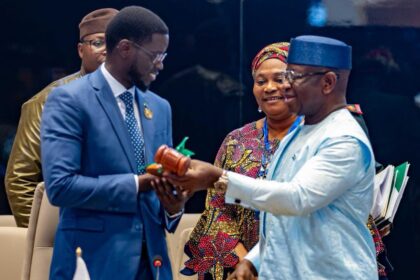
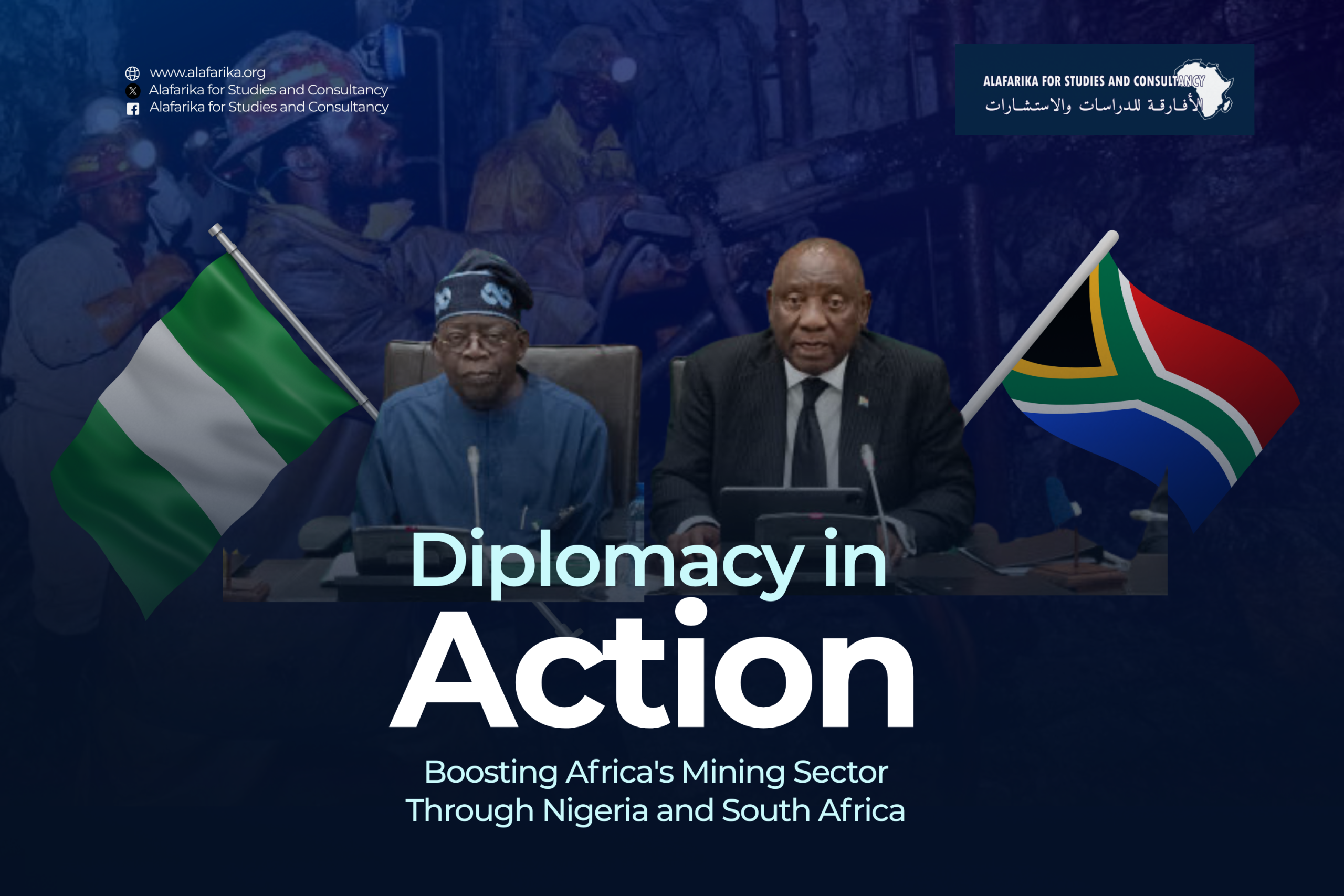
Nigeria’s economy is dependent on oil, and this oil economy has created an enclave economy that has minimal local value addition, low job creation potential, and little to show in the area of technology transfer and its linkages with the rest of the economy. Globalization, or the internationalization of production, technology, enterprise, and exchange of goods and services, calls for the development of the primary industries of minerals and agriculture in order for a country like Nigeria to participate in the global arena. Metals utilization, production, and consumption in any nation are an index of their industrialization. Recently, Nigeria and South Africa signed a Memorandum of Understanding (MoU) to deepen bilateral cooperation in the mining sector. According to media reports, the agreement marks a major step in the implementation of agreements reached under the Nigeria–South Africa Bi-National Commission. The collaboration in the mining sector offers vast opportunities for industrialization, job creation, and sustainable growth across the continent. The Memorandum of Understanding in geology, mining, and mineral processing signed will serve as a cornerstone for facilitating knowledge and technology transfer, investment promotion, capacity building, regional integration, and value addition.