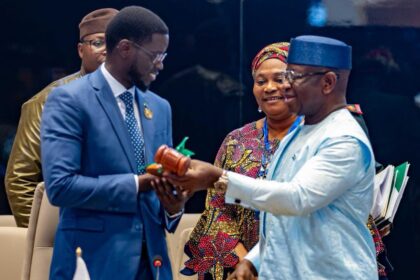
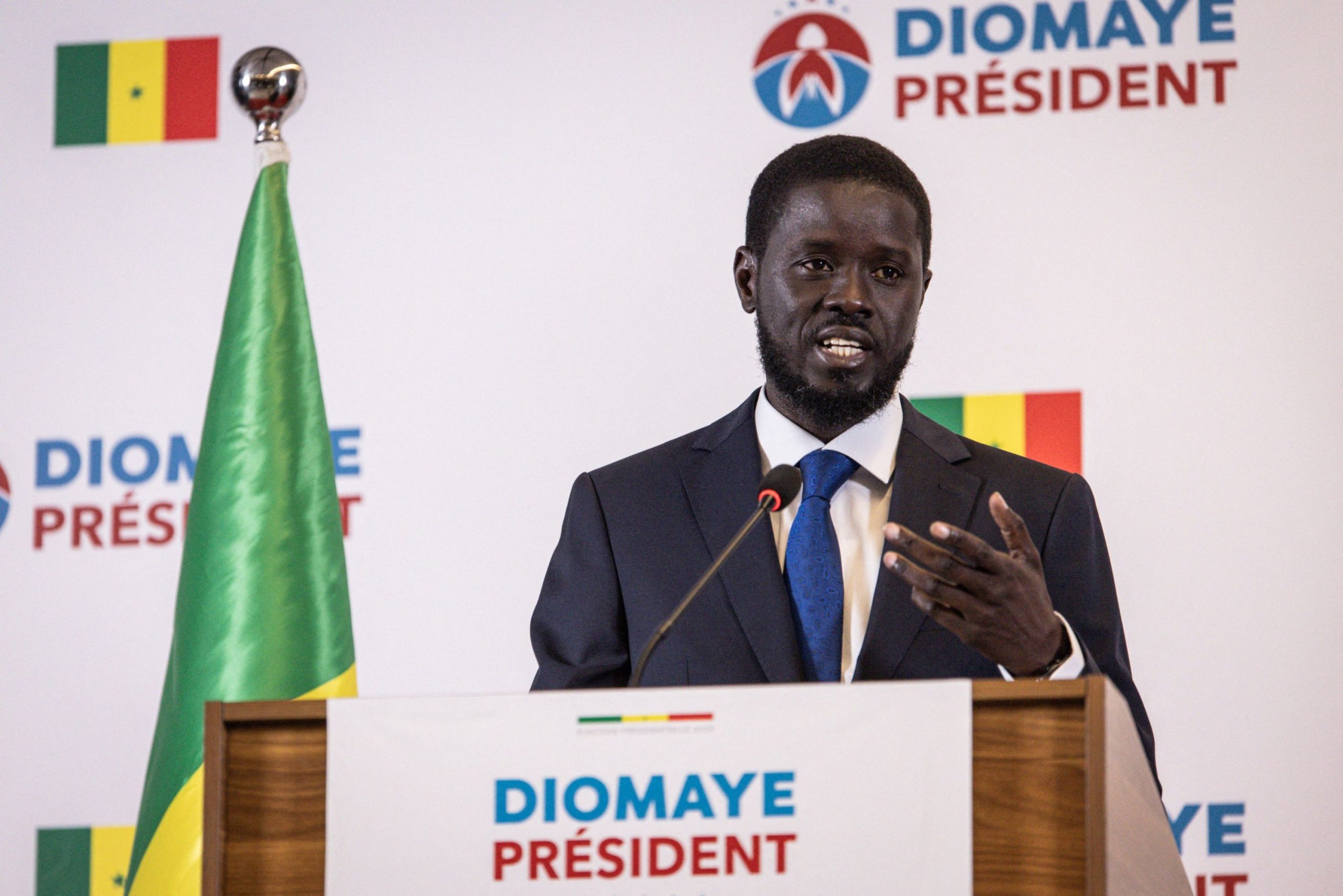
In a remarkable turn of events, Senegal’s electoral arena has been reshaped with the rise of newcomer Bassirou Diomaye Faye, marking a significant shift in the nation’s political narrative.
The election on March 24, which was on the brink of postponement, unfolded amidst a backdrop of political suspense and public unrest, challenging Senegal’s long-standing image as a beacon of stability in West Africa.
The peaceful conclusion of the polls, which saw the ruling party’s concession to Faye, the opposition candidate, heralds a new era who at 44, is poised to become the youngest president ever in Senegal.
Senegal, a country of 17 million people with a vibrant political landscape boasting over 300 political parties, has long been hailed as a beacon of democracy in West Africa and its reputation as a stable democracy has earned it accolades and partnerships from the West and trade relations with China.
In contrast to its neighbouring countries such as Mali, Niger, Burkina Faso, and Guinea, where junta governments have recently seized power through coups, Senegal has maintained a remarkable record and has never witnessed a military coup or dictatorship since gaining independence from France in 1960.
As Faye prepares to take the helm, his ascent from a tax inspector to the highest office, overcoming imprisonment and political adversity, encapsulates the dynamic forces at play in Senegal’s democracy. This article delves into the intricate dynamics of change that have propelled Faye to the forefront of Senegal’s 2024 Presidential Election, setting the stage for transformative leadership in a region where the quest for enduring democracy remains a formidable challenge.
The Election’s Prelude: A Test of Democratic Resilience
The road to the 2024 presidential election was not without its challenges as incumbent President Macky Sall’s silence on his candidacy for a third term, despite constitutional term limits, led to mounting pressure and protests. However, his eventual decision not to run was overshadowed by attempts to postpone the election, sparking further unrest and widespread speculation.
Faye’s victory marks a significant shift in Senegal’s political landscape, especially considering his incarceration just days before the election, alongside his mentor and a prominent figure Ousmane Sonko was barred from running, and his party, Patriots of Senegal (PASTEF), dissolved.
While Ousmane Sonko, another tax inspector turned political figure, was initially the face of the opposition, his imprisonment on defamation charges shifted the spotlight to Faye. Despite his incarceration, Sonko’s anti-corruption stance and appeal to the disenfranchised youth—those left behind by Senegal’s economic growth—resonated deeply. However, his endorsement of Bassirou Diomaye Faye, whom he designated as his political successor, redirected the momentum towards Faye, culminating in a groundswell of support from various societal strata.
The pre-COVID-19 economic boom in Senegal, lauded internationally, paradoxically sowed seeds of discontent among the youth because the impressive growth narrative did not translate into tangible job opportunities, leaving a staggering three out of ten young Senegalese unemployed. This disconnect between macroeconomic success and microeconomic realities became a rallying point for the opposition, with Faye emerging as the embodiment of the promise for a more inclusive economic future and an icon of hope for the youths of Senegal.
Bassirou Diomaye Faye: The Unforeseen President-Elect of Senegal
Bassirou Diomaye Faye, a figure relatively unknown on the national political stage until recent events thrust him into the spotlight, emerged as Senegal’s president-elect in a remarkable turn of events. Without a doubt, his journey from a prison cell to the highest office in the land epitomizes the turbulent sphere of Senegalese politics and the staunch aspirations of its people for change.
Born in 1980 in Ndiaganiao, a village in west-central Senegal, Faye’s path to political prominence was not at all conventional.
His career as a tax inspector brought him into contact with his mentor Ousmane Sonko, a charismatic firebrand known for his anti-corruption crusade and popularity among the youth who together, played pivotal roles in forming a labour union, laying the groundwork for their future political endeavours.
Faye’s activism led his political journey to take a dramatic turn in April 2023 when he was arrested on charges ranging from spreading false news to defamation of a constituted body, stemming from a social media post critical of the government. His imprisonment alongside Sonko by the government aggravated their supporters and fueled widespread protests against President Macky Sall’s administration, accusing it of corruption and neglecting chronic poverty biting hard into the life of Senegalese.
Despite facing adversity, Faye’s resolve remained steadfast. His release from prison on March 14, just days before the election, marked a turning point in Senegal’s political landscape. Supported by Sonko and the dissolved Patriots of Senegal (PASTEF) party, Faye entered the race as an independent candidate, garnering significant traction among disillusioned voters, particularly the youth.
The former tax collector leveraged the discontent of younger voters grappling with high unemployment rates and struck a chord with many who felt marginalized by the status quo. This laid the groundwork for his campaign promises to address longstanding issues of corruption and poverty while ushering in a new era of inclusive governance.
Faye is poised to assume office on April 2, becoming the youngest president in Africa as Senegal stands at a crossroads.
However, the road ahead is fraught with challenges, and Faye’s ability to navigate the complexities of Senegalese politics will shape the country’s trajectory for years to come.
A Multifaceted Contest
The 2024 Presidential Election in Senegal unfolded as one of the most vibrant and diverse electoral contests in the nation’s history with a staggering 93 candidates initially submitting their candidatures. The race eventually narrowed down to 19 confirmed contenders, representing a broad spectrum of political ideologies and aspirations.
Beside first-timer Faye who emerged victorious among the contenders, Amadou Ba emerged as a prominent figure, backed by incumbent Sall and representing a continuation of the previous government’s policies. His candidacy reflects the ongoing debate over the trajectory of Senegal’s governance and the role of incumbency in shaping electoral outcomes which failed to manifest.
However, the electoral sphere was not solely dominated by established political figures as it also saw Mahammed Boun Abdallah Dionne, former Prime Minister who positioned himself as the “president of reconciliation,” advocating for unity and cohesion in a polarized political environment. Similarly, Khalifa Sall, the two-time mayor of Dakar, brought his extensive experience in municipal governance to the national stage, offering a unique perspective on urban development and grassroots engagement.
Notably, entrepreneur Anta Babacar Ngom stood out as the sole female candidate. Her significance cannot be neglected as her candidacy for inclusivity’s sake poses gender representation.
Challenges and Opportunities
In the aftermath of Bassirou Diomaye Faye’s resounding electoral triumph, Senegal stands at a pivotal juncture, poised for transformative change under his leadership. His landslide victory, capturing an impressive 54.28% of the votes plainly reflects the frustration of the youth and their agitation for a revolutionary change and relief.
As young Senegalese, like many across Africa, grapple with frustrations over leaders perceived as disconnected from domestic priorities and entangled with business interests, Faye’s ascendancy is a beacon of hope for a brighter future. His campaign, resonating with the aspirations of the youth, pledged economic reform and anti-corruption measures, addressing the systemic challenges that have hindered Senegal’s progress.
The disconnect between economic potential and reality is palpable, exemplified by the stalled promises of the oil and gas reserves off Senegal’s coast and failed liberalization policies in the fisheries sector. Despite encouraging indicators such as strong economic growth and poverty reduction, a growing share of young Senegalese embark on perilous journeys to Europe, disillusioned by the lack of opportunities at home.
Moreover, as the backbone of Senegal’s service sector and comprising 75% of the population, women wield significant influence in shaping the country’s political landscape.
“I pledge to govern with humility and transparency, and to fight corruption at all levels. I pledge to devote myself fully to rebuilding our institutions,” declared Faye in his inaugural address, reaffirming his commitment to the principles that propelled him to power.
Faye’s economic vision for Senegal offers a departure from the past, emphasizing the renegotiation of oil and gas contracts with international firms to prioritize national interests and bolster indigenous companies. This stance mirrors his determination to assert Senegal’s sovereignty over its natural resources and break free from what his campaign terms “economic enslavement.”
“While currency reform remains a priority, I understand the need for pragmatism. We will seek ‘reform’ within the ECOWAS bloc,” Faye clarified, acknowledging the complexities of regional dynamics and the importance of collaborative initiatives.
Alex Vines of Chatham House notes, “Faye is a lot more pragmatic in private and knows that he needs to improve the economy and attract further investment. He is committed to currency reform but will not make hasty decisions.”
However, challenges loom on the horizon as warned by Global credit ratings agency S&P Global. The agency expressed concerns about the lack of communication regarding fiscal and economic policies, cautioning that this could impact Senegal’s creditworthiness. Additionally, Faye’s emphasis on anti-corruption measures may lead to political tension, potentially deterring international investment and hindering economic growth.
“Sustained political tension could lower or delay international investment and weigh on Senegal’s growth,” warns S&P Global, highlighting the delicate balance Faye must strike in his pursuit of reform.
Conclusion
In conclusion, Bassirou Diomaye Faye’s emergence as the president-elect, without prior executive leadership experience, marks a new chapter in Senegal’s political history. His journey from a tax inspector to the highest office in the land, amidst legal battles and a lack of traditional political grooming, embodies the resilience of Senegal’s democratic ideals and the evolving nature of its political landscape.
As he steps into his role, he faces a myriad of challenges and expectations as the eyes of the nation and the international community will be fixed on how he navigates the complexities of governance, from economic revitalization to institutional reform. It is quite obvious that his success will be measured not only by his ability to deliver on his campaign promises but also by his capacity to unite a diverse and hopeful nation under a common vision for the future.
Moreover, Faye’s presidency holds broader implications for the trajectory of democracy in West Africa, as a region grappling with recurring political instability and democratic backsliding, Senegal’s commitment to peaceful transitions of power and pluralistic governance sets a powerful example. His leadership will undoubtedly shape the narrative of democracy and governance in the region, inspiring other nations to uphold democratic values and foster inclusive political systems.