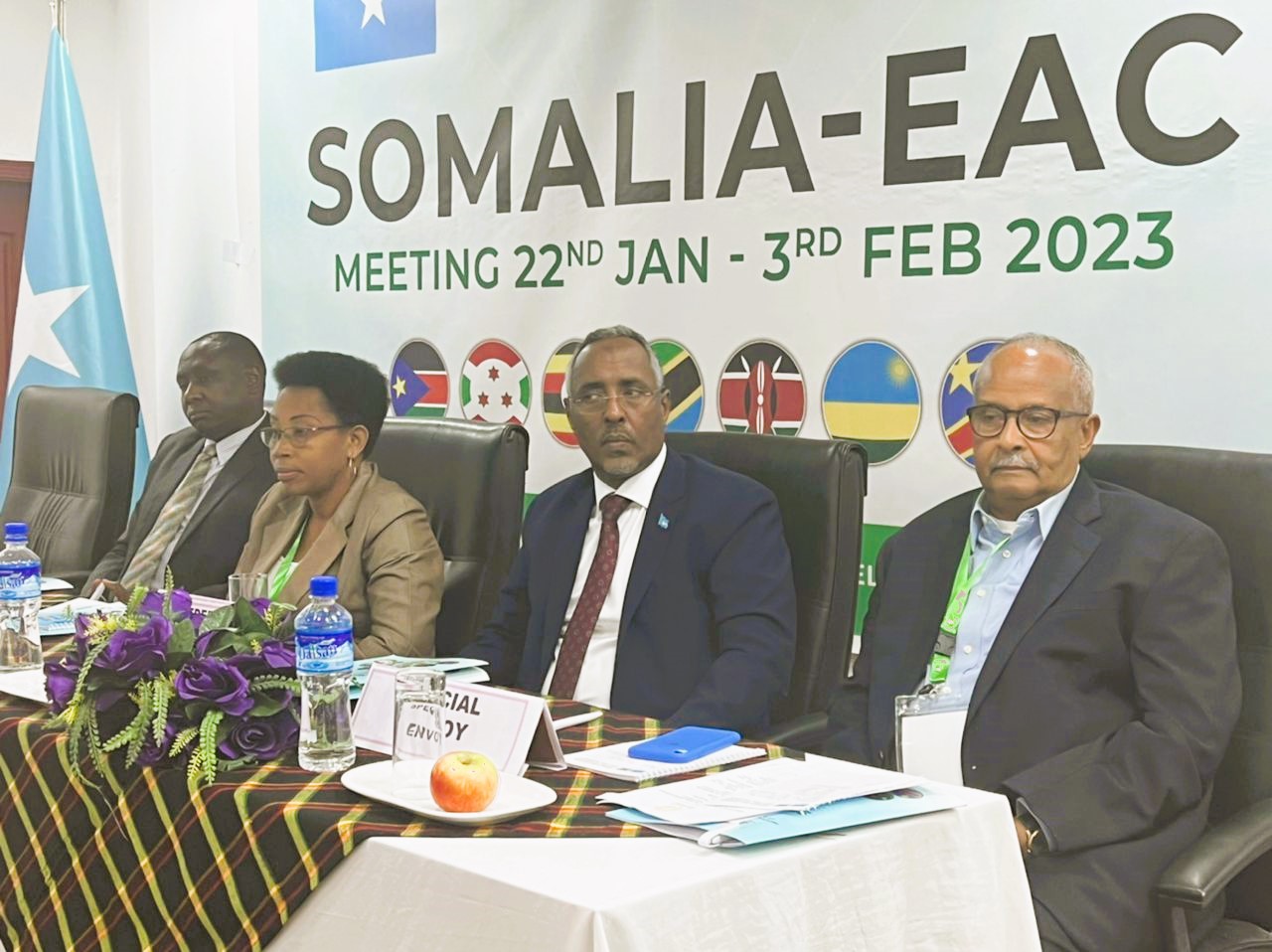
News emerged of Somalia becoming the East African Community’s (EAC) eighth member state at the economic bloc’s December summit. This impending expansion of the economic bloc is set to be a significant step forward in regional integration and cooperation.
The Republic of Burundi, the Democratic Republic of Congo, the Republic of Kenya, the Republic of Rwanda, the Republic of South Sudan, the Republic of Uganda, and the United Republic of Tanzania are the seven partner states that make up the East African Community (EAC), a regional intergovernmental organisation with its headquarters located in Arusha, Tanzania.
The prospect of Somalia’s entry into the EAC will mark a pivotal moment in the nation’s ongoing journey towards stability and economic growth. For a country that has faced decades of conflict, instability, and socioeconomic challenges, the move carries substantial promise. Hence, joining the EAC signifies an opportunity for Somalia to deepen its regional ties, enhance trade, and embrace a more secure and stable future.
What led to Somalia’s decision to join the EAC brings with it a complex array of challenges, from fostering economic development to harmonising trade policies and regulations. The challenges, opportunities, and implications of this historic decision are as multifaceted as the nation’s intricate history.
For Abdulsalami Omer, the former Foreign Affairs Minister of Somalia and the current Presidential Special Envoy to the East African Community, Somalia’s imminent decision to join the EAC is a reflection of the nation’s strategic vision for a more stable and economically prosperous future.
Firstly, economic integration within the EAC presents Somalia with an opportunity to diversify its economy and stimulate growth. The country recognises that being part of a larger regional economic bloc can open doors to increased trade, investment, and market access. As Somalia seeks to rebuild its economy and infrastructure following decades of conflict, this move is seen as a vital step towards attracting foreign investment and fostering economic development.
Additionally, security and political stability are critical drivers behind Somalia’s choice to join the EAC. The nation acknowledges that regional cooperation can enhance security efforts, counter-terrorism initiatives, and diplomatic relations. Thus, by aligning with neighbouring states in the EAC, Somalia aims to strengthen its position in addressing common security concerns, fostering peace, and ensuring a more stable future for its citizens.
Also, there are some criticisms and scepticism about this move by the Somalian government. Yet, there is a sense of pragmatism in Somalia’s decision to seek EAC membership. The advantages of harmonising trade policies, standards, and regulations with its East African neighbours are yet another sure reason for the move. This not only streamlines cross-border trade but also simplifies administrative procedures, ultimately reducing trade barriers and costs. Somalia’s decision to join the EAC reflects a forward-looking perspective that aims to harness the benefits of regional collaboration for the greater good of its citizens and the entire East African region.
The process of joining the EAC
Somalia started the process by applying to join the East African Community (EAC) in 2012, but the EAC didn’t immediately start a verification mission to assess Somalia’s readiness for membership until January 25, 2023, 11 years later.
On June 6, 2023, in Bujumbura, the Heads of State of the East African Community (EAC) approved the verification team’s conclusions. Accordingly, this made it possible for the Council of Ministers and the EAC Secretariat to start talks with Mogadishu over Somalia’s membership.
All of the integration pillars within the EAC framework would be covered in the negotiations. In doing so, the laws and regulations of Somalia will be compared and contrasted. This will also entail determining when Somalia will put the laws into effect and harmonising them with neighbouring ones.
According to Abdulsalami Omer, “The way forward for Africa and East Africa is regional integration and opening up markets, as this will help lower the cost of products. Integration is the nemesis of the new type of terrorism, and with regional integration and cooperation, terrorism will be defeated.
“There is a lot Somalia hopes to gain, but the region also has a lot to gain from Somalia because of its connectivity to the Middle East as well as the diaspora in Europe, America, and everywhere.”
All partner states respect the principles and ideals included in the Treaty for Establishment of the East African Community, which outlines the procedure for joining or admitting members into the community. The majority of the time, the leaders of each member state give “general directions and impetus to the development and achievement of community objectives through an apex EAC organ known as the Summit.”
The Summit, a gathering of the heads of state and government of EAC partner nations, takes place annually to consider matters brought before it by the Council of Ministers and to establish important priorities at the highest political level in the region.
Article 3 of the community’s treaty contains the provisions for admitting members into the community. The Democratic Republic of the Congo (DRC) is the most recent member to formally join the East African Community in March 2022 and has been revealed to be contributing to the community’s expansion, bringing the total number of East African countries to seven. The formalisation of Somalia at this coming summit will make the members eight.
Somalia’s prospects and potential
Somalia, as a nation with its long coastline along the Indian Ocean and untapped agricultural, fishing, and mineral resources, holds the promise of economic growth and prosperity. The country boasts immense potential in its strategic location, natural resources, and resilient population. Thus, the formalisation of Somalia’s integration into the EAC at the forthcoming December summit is nothing short of transformative. With a seat at the table of this dynamic regional economic bloc, Somalia gains access to a plethora of opportunities, both economically and politically.
Economically, Somalia’s potential within the EAC is immense. EAC membership will provide Somalia with a substantial platform for trade and investment. The ability to engage with established regional economies can lead to increased foreign direct investment, job creation, and economic diversification. Somalia’s untapped resources, such as its agricultural and fishing sectors, can find new markets and opportunities within the EAC, fostering growth and reducing poverty.
Politically, Somalia’s inclusion in the EAC solidifies its position as an active and respected player in East African affairs. It enables the nation to have a stronger diplomatic voice and a more influential role in addressing regional challenges, including security issues and conflict resolution. Moreover, EAC membership often offers valuable stability and security benefits, as it encourages cooperation in areas like counter-terrorism, border management, and peacekeeping efforts. Somalia’s potential within the EAC is not only limited to economic growth; it extends to regional collaboration, security, and the prospect of contributing to a more peaceful and stable East African region.
What does it mean for the East African region?
The expansion of the EAC will without doubt keep enhancing the region’s economic dynamism. Somalia, with its vast agricultural potential and strategic location, could become a significant player in regional trade and investment. This would lead to increased economic integration, job creation, and shared prosperity, benefiting the people of Somalia and the entire EAC.
Also, member states’ inclusion often bolsters the region’s security and political stability. The members’ engagement in the bloc provides opportunities for cooperation in counter-terrorism efforts, border management, and conflict resolution. This would contribute to a safer and more stable East African region. Hence, Somalia’s voice in regional affairs could help address shared security concerns and foster diplomatic dialogue, too.
Also, East African regional collaboration would be further strengthened by the inclusion of Somalia. With its commitment to regional cooperation and integration, the EAC can provide a platform for Somalia to rebuild and engage constructively in the region’s political and economic activities. The success of Somalia’s integration would serve as a testament to the capacity of the EAC to bring nations together and advance common goals, like having a single currency in the region. The entry of Somalia into the EAC is foreseen to not only benefit the nation itself but would also contribute to the growth, stability, and unity of the entire East African region.
What it means for the African continent
Admitting a new nation into a regional bloc, like the Somalia-EAC, holds profound significance for Africa as a whole. It is a testament to the continent’s commitment to fostering unity and collaboration, transcending political and geographical boundaries. The expansion of regional blocs not only signifies growth but also represents a powerful step towards African integration.
The potential admission of Somalia into the East African Community (EAC) carries profound implications for the entire African continent. It signifies a significant step towards greater regional integration and cooperation. This means Africa demonstrates its commitment to fostering unity, peace, and prosperity across its eastern regions.
For Africa, Somalia’s admission into the EAC would underscore the continent’s capacity for conflict resolution and post-conflict recovery. Somalia’s tumultuous past has seen it emerge from years of instability, civil war, and political strife. Its inclusion in the EAC would be a symbol of hope and resilience, showcasing Africa’s ability to mend the wounds of conflict and extend a hand of friendship and support. It serves as a testament to the power of regional organisations to help nations rebuild and reestablish themselves on the path to growth and development.
The increased regional collaboration can help address the complex security challenges that have affected not only Somalia but neighbouring nations as well. This collective approach to security highlights the strength of African nations when they work together to safeguard the peace and well-being of the continent’s people.
Conclusively, all these represent a beacon of hope and a symbol of African solidarity, underscoring the collective vision for a peaceful, prosperous, and united continent; the step speaks of Africa’s vision of unity, growth, and prosperity on the global stage.