Sudan has been in a state of political turmoil for several years, with the most recent crisis beginning in 2018 when protests erupted against the long-serving President Omar al-Bashir. The demonstrations were initially sparked by rising food prices and fuel shortages but quickly turned into a broader demand for democratic reforms and an end to Bashir’s rule.
In April 2019, after months of protests, Bashir was ousted in a military coup led by General Abdel Fattah al-Burhan. However, this did not bring an end to the crisis, as protesters continued to demand a civilian-led government and an end to military rule.
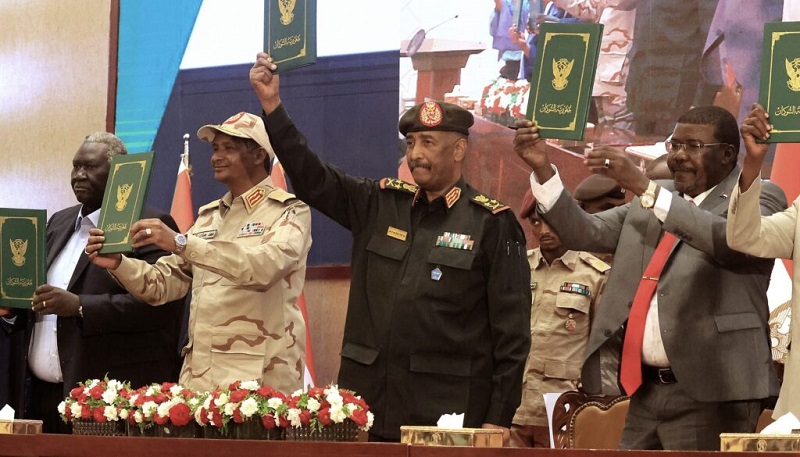
After months of negotiations, a power-sharing deal was reached between the military and civilian leaders in August 2019, which established a transitional government led by Prime Minister Abdalla Hamdok. However, the transitional government faced numerous challenges, including economic difficulties, widespread corruption, and continued unrest.
In October 2021, a coup led by General Abdel Fattah al-Burhan once again plunged the country into crisis. The military dissolved the transitional government and declared a state of emergency, leading to widespread protests and condemnation from the international community.
The situation since then has remained tense, with the military cracking down on dissent and protesters demanding a return to civilian rule. The crisis in Sudan has significant implications for the region and the world, as instability in the country could exacerbate existing conflicts and create new ones.
Fresh crisis: Khartoum shooting and explosions
Khartoum, the capital of Sudan, was awakened to continuous gunfire on Saturday, the 15th of April, amid tensions between the military and the country’s potent paramilitary forces. The issue at hand pertains to how Gen. Mohammed Hamdan Dagalo-led Rapid Security Forces (RSF) should be assimilated into the military and who should be in charge of overseeing it.
The shootings and explosions occurred near the presidential palace, the city’s airport, the defence ministry, and the headquarters of the Sudanese army in central Khartoum. According to various media outlets and footage, the city was filled with columns of smoke, and soldiers were stationed throughout the streets as residents could be seen scurrying for cover as artillery engagements shook the city.
During the conflict, and according to reports, a Saudi Arabian Airlines plane at Sudan’s Khartoum airport was shot at. Flights to and from Sudan have been halted till further notice, the airline claimed, and all of its passengers, employees, and staff have been relocated to the Saudi Embassy in Sudan’s capital, Khartoum.
Conflicts came to a head after several months of rising tensions. These series of conflicts, according to analysts, had prevented the country from returning to its hastily completed democratic transition, which had been stopped in its tracks by a military coup in October 2021. Up until now, the conflict has been “forcing a delay in the signing of an internationally backed deal with political parties to revive the country’s democratic transition.”
The conflict was also heightened by disagreements over how the RSF, led by Dagalo, should be incorporated into the military and who should be in charge of overseeing it. The fresh crisis saw both sides making opposing claims about who controlled the strategic installations around the capital and trading accusations about who initiated the conflict. As of early Sunday, April 16, at least 56 people had died and at least 595 had been injured across Sudan.
Global reactions
Countries across the globe have reacted to the devastating development and called for a cessation of power between the parties concerned. Also, international organisations have voiced their displeasure and sought peace for the country.
Immediately after the clash in what appeared to be a “coup attempt”, UK Foreign Secretary James Cleverly urged the Sudanese leadership to control their soldiers and de-escalate. While emphasising that military action will not solve the situation via the micro-blogging platform Twitter, he stated that “the ongoing violence across Sudan must stop immediately… the UK calls on the Sudanese leadership to do all they can to restrain their troops and deescalate to prevent further bloodshed.”
Also, the UAE, US, and Saudi Arabia have discussed the situation in Sudan. According to the Saudi state news agency, the current condition of affairs in Sudan was discussed by the foreign ministers of Saudi Arabia, the United Arab Emirates, and the United States. According to the news agency, the ministers demanded that the military buildup cease and that a framework agreement between Sudan’s military and civilian political groups be reinstated.
The African Union has also called for an “urgent” ceasefire in its press release.
“Today, when things have gone dangerously out of control and resort to armed violence has prevailed as a way of resolving political disputes, the President of the Commission of the African Union makes a fervent appeal to all parties, the armed forces in particular, and the RSF in particular, to immediately cease the destruction of the country, the panic of the populations, and the bloodbaths of innocent people in the last 10 days of the holy month of Ramadan,” part of the press release states.
The Intergovernmental Authority on Development (IGAD), a regional organisation, has revealed its plans to send the presidents of Kenya, South Sudan, and Djibouti to mediate between the warring parties in Sudan. According to the announcement made from the office of Kenyan President William Ruto, IGAD decided to dispatch Presidents Kiir, Ruto, and Guelleh as soon as possible to mediate between the opposing camps.
United Nations Secretary-General Antonio Guterres had also condemned the conflicts in Sudan “that have left dozens of civilians dead, including three workers for the global body’s food agency, demanding swift justice over the killings.”
The pan-Arab body, the Arab League, also called for “an immediate end to the violence in Sudan and offered to mediate between the country’s warring sides.” The organisation stated that it is ready “to exert efforts to help Sudan end the crisis in a sustainable manner, in a way that serves the interests of the Sudanese people”.
Negative Impacts of the Crisis
Political tension can have a number of negative impacts, both on the individuals and societies that are directly affected by it as well as on the broader region and international community. Some of the negative impacts of political tension include:
Violence and conflict: Political tension can often lead to violence and conflict as different factions struggle for power and control. This can result in loss of life, displacement, and destruction of infrastructure and property. The situation in Sudan is synonymous with the game of power mongers.
Economic instability: Political tension can also have a significant impact on the economy, as businesses may be reluctant to invest or operate in an unstable environment. This can lead to unemployment, inflation, and other economic problems.
Human rights violations: During times of political tension, there may be increased incidents of human rights violations, as governments and other actors may resort to repressive measures to maintain control. In an African proverb, it is said that “when two elephants fight, it is the grass that suffers most.” Thus, most innocent citizens are the ones getting their rights violated in Sudan.
Social unrest: Political tension can also create social unrest, with different groups in society taking sides and engaging in protests and demonstrations. This can create a sense of division and tension within communities and may result in further conflict. Social unrest in Sudan has been a trend since Bashir’s era.
International relations: Political tension can have a negative impact on international relations, as countries may become more isolated and mistrustful of one another. This can lead to diplomatic tensions, trade disruptions, and other problems that can affect global stability and cooperation. For example, Chad’s government, despite calling for peace, was reported to have closed its border with Sudan.
By and large, political tension can have a range of negative impacts that can harm individuals, communities, and societies as a whole. It is important for leaders, both in Sudan and across the globe, to work towards resolving tensions and conflicts through peaceful and democratic means in order to avoid these negative consequences.
A Complex Set of Roots
The crisis in Sudan has its roots in a complex set of political, economic, and social factors. Some of the main causes of the crisis include:
Authoritarian rule: Sudan was ruled by President Omar al-Bashir for over 30 years, during which time he maintained tight control over the country through repressive measures such as censorship, torture, and extrajudicial killings. This led to widespread discontent among the population and fueled demands for democratic reforms.
Economic hardship: Sudan has faced significant economic challenges, including high inflation, unemployment, and a large foreign debt. This has led to widespread poverty and economic insecurity, particularly among young people.
Ethnic and religious divisions: Sudan is a diverse country, with a range of ethnic and religious groups. However, these differences have often been exploited by those in power to maintain control, leading to tensions and conflicts between different groups.
Regional conflicts: Sudan has been involved in a number of regional conflicts, including the civil war in South Sudan and the conflict in Darfur. These conflicts have created instability and contributed to the overall crisis in the country.
Environmental challenges: Sudan is also facing significant environmental challenges, including desertification, water scarcity, and climate change. These challenges have contributed to economic hardship and social unrest, particularly in rural areas.
To sum it up, the crisis in Sudan is the result of a complex set of factors that have contributed to political, economic, and social instability in the country. Addressing these underlying causes will be essential for achieving lasting peace and stability in Sudan.
Addressing the Crisis
Addressing the crisis in Sudan will require a comprehensive and multi-faceted approach that addresses the underlying political, economic, and social issues in the country. Here are some ways that the crisis in Sudan could be addressed:
Dialogue and Negotiations: One of the key ways to address the crisis in Sudan is through dialogue and negotiations between the different stakeholders, including the military, civilian leaders, and opposition groups. This can help to build trust and find solutions to the underlying political and economic challenges in the country.
Political Reforms: Political reforms are necessary to address the underlying political challenges in Sudan. These reforms could include changes to the constitution, decentralisation of power, and greater respect for human rights and civil liberties.
Economic Reforms: Economic reforms are necessary to address the economic challenges in Sudan. These could include measures to reduce inflation and stabilise the currency, promote investment and economic growth, and tackle corruption and other economic challenges.
International Support: The crisis in Sudan requires international support, including financial and technical assistance, to help address the economic challenges and promote democratic reforms in the country.
Reconciliation and Healing: Reconciliation and healing are essential for building a sustainable peace in Sudan. This could include measures to address the underlying ethnic and religious tensions in the country and promote dialogue and understanding between different groups.
Conclusively, addressing the crisis in Sudan will require a comprehensive approach that addresses the underlying political, economic, and social challenges in the country. This will require the active engagement of Sudanese stakeholders and the support of the international community, as well as building sustainable peace and democracy in the country.