Following the announcement that the N1000, N500, and N200 naira notes will be redesigned, the Central Bank of Nigeria (CBN) recently gave Nigerians less than 100 days to “dispose” of the outdated banknotes they still had in their hands.
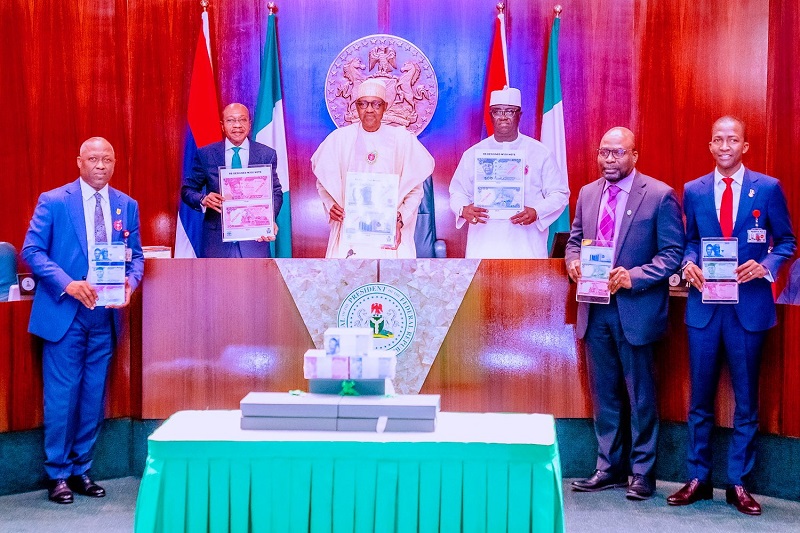
The Governor of the CBN, Godwin Emefiele, while disclosing in Abuja during the Monetary Policy Committee monthly meeting, stated that after President Muhammadu Buhari unveiled the newly designed naira notes, “the apex bank would not move the January 31, 2023 deadline for all old notes to be deposited with commercial banks.”
It was on October 26, 2022, that the Governor earlier announced that the CBN would issue the redesigned N200, N500, and N1,000 notes, effective December 15, 2022. However, the new notes were unveiled on the 23rd of November, 2022, before the originally scheduled date of December 15.
He said, “100 days is enough for any person from any part of Nigeria to deposit his money in the bank and get his money when the new notes are released.”
Before the Federal Executive Council meeting and immediately after the official launch, the CBN governor refuted claims made during a briefing that the early release of the new notes was an attempt to target specific Nigerians.
Also, President Buhari stressed the value of redesigning the new naira notes, explaining that it will help the government deal with the problem of illicit financial flows, corruption, strengthen the country’s economy, and ensure that the value of the naira advances.
Will this new monetary policy be feasible based on its rationale?
Nigeria is redesigning its currency notes for the first time in 19 years, though the reasons for this are still being debated. Although, as revealed, the goal of monetary policy is to lower the amount of money that is not in the banking system and control inflation, it appears the naira is now in a worse situation than it was before.
There is currently a massive depreciation of the naira and greater imported inflation as part of the effects of the redesign announcement. Following the announcement, the naira currency has fallen the most against the US dollar on the illegal market. It was reported that the naira was trading at about N760 to $1 on October 26. Since then, it has fallen precipitously to a depressing N900/$1 rate. The difference between the official rate and the parallel market rate effectively increased as the value of the naira fell on the black market.
But against the above odds, the integrity of the CBN and the country, according to CBN Governor Godwin Emefiele, was in jeopardy due to some difficult management issues with the existing supply of banknotes in circulation, especially those outside the banking sector. While speaking in line with the powers conferred on the CBN by Section 2(b) of the CBN Act 2007, he said:
“Statistics show that 85% of the currency in circulation is outside the vaults of our commercial banks. Data indicates that N2.73 trillion out of the N3.23 trillion in currency in circulation was outside the vaults of commercial banks across the country.”
He also mentioned the growing difficulty and risk of counterfeiting, as shown by various security reports, the deteriorating lack of clean and functional banknotes, and the requirement to adhere to international norms that call for the circulation of new legal tender every five to eight years.
“It is therefore no longer tenable to continue with business as usual, especially given the continually evolving circumstances that could impede the optimal performance of our naira.”
The CBN believes that the redesign of the currency will further efforts to establish a cashless society. By further bringing in currency from outside the banking system, this will increase the effectiveness of the monetary policy. Additionally, given the country’s current level of security, the CBN is certain that terrorist attacks and kidnappings will be kept to a minimum since access to the significant amount of money needed to pay ransom outside of the banking system will start to dwindle.
The act appears to be in good faith, given its benefits and steps toward adhering to international norms. But there is a lingering fear that the redesign may not remedy the rising inflation in the country. First, according to some experts, the policy has no way to appreciate the value of the naira in the real sense, and secondly, countrymen with loads of old naira unlawfully acquired have started laundering them through luxury purchases, thereby inflating the economy.
Argument as a Political Tool or Economic Tool
Financial experts, including economists, lawyers, and others, have been debating the policy in depth. Many of them believe that the policy is merely a diversion from the serious economic difficulties that are currently upsetting the country and offers no real economic benefits to the populace. Before the National Assembly, the Minister of Finance disavowed the policy and denounced it as having no financial or monetary worth. However, the President reiterated his support for the strategy and its advantages as a means of battling corruption. Nonetheless, questions remain about whether the policy’s costs and benefits are appropriate at this time.
The timing of the policy, which comes just before the general election in 2023, has drawn criticism from a lot of citizens, especially statesmen. For instance, the governor of a southern region of Nigeria, Edo State, Mr. Godwin Obaseki, has called the proposed redesign of Naira notes by the Central Bank of Nigeria a political manoeuvre by the APC-led government to persuade voters ahead of the 2023 general election.
In terms of politics, it is anticipated that many candidates and political parties who have kept sizable sums of the country’s currency in fireproof vaults in their homes, in overhead and underground water storage tanks, and on farms will be compelled to bring such deposits into the bank vaults to exchange for the new banknotes. Banks will notify anti-corruption bodies throughout the process, including the Economic and Financial Crimes Commission, a Nigerian law enforcement agency that investigates financial crimes such as advance fee fraud and money laundering, and also notify the Nigerian Financial Intelligence Unit, the main national organisation in charge of receiving disclosures from reporting organisations like banks.
After receiving information about large deposits, the agencies will trace the money and contact the account owners to find out the source of the money and confirm that it is not the proceeds of crime. In fact, if it is found that the deposit is not the result of financial fraud or money laundering, the depositors will not be allowed to request a withdrawal of the lump sum from their accounts.
However, the actual reason why many citizens count the policy as a political tool is that there is a high tendency that candidates for the ruling APC may have unrestricted access to the new banknotes, but opposition political parties and candidates may not be permitted to withdraw considerable sums of money for campaign costs.
But the bottom line is, whether politically or economically, there are concerns that the criminals who may be the primary targets of these altered notes, such as kidnappers, money launderers, and counterfeiters, are cunning and intelligent and may be able to avoid being caught. For instance, many of these economic saboteurs are believed to be buying real estate, luxury cars, jewelry, and other items with the intention of selling them after the new currencies have entered circulation. Many more people are exchanging their Naira for international money like dollars, euros, and British pounds.
Latest Developments
On the 15th of December 2022, deposit money banks (DMBs) nationwide started issuing the newly designed naira notes to customers following the Central Bank of Nigeria’s (CBN) mandate. In the majority of commercial banks, the new naira notes were distributed over-the-counter alongside the old ones.
In yet another development, the Central Bank of Nigeria’s most recent policy, which limits daily cash withdrawals for individuals to N20,000 and corporate organizations to a maximum of N100,000 per day, has been approved by the Nigerian Senate.
But there is currently a lawsuit for an injunction against the President of the Federal Republic of Nigeria, the Attorney General of the Federation, the CBN, and the Governor of the CBN, Godwin Emefiele, over cash withdrawal restrictions and the redesign of the N1000, N500, and N200 banknotes on behalf of 20 million unbanked Nigerians.
The court has, however, refused the motion seeking to stop the cash withdrawal limits. The judge overseeing the case, Justice Oriji, declined to accept the injunction requests in favour of ordering that all respondents be given notice to appear and provide justification as to why an injunction should not be granted against them. The judge thereafter adjourned the matter to January 10, 2023, “after granting orders for an accelerated hearing and substituted service.”
Conclusively, the implemented policy limiting the amount of cash that a person or corporate body can withdraw at once, forcing them to switch to electronic funds transfers and going cashless, is a “big good one,” as some politicians who might want to engage in vote-buying come 2023 elections will find it difficult to do so.