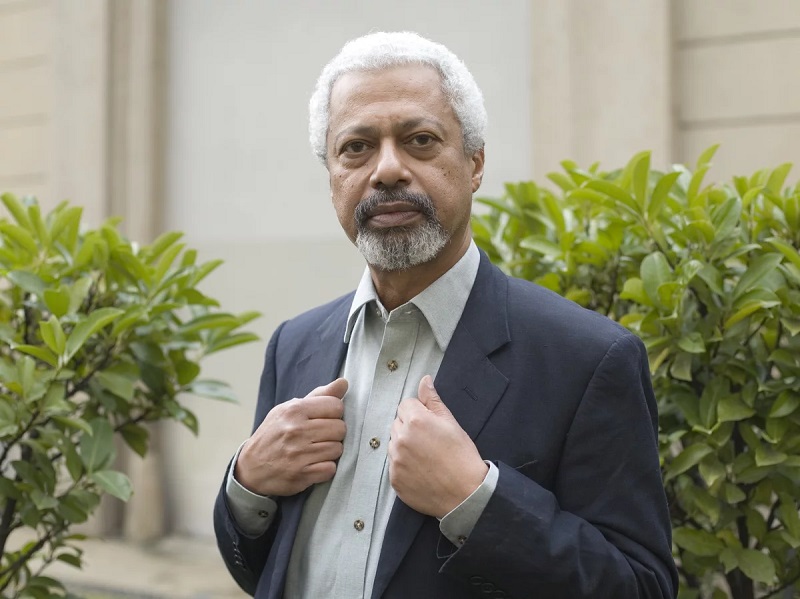
Tanzanian writer Abdulrazak Gurnah was on Thursday declared the winner of the Nobel Prize for Literature, according to the Swedish Academy, as a result of his works that explore the legacies of imperialism on uprooted individuals. Gurnah, who was a former lecturer at Nigeria’s Bayero University Kano, was born and nurtured on the island of Zanzibar. He went to England as a refugee at the end of the 1960s and has published 10 novels and a number of short stories. “Paradise,” set in colonial East Africa during World War One and shortlisted for the Booker Prize for Fiction, and “Desertion” are two of his novels.
Gurnah moved to the United Kingdom as a refugee in 1964, following a military coup that resulted in the persecution of citizens of Arabic origin. He has lived in Britain ever since and has written exclusively in English. In 1987, he wrote his debut novel, Memory of Departure, a coming-of-age novel set during a failed rebellion. Since then, he’s published nine works, nearly all of which deal with memory, migration, and the legacy of colonialism. When his best-known novel, Paradise, was published in 1994, it was highlighted by the Nobel Prize Committee and was shortlisted for the Booker Prize.
Gurnah is the first African writer to win the Nobel Prize in Literature in over a decade and the first non-white African writer in nearly three decades. He is only the sixth African writer to win the prize overall. He is also the first Black writer to win since Toni Morrison was awarded the prize in 1993. He is the second Black African writer to win, following Nigerian playwright Wole Soyinka, who won in 1986.
No one had Gurnah on their radar when it came to the Nobel Prize. Outside of the United Kingdom, it is believed that Gurnah’s novels are mostly obscure, and even within the country, they aren’t particularly well recognized. Though a recently retired professor of English literature at the University of Kent, he is most recognized for his work as a critic, which is one of the reasons he was overlooked. Ironically, he has devoted much of his time to writers who are frequently the subject of Nobel Prize speculation.
But why was Ngũgĩ wa Thiong’o wasn’t given the Nobel?
When the Nobel Prize for Literature was revealed this week, many Kenyans’ hopes were broken once more when author Ngũgĩ wa Thiong’o was not named the winner. Thiong’o is the most well-known poet and playwright in the country. He was imprisoned in Kenya decades ago for writing a play in Gĩkũyũ, his mother dialect, rather than English. However, he is the most influential and, arguably, important living African writer, who has long been seen as a front-runner for the Nobel Prize.
Similarly, a number of African writers, including Boris Diop, Nuruddin Farah, and Mia Couto who are believed to be far more prominent than Gurnah, have yet to win the prize. However, for Thiong’o, he believed his “personal” reasons could be because he was forced to spend much of his life in exile, though he is now the founding director of the International Center for Writing and Translation at the University of California, Irvine, where he lectures.
Despite congratulating the winners, Thiong’o believes his time in prison was a watershed in his life. For writing in Gĩkũyũ language, and for being put into prison by a post-colonial African government. But this seemed like nothing to him as he revealed to appreciate what he called “the Nobel of the heart.”
“Someone who reads my book and they come and tell me, look, your book impacted me in this and that manner. The beauty about a Nobel of the heart is it’s very democratic, it’s available to every writer.”
The Prize, The Honour
The Nobel Prize in Literature was awarded to the novelist Abdulrazak Gurnah, premised on his “uncompromising and compassionate penetration of the effects of colonialism and the fate of the refugee in the gulf between cultures and continents”.
The Prize has become the most distinguished literary award in the world, and the rules for it were stated to be that the candidate should have bestowed “the greatest benefit on mankind”, and writing “in an idealistic direction” which must have caused much discussion.
The Prize has been given out a total of 118 times. Only 16 prizes have gone to women, with seven of those in the twenty-first century. The Swedish academy vowed in 2019 that the award would become less “male-oriented” and “Eurocentric,” but instead gave the honor to two Europeans, Handke, and Polish writer Olga Tokarczuk.
Though individual works are occasionally mentioned as particularly remarkable, the honour is given based on an author’s whole body of work. The Swedish Academy selects who will receive the prize. It is one of Alfred Nobel’s five Nobel Prizes, which he established in his will in 1895. The prize includes a gold medal and ten million Swedish kronor ($1.14 million).
Gurnah would have received the Nobel Prize from King Carl XVI Gustaf at a formal ceremony in Stockholm on December 10, the anniversary of scientist Alfred Nobel’s death in 1896, who established the rewards in his last will and testament. However, because of the pandemic, the in-person celebration has been cancelled and replaced by a televised ceremony in which the laureates receive their prizes in their home countries.
Some people sees this award as a good development for the African literary scene, and can also “revitalize” African literature. Although, there are concerns that the award and its likes indicate the West’s limited recognition of African literature in African languages, as the works of many authors in the continent who write in African or French languages are not translated into English.
The Nobel Prize came after Zimbabwean novelist, Tsitsi Dangarembga was announced as the winner of the Peace Prize of the German Book Trade.
According to Venice Trommer, who runs a book store in Berlin that specializes in African literature and co-organises the African Book Festival, “There’s been an awakening in the minds of a lot of white people who are just trying to be critical of themselves. They want to be informed and open to perspectives that are different from their own.”
While there hasn’t been a paradigm shift yet, awarding the Nobel Prize or other international prizes to African writers focusing on important African issues might signals the world’s readiness to look beyond the European/American horizons in terms of literature.
For Gurna, for Africa, for Tanzania, this is yet another limelight, and more to come.