The need for protection was the foundation all laid by the majority of African countries when coronavirus broke into the African states in late 2019. During the reign of the first and second wave of the infections, all measures were roll out by the African governments, prominent of which is the lockdown and restriction of movements from one African state to another. Albeit all measures, rising and falling cases of covid19 infections with different varieties continued to be discovered in Africa, traced from other European and Asian countries.
Again, the highest health body in the world, World Health Organization has issued concern recently over another resurgence of the third wave of Coronavirus infections in many African countries. Just like the first wave, reports surface that many of these countries are seriously unprepared for an increase in cases.
In recent past weeks, several covid 19 infections are increasingly going south with the percentage of about 30% seen in about 14 countries. A perfect example is obtainable in South Africa. The country is reportedly leading a sustained increase in the cases, the presence of winter according to South African medical experts, has increased the risk of infections.
Like South Africa, many worries have also been in place for Uganda too, after recording up to 131% week-on-week rise in cases in schools, health centers, and isolation centres.
According to the African reports, other countries like Angola, Namibia, and especially DR Congo are not left out in the surge. DR Congo government has confirmed through the WHO Regional African Director that the country is currently faced with the worst hit of covid 19 cases.
He said: “the threat of a third wave in Africa is real and rising,” says Matshidiso Moeti, WHO Regional Director for Africa. “It’s crucial that we swiftly get vaccines into the arms of Africans at high risk of falling seriously ill and dying of COVID-19”.
Vaccine shortages
Many of Africa’s most vulnerable people remain widely exposed to COVID-19 as the continent nears 5 million COVID-19 cases and a third wave. The increasing shortage of vaccines that have often proved to prevent deaths in many cases is rising the numbers, week-on-week.
The spiral COVID-19 crisis in India could be regarded as one major cause, especially concerning the export restrictions on the COVAX Facility supplied by the Serum Institute of India which the African continent has been heavily dependent on. According to African News, 47 of Africa’s 54 countries, nearly 90% are set to miss the September target of vaccinating 10% of their people unless Africa receives 225 million more doses.
Director of the Africa Centres for Disease Control and Prevention, Dr. John Nkengasong said African countries that have already rolled out first doses to the masses, might need to restart their efforts as the shortage factor worsen.
Though, there are developments to the situation. Wealthy nations like Joe Biden’s United States have planned that the US will gift about five hundred thousand Pfizer vaccines to 92 lower-middle-income and low countries in Africa. Like the U.S, according to Health Policy Watch, France is also making tangible deliveries via COVAX.
However, albeit recent vaccine shortages, Vaccination efforts and acceptance of vaccination received in 2020 vary across countries. Risk Communication Community Engagement Collective, a joint WHO, United Nations Children’s Fund (UNICEF), and International Federation of the Red Cross and Red Crescent Societies (IFRC) initiative reported that Central and West African gets an average of 60% vaccine confidence. Though confidence in vaccines in Africa ranges, from 38% in Cameroon to the highest 86% in Guinea.
While more vaccines are vital to rescuing the current situation, some African countries must act swiftly to roll out the vaccines in their custody for vaccination. While 14 African countries have used from 80% to 100% of the doses, they received through the COVAX Facility, 20 countries have used less than 50% of the doses received.
Vaccine hesitancy
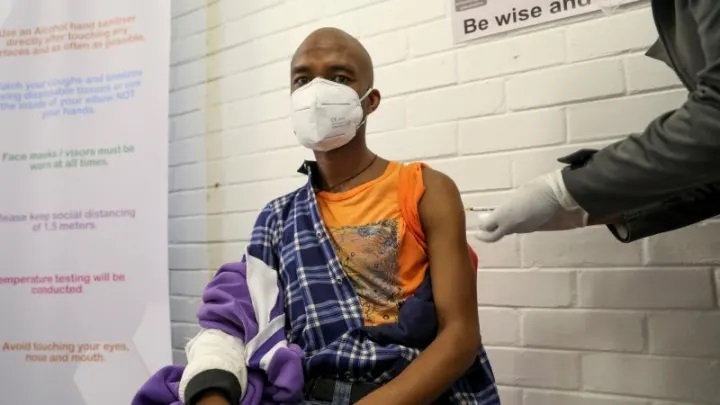
Amid concerns of safety and the rising number of hospitalizations, many Africans are hesitating to get COVID-19 vaccines. An example is the recent Ghana survey that showed a significant number of Ghanaians reluctant to be vaccinated. This too has perhaps led to the recent Malawi and South Sudan decision to destroy some of their doses.
According to the DW, many Africans believed that the lack of clarity surrounding the efficacy and the composition of the vaccine were enough reasons for hesitations and resistance. That the vaccines might have side effects or long-term effects on birth worries too.
Many people remain skeptical about the safety of vaccines. This distrust is borne out of conspiracy ideology claiming the vaccines are meant to harm Africans.
World Health Organization reported that Africa with 16% of the world’s population, has received less than 2% of the COVID-19 vaccine doses administered across the world.
Meanwhile, contrary to the general belief, Paul Offit, MD, director of the Vaccine Education Center at Children’s Hospital of Philadelphia and a member of the FDA advisory panel that recommended approval, says there is no evidence that the vaccines can cause short or long-term effects.
Poor infrastructure
In Africa, the poor state of roads across the country presents significant barriers to the successful distribution of vaccines, especially in semi-urban and rural communities. There, the continent’s infrastructural status will be incapacitated to smoothly distribute the vaccines across promptly. Bad roads will certainly slow down travel time and delay the efficient distribution.
In Nigeria for instance, the Infrastructure Concession Regulatory Commission reported that only 60,000 kilometers of the country’s 195,000 kilometers of the road network are ramped, with the rest in shambles.
In the area of infrastructural security, the persistent insecurity especially in the West African region has also hampered the delivery of vaccines to communities. Chigozie Ubani, a security consultant and fellow at the Institute of Security, Nigeria, believes that “due to the perception of residents of that area to such activities, medical workers deployed to administer the vaccine in the region could be exposed to grave danger”.
All in all, while COVID-19 vaccine hesitancy within the critical infrastructure workforce represents a risk to Africa’s critical functions, the health infrastructural workforce is vital in ensuring the functionality of communities and safeguarding public health at the moment. If vaccine acceptance is unencourageable across these populations, others within a community may also be reluctant to accept the vaccine when it becomes available to them.