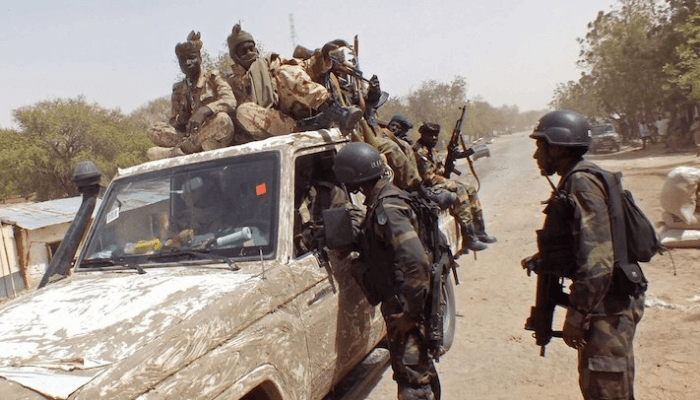
The need for protection was the foundation on which the state was built as that is the social contract between citizens and the state; hence, security should be a fundamental right and entitlement for every person, under which people voluntarily surrendered their rights to the government, which is responsible for everyone’s survival.
In Nigeria, every law-abiding citizen should be entitled to a defense, and defense in this context refers to the mechanisms in place to avoid, deter, mitigate, or address violent conflicts and threats posed by other governments, non-state actors, or systemic socio-political and economic conditions.
The nature of insecurity in Nigeria, if to be examined, will be inexhaustible. Kidnapping, armed banditry, massacres, abductions, and, of course, terrorist attacks are among the main forms of insecurity that Nigerians face today. Nigeria’s volatile security situation has shown that the country is more at risk from inside than from outside or any foreign aggressors.
As the key cause of Nigeria’s security crisis, political and religious disparities, intolerance, mismanagement of resources, subversion, sabotage, armed robbery, muting, and other sorts of lawlessness can all be traced and established. Other factors include, but are not limited to, unemployment and poverty, high rates of illiteracy among Nigerians, ethnic and religious divisions, and the consequences of corruption and unethical behavior in Nigeria.
Meanwhile, the effects and consequences of the insecurity saga are not uncommon. Should we discuss capital and human loss, or the Nigerian stereotype? The immediate results are destruction, with massacres and widespread losses of human capital—soldiers, community leaders, vibrant youngsters, entrepreneurs, occupational specialists, husbands, wives, and children – as a result of both calculated and mob action.
Also, investors would always find it difficult to set up standards planned, due to fear of loss. For example, reports emerged that the Lagos Chamber of Commerce and Industry (LCCI) claims that the current state of insecurity in Nigeria is eroding investor morale, noting that the consequences for Africa’s most populous country are far-reaching and multi-faceted.
According to the LCCI President, she expressed that insecurity was a major factor in the country’s persistent rise in food inflation in recent years and that a worsening security situation will increase inflationary pressure on food prices, exacerbating poverty.
“This alarming state of insecurity in the country has hampered the movement of goods, services, and persons across the country, with implications for agriculture, agro-allied services, trade, and commerce, especially in affected areas. Transportation & logistics sector, hospitality, and allied investments, education, construction, and real estate have been severely impacted by the crisis.”
Houses, farmland and crops, farm machinery, livestock, and cars, among other things, have been destroyed. These actions have resulted in the allocation of scarce human, material, and financial capital to resolve any arisen issues.
Way forward
The country’s security situation has deteriorated to the point that hostage-taking of innocent civilians, vandalism of private and public property, abduction, and bombings of religious buildings, markets, and schools have become uncontrollable. The only way to solve Nigeria’s insecurity problem is for the government to rule in a way that promotes growth.
The rising insecurity has also led to growing calls for separation in Nigeria, while others have asked the country’s President Muhammadu Buhari to resign. While his officials have ruled out the possibility of his resignation, it appeared that the President himself is up to do with internal and international affairs, as he approved the establishment of the National Centre for the Control of Small Arms and Light Weapons (NCCSALW) as part of Nigeria’s ongoing security architecture reform to counter emerging threats and reinforce regional mechanisms for SALW monitoring, prevention, and regulation.
Also, as insurgency, banditry, kidnapping, and secessionist violence have all increased in the country, President Buhari recently sought international aid. Multiple reports indicated that the Nigerian President asked the US for help in a virtual meeting with the US Secretary of State Anthony Blinken.
Seeking international assistance to deal with the spreading terror, Buhari was reported to have urged the United States to consider relocating the US Africa Command (Africom) from Stuttgart, Germany, to Africa to make it easier to deal with the continent’s insecurity.
“The security challenges in Nigeria remain of great concern to us and [are] impacted more negatively by existing complex negative pressures in the Sahel, Central, and West Africa, as well as the Lake Chad Region.
“Nigeria and her security forces remain resolutely committed to containing them and addressing their root causes. The support of important and strategic partners like the United States cannot be overstated as the consequences of insecurity will affect all nations, hence the imperative for concerted cooperation and collaboration of all nations to overcome these challenges”.
While President Buhari’s move of seeking foreign assistance was heavily criticized by Nigerians and other Africans who are warry of foreign interference in the continent, it is important to state that tackling insecurity in Nigeria must focus on social development with practical plans of supporting local business operations and industrial growth so as to minimize the gaps and risks of youth unemployment. Tackling insecurity in Nigeria must also include “upskilling” the information, communication, and technology fields.