بالعربي
Facebook Twitter Linkedin Youtube
Alafarika for Studies and Consultancy
Library
0

No products in the cart.

مكتبتنا (عربي)
  • Home
  • Reports
    • Geopolitics & Governance
    • Economy & Trade
    • Security & Conflict Resolution
    • Regional Integration & Global Cooperation
    • Education, Science & Technology
    • Culture & Media
  • Analyses
    • Geopolitics & Governance
    • Economy & Trade
    • Security & Conflict Resolution
    • Regional Integration & Global Cooperation
    • Education, Science & Technology
    • Culture & Media
  • Weekly Brief
  • Data
    • Charts
    • Infographics
  • Journals
  • Events
  • Country Profile
    • Nigeria
Font ResizerAa
Alafarika for Studies and ConsultancyAlafarika for Studies and Consultancy
Search
  • Home
  • بالعربي
  • Reports
    • Geopolitics & Governance
    • Economy & Trade
    • Security & Conflict Resolution
    • Regional Integration & Global Cooperation
    • Education, Science & Technology
    • Culture & Media
  • Analyses
    • Geopolitics & Governance
    • Economy & Trade
    • Security & Conflict Resolution
    • Regional Integration & Global Cooperation
    • Education, Science & Technology
    • Culture & Media
  • Weekly News Brief
  • Journals
  • Data
    • Infographics
    • Charts
  • Events
  • Country Profile
    • Nigeria
Follow US
  • About
  • Request A Report/Study
  • Consult With Us
  • Call to Host/Train
  • To Publish With Us
All Rights Reserved | Alafarika for Studies and Consultancy © 2026.
Weekly News Brief

Mali’s president, top leaders detained by country’s military

Hammed J. Sulaiman
By
Hammed J. Sulaiman
Last updated: May 24, 2021
4 Min Read
Share

Military officers in Mali have detained the transitional government’s president, prime minister, and defense minister on Monday, escalating political instability just months after the previous president was deposed by a military coup. 

President Bah Ndaw, Prime Minister Moctar Ouane, and Defense Minister Souleymane Doucoure were all taken to a military base in Kati, outside Bamako, hours after two military members lost their jobs in a cabinet reshuffle, according to diplomatic and government sources. 

Their detentions came after President Ibrahim Boubacar Keita was deposed by the military in August. The development could escalate instability in the West African region, where al Qaeda and Islamic State-linked militants control large swaths of the desert north.

Political unrest and military infighting have hampered attempts by Western powers and neighbors to help the impoverished nation, leading to regional insecurity.

Bunnaj Africa gathered that the UN mission in Mali demanded the group’s “immediate and unconditional” release, stating that those holding the leaders must be held accountable for their behaviour. 

In a joint statement, ECOWAS, the United Nations, the African Union, the European Union, and other European countries said a delegation from the top international decision-making body would visit Bamako on Tuesday to help resolve the “attempted coup.” 

“The international community rejects in advance any act imposed by coercion, including forced resignations,” the group said.

After the August takeover, Ndaw and Ouane were tasked with overseeing an 18-month transition back to civilian rule, but they seem to have defied the military’s authority over a range of key positions. 

“The sacking of the pillars of the coup was an enormous misjudgement,” reveals a senior former Malian government official. “The actions are probably aimed at getting them back in their jobs.”

The military’s ultimate objective was unclear at first. This, according to a military official in Kati, was not an arrest. “What they have done is not good,” the source said, referring to the cabinet reshuffle. “We are letting them know, decisions will be made.”

Kati’s military base is infamous for overthrowing Malian rulers. President Keita was taken to Kati by the military in August and forced to resign. In 2012, a mutiny there helped to overthrow his predecessor, Amadou Toumani Toure. 

Since then, Mali has been in a state of upheaval. Following Toure’s departure, an ethnic Tuareg insurgency took control of the country’s northern two-thirds, which was then taken over by al Qaeda-linked jihadists. 

Insurgents were defeated by French forces in 2013, but they have since regrouped and continue to assault the army and civilians. They’ve spread their methods to Burkina Faso and Niger, where attacks have increased dramatically since 2017.

There seemed to be a reason to be optimistic. To restore a democratic government, the transitional government announced last month that legislative and presidential elections will be held in February 2022. 

“It is regrettable, but not surprising: the arrangement agreed to after the coup last year was not perfect, but it was a compromise agreed to by all the major Malian and international stakeholders,” said J. Peter Pham, former U.S. special envoy for the Sahel, now with the Atlantic Council, reveals.

Keywords:CoupMaliMilitaryPolitics

Sign Up For Weekly Newsletter

Subscribe to our newsletter to get our weekly briefs, reports, and analysis instantly!

By signing up, you agree to our Terms of Use and acknowledge the data practices in our Privacy Policy. You may unsubscribe at any time.
Share This Article
Facebook Whatsapp Whatsapp LinkedIn Reddit Threads Email Copy Link Print
ByHammed J. Sulaiman
Educator, writer and legal researcher at Alafarika for Studies and Consultancy.

SUBSCRIBE NOW

Subscribe to our newsletter to get our weekly briefs, reports, and analysis instantly!

WHAT OTHERS ARE READING

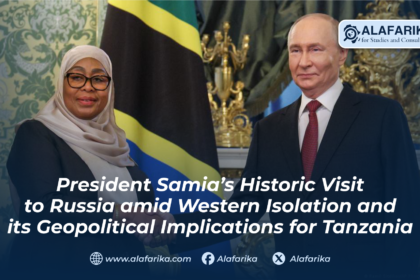
President Samia’s Historic Visit to Russia amid Western Isolation and its Geopolitical Implications for Tanzania

AnalysesGeopolitics & Governance
June 12, 2026

The 2026 U.S. Counter-Terrorism Strategy: A Critical African Assessment

Throughout most of the post-Cold War era, Africa occupied the margins of American grand strategy.…

June 10, 2026

Africa This Week (06/06/2026)

South Africa and Kenya have signed six Memoranda of Understanding to deepen cooperation in trade,…

June 6, 2026

Chad and the Crisis of Statehood in the Sahel: Collapse, Resilience, or Transformation?

The Sahel has appeared as one of the most geopolitically unstable regions in the modern-day…

June 2, 2026

From The Same Section

Situation ReportsGeopolitics & Governance

Can the 2026 Ethiopia General Election Secure a Fractured Nation?

On June 1, 2026, Ethiopia is scheduled to hold its 7th General…

By
Ahmadulbadawy AbdulRaheem
May 31, 2026
AnalysesGeopolitics & Governance

Faye-Sonko Fallout: Senegal’s Political Tension Amid Economic Crisis

In political philosophy, one of its powerful core concepts is a classic…

By
Ahmadulbadawy AbdulRaheem
May 25, 2026
AnalysesSecurity & Conflict Resolution

Nigeria-US Elimination of ISWAP’s Abu-Bilal Al-Minuki: What Does It Mean, and What are the Future Expectations?

For over 50 years, the United States of America and the Federal…

By
Ahmadulbadawy AbdulRaheem
May 18, 2026

Discover More

Africa This Week (23/05/2026)

Weekly News Brief
May 23, 2026

Africa This Week (16/05/2026)

Weekly News Brief
May 16, 2026

Africa This Week (09/05/2026)

Weekly News Brief
May 10, 2026

Africa This Week (02/05/2026)

Weekly News Brief
May 1, 2026
Registered and Certified by:

Follow us: 

Other Pages

  • About
  • Request A Report/Study
  • Consult With Us
  • Call to Host/Train
  • To Publish With Us

Quick Links

  • Events
  • Library
  • Journals
  • Privacy Policy
  • Contact
All Rights Reserved | Alafarika for Studies and Consultancy © 2026.
Get Updated!
Subscribe to our newsletter and never miss our latest reports, analyses, publications, and other events.

Zero spam, Unsubscribe at any time.
Welcome Back!

Sign in to your account

Username or Email Address
Password

Lost your password?